

Ujasusi Blog’s East Africa Monitoring Team | 29 March 2026 | 0600 BST
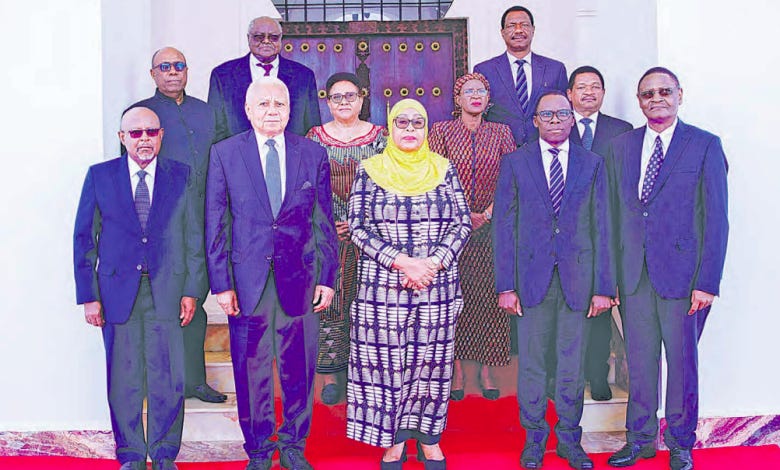
The Judge Chande Commission is a nine-member presidential commission of inquiry established by President Samia Suluhu Hassan on 18 November 2025 to investigate violence during and after Tanzania’s disputed 29 October 2025 general election. Chaired by retired Chief Justice Mohamed Chande Othman — a former ICTR Chief of Prosecutions and ICC special adviser — the commission is scheduled to submit its findings to the President by 3 April 2026, following a 42-day extension from its original 20 February deadline. The report will be the first formal institutional account of events that killed approximately 10,000 people according to ICC submissions, though the commission’s narrow Terms of Reference, executive-appointed composition, and media restrictions have drawn sustained criticism from opposition parties, civil society organisations, the United Kingdom at the UN Human Rights Council, and international rights bodies including Amnesty International and Human Rights Watch.
This assessment examines the commission’s mandate, composition, operational conduct, and the political dynamics shaping what its report is likely to contain — and what it is structurally designed to exclude.
Table of Contents
Who Appointed the Judge Chande Commission in Tanzania?
What Is the Judge Chande Commission Investigating?
Why Is the Judge Chande Commission Widely Criticised?
How Will the Chande Commission Impact Tanzanian Politics?
When Will the Judge Chande Commission Submit Its Report?
What Are the Judge Chande Commission’s Terms of Reference?
What Controversies Surround the Judge Chande Commission?
Why Did Samia Suluhu Establish the Commission
Strategic Outlook: What Will the Report Contain?
1. Who Appointed the Judge Chande Commission in Tanzania?
President Samia Suluhu Hassan established the commission under the Commissions of Inquiry Act, Cap 32 on 14 November 2025, six days after her inauguration speech in which she acknowledged loss of life during the post-election period without providing any casualty figures. Chief Secretary Dr Moses Kusiluka formally announced the eight-member body on 18 November 2025, and President Samia presided over the swearing-in ceremony at State House, Chamwino, on 20 November.
The commission’s establishment followed intense international pressure. The UN High Commissioner for Human Rights, Volker Türk, had publicly called for investigations into killings, enforced disappearances, and the concealment of bodies by security forces. The African Union Election Observer Mission declared the elections non-compliant with AU principles and normative frameworks. The SADC Electoral Observation Mission concluded that voters could not express their democratic will. A joint statement by the foreign ministers of Canada, Norway, and the United Kingdom cited credible reports of large numbers of fatalities.
President Samia defended the domestic commission at its launch, stating she had “a lot of faith” in its expertise. She argued that a domestic investigation should precede international scrutiny — a position rejected by opposition parties and challenged by the UK at the 61st UNHRC session in March 2026, where the British Human Rights Ambassador explicitly stated that a presidential commission cannot credibly investigate the President.
2. What Is the Judge Chande Commission Investigating?
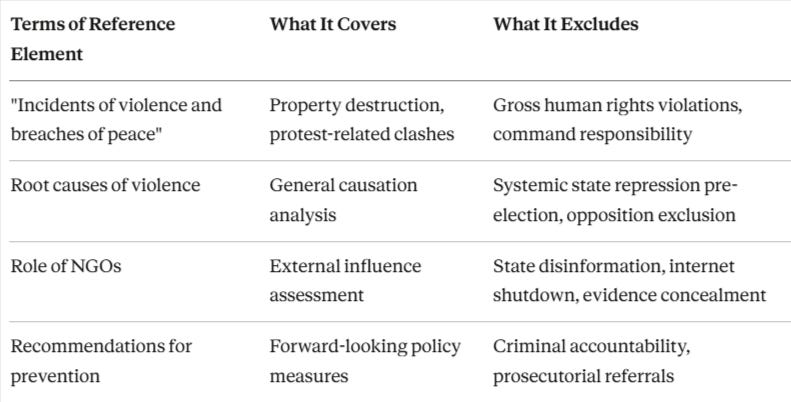
The commission’s Terms of Reference task it with investigating “incidents of violence and breaches of peace” before, during, and after the 29 October 2025 general election. Its mandate covers three broad areas: establishing the root causes of the violence, assessing its impact, and recommending measures to prevent future occurrences.
The framing is the critical issue. “Incidents of violence and breaches of peace” is a formulation that structurally excludes the categories of abuse documented by international human rights organisations and UN bodies. Amnesty International’s pre-election briefing documented systematic violations across Tanzania between January 2024 and October 2025, including enforced disappearances, arbitrary arrests, torture, and extrajudicial killings. Human Rights Watch described security forces responding to protests with lethal force, deploying troops and using live ammunition. The UN Human Rights Office reported that hundreds were killed, with bodies transported by security forces to undisclosed locations.
The Terms of Reference were drafted by the executive before a single witness appeared. They do not reference command responsibility, the nationwide internet shutdown imposed from 29 October to 3 November, the detention of opposition leader Tundu Lissu on treason charges, mass arrests of civilians including children charged with treason, or the role of TISS in deployment coordination.
President Samia also directed the commission to examine the role of non-governmental organisations, both within and outside Tanzania — a mandate element that mirrors the government’s broader narrative framing the protests as externally incited rather than domestically driven.
3. Why Is the Judge Chande Commission Widely Criticised?
Criticism falls into four distinct categories: composition, transparency, independence, and mandate scope.