

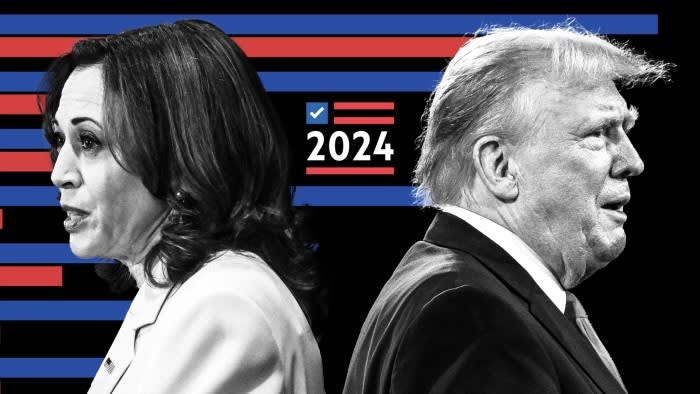

The 2024 US presidential election is shaping up to be a high-stakes contest between Vice President Kamala Harris and former President Donald Trump, with significant implications for the future direction of American politics and policy. However, beneath the surface of the political campaign lies a complex and intense intelligence battle, as foreign adversaries like Russia, China, Iran, and North Korea seek to influence the election outcome and undermine faith in US democratic institutions.
The Political Race: Harris vs. Trump
On the surface, the 2024 election presents a stark choice between two candidates with very different visions for America's future. Vice President Kamala Harris, having stepped into the role of Democratic nominee after President Biden's withdrawal, is running on a platform of building on the Biden administration's policy agenda. She is emphasizing issues like protecting abortion rights, addressing climate change, and expanding access to healthcare and education.
Former President Donald Trump, on the other hand, is seeking to return to the White House on a platform of "Make America Great Again," focusing on issues like restricting immigration, cutting taxes and regulations, and taking a more confrontational stance toward China. The policy contrasts between the two candidates are stark on issues ranging from tax policy to healthcare to foreign relations.
Current polling shows a tight race between Harris and Trump, with Harris maintaining a slight lead nationally but the outcome still very much in doubt. Key swing states like Pennsylvania, Georgia, Michigan, and Arizona look to be particularly competitive and potentially decisive. Both campaigns are pouring resources into these battleground states in an effort to gain an edge.
The election is taking place against a backdrop of deep partisan polarization and lingering doubts about election integrity stemming from Trump's false claims about the 2020 election. There are concerns about the potential for post-election unrest, particularly if the result is close or contested.
The Intelligence Battle Behind the Scenes
While the political contest plays out publicly, US intelligence agencies are engaged in an intense effort to protect the integrity of the election from foreign interference. Multiple foreign adversaries, particularly Russia, China, and Iran, are assessed to be actively working to influence the election outcome and sow discord among the American public.
Russian Interference Efforts
Russia remains one of the most persistent and aggressive foreign actors seeking to meddle in US elections. US intelligence agencies assess that Russia is continuing to conduct influence operations aimed at exacerbating political and social divisions in the United States. Some key aspects of Russia's efforts include:
Spreading disinformation and propaganda through social media and other online channels, often using AI-generated or enhanced content.
Targeting the Harris-Walz campaign with character attacks and amplifying divisive narratives.
Potentially encouraging or organizing protests, both online and in-person, in an effort to increase social and political tensions.
Preparing for potential influence operations in the immediate pre- and post-election period to sow doubt about the results.
Russian actors have shown a particular focus on swing states and contentious political issues like immigration and the economy. There are concerns that Russia may attempt to incite violence or encourage challenges to the election results, regardless of the outcome.
Chinese Influence Operations
While perhaps less aggressive than Russia, China is also assessed to be conducting influence operations aimed at shaping the US political landscape. Some key aspects of China's efforts include:
Targeting down-ballot Republican candidates and members of Congress who advocate for policies perceived as anti-China.
Amplifying narratives critical of US policies on issues like Taiwan and trade relations.
Spreading disinformation about US domestic issues like the economy and natural disaster response.
China's operations tend to be more subtle and long-term focused compared to Russia's, often aiming to shape perceptions of China and US-China relations rather than directly impacting the presidential race.
Iranian Cyber and Influence Activities
Iran has emerged as an increasingly active player in election interference efforts. Some key aspects of Iran's campaign include:
Conducting cyber operations against political campaigns, including a hack-and-leak operation targeting the Trump campaign.
Spreading disinformation and propaganda aimed at increasing political and social divisions in the US.
Potentially encouraging protests and providing resources to protest organizers.
Preparing for possible cyber-influence operations in the lead-up to Election Day.
Iranian actors have shown a particular focus on issues related to US policy in the Middle East, often seeking to amplify anti-Israel sentiment and criticism of US foreign policy.
North Korean Activities
While less prominent than Russia, China, or Iran, North Korea is also believed to be engaged in some level of election interference activity. This likely includes cyber operations and online influence efforts, though details of North Korea's specific activities are less publicly available.
US Intelligence Community Response
Faced with this multi-faceted foreign interference threat, the US intelligence community is engaged in a comprehensive effort to protect the integrity of the election. Some key aspects of this effort include:
Monitoring and analyzing foreign influence campaigns to identify and expose interference efforts.
Sharing threat information with state and local election officials, social media companies, and other relevant stakeholders.
Conducting offensive cyber operations to disrupt foreign interference efforts.
Issuing public warnings about foreign interference threats to raise awareness and build resilience.
The intelligence community has emphasized that while foreign actors are attempting to influence the election, there is currently no evidence that any foreign actor has the capability to directly manipulate vote tallies or election results.
Challenges and Complexities
The intelligence battle surrounding the 2024 election is particularly complex and challenging for several reasons:
1. Evolving Tactics:
Foreign adversaries are constantly adapting their interference techniques, including increased use of AI-generated content and more sophisticated social engineering tactics.
2. Domestic Amplification:
Foreign-origin disinformation and propaganda is often unwittingly amplified by domestic actors, making it difficult to distinguish foreign from domestic influence efforts.
3. Technological Vulnerabilities:
The increasing reliance on technology in election systems and political campaigns creates new potential vulnerabilities for cyber attacks and manipulation.
4. Political Sensitivities:
Efforts to combat foreign interference can become politically charged, with some viewing warnings about interference as attempts to delegitimize certain candidates or outcomes.
5. Post-Election Period:
There are significant concerns about foreign efforts to exploit any post-election uncertainty or unrest, particularly given the contentious aftermath of the 2020 election.
Implications and Outlook
The outcome of this intelligence battle could have significant implications for the integrity of the 2024 election and the future of American democracy. While the US intelligence community has made strides in identifying and countering foreign interference efforts, the threat remains persistent and evolving.
The effectiveness of these foreign influence campaigns will depend in part on the resilience of the American public and institutions. Efforts to improve media literacy, strengthen election infrastructure, and build public awareness of foreign interference threats will be crucial in mitigating the impact of these operations.
Ultimately, the 2024 election represents not just a political contest between Harris and Trump, or Democrats and Republicans, but a test of the ability of US democratic institutions to withstand sustained assault from foreign adversaries seeking to exploit and exacerbate domestic divisions.
As Election Day approaches, it will be critical for voters, policymakers, and the media to remain vigilant against potential foreign interference while also working to address the domestic political and social issues that foreign adversaries seek to exploit. The outcome of this hidden intelligence battle may prove just as consequential as the public political campaign in shaping the future of American democracy.
SOURCE: Osint