

Ujasusi Blog’s East Africa Monitoring Team | 18 January 2026 | 0520 GMT
🔓FREE ACCESS
Please consider becoming a paid subscriber
You can also donate.
📋 In Brief
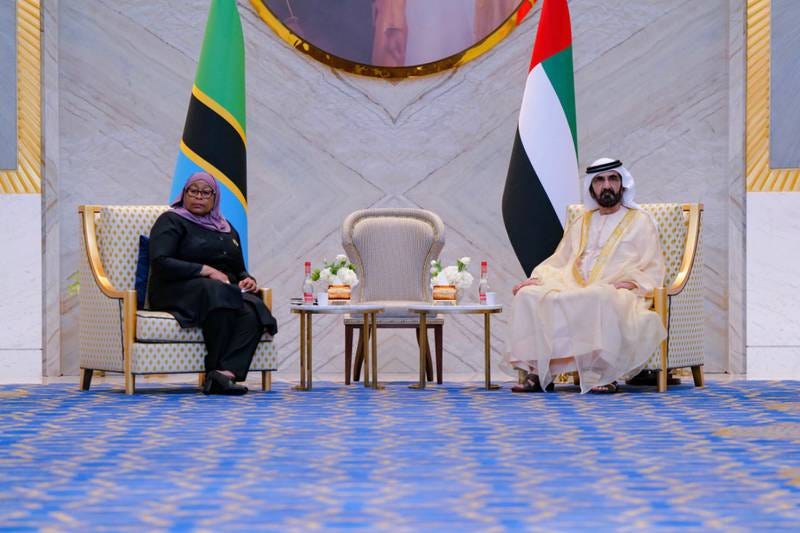
The United Arab Emirates faces significant strategic setbacks across the Horn of Africa and Yemen, according to intelligence sources cited by The Dark Box. Saudi Arabia has systematically dismantled Emirati military facilities in Somalia, crushed the UAE-backed Southern Transitional Council in Yemen, and coordinated with Turkey to contain Abu Dhabi’s influence. For Tanzania, where the UAE has become the leading source of foreign investment with a portfolio exceeding $1 billion across ports, energy, petroleum and controversial carbon credit deals, these developments raise fundamental questions about the viability of President Samia Suluhu Hassan’s strategy to rely on non-Western donors following the estimated 10,000 deaths in post-October 29 election violence.
🔍 The UAE’s Regional Setbacks: A Systematic Dismantling
Somalia: Military Facilities Closed
According to The Dark Box sources, Mogadishu authorities abruptly cancelled security and port arrangements with Abu Dhabi and ordered closure of Emirati military facilities, ending the UAE’s strategic presence along the Red Sea corridor. This followed sustained Saudi diplomatic pressure combined with Somali frustration over perceived Emirati interference in internal politics and support for regional fragmentation through entities like Somaliland.
Yemen: The Southern Transitional Council Collapses
Within days, Saudi-led operations dissolved the command structure of the UAE-backed Southern Transitional Council, a separatist proxy cultivated over years as a counterweight to unified Yemeni authority. What sources describe as a decade-long project was dismantled in less than a week, eliminating any viable Emirati-aligned force capable of territorial control.
Turkey-Saudi Coordination: A New Regional Alignment
Turkish President Erdogan has entered advanced coordination with Crown Prince Mohammed bin Salman on Yemen, Somalia, Sudan and maritime security files. This emerging understanding explicitly opposes non-state armed actors and separatist projects, directly contradicting Abu Dhabi’s historical approach of building influence through proxy militias and fragmentation.
Sudan: Central Government Resurgence
The return of a strengthened central government to Khartoum, backed by Turkish-Saudi alignment, has further reduced Emirati influence. Both Ankara and Riyadh are aligning behind preservation of unified state institutions rather than empowerment of militias, reversing years of UAE investment in the Rapid Support Forces.
India’s Somaliland Refusal
New Delhi declined to recognize Somaliland despite sustained Emirati lobbying, denying Abu Dhabi hoped-for international validation and demonstrating Saudi Arabia’s growing influence over major external powers’ calculations.
The Dark Box sources emphasize that no regional actor has stepped forward to mediate on Abu Dhabi’s behalf, and traditional partners have either remained silent or recalibrated toward Riyadh. The message: fragmentation projects will no longer be tolerated, and influence must flow through recognized states rather than parallel structures.
🇹🇿 UAE Investment Portfolio in Tanzania: Over $1 Billion at Stake
The UAE’s presence in Tanzania extends far beyond single projects, representing a comprehensive investment portfolio that by Q3 2025 made the Emirates Tanzania’s leading source of foreign direct investment, surpassing China.
1. DP World Port Operations: The Flagship Controversy
DP World’s management of container terminal operations at Dar es Salaam port under a 30-year concession agreement signed in October 2023 represents the UAE’s most visible and contentious investment. Operations began in April 2024, with DP World managing berths four to seven at Tanzania’s primary maritime gateway.
Investment structure: DP World committed to initially invest more than $250 million to upgrade the port, with investment potentially increasing to $1 billion during the concession period alongside hinterland logistics projects.
Performance metrics: The partnership has reduced ship turnaround times from seven days to three days. The Tanzanian government has collected Tsh325.3 billion from agreements with DP World, encompassing fees such as land rent, royalties and wharfage charges. One notable achievement was elimination of the $1,000 container demurrage fee that had long burdened local businesses.
Persistent controversies: Opposition figures and civil society organizations have questioned transparency of concession terms, revenue sharing arrangements, and whether the deal provides sufficient technology transfer to Tanzanian institutions. Legal experts and the opposition party condemned the Inter-Government Agreement, arguing it contained clauses more beneficial to DP World than Tanzania.
2. Masdar Renewable Energy: 2GW Solar and Wind Projects
Abu Dhabi’s Masdar signed a Joint Development Agreement with TANESCO in August 2022 to develop renewable energy projects with total capacity up to 2 gigawatts. The partnership establishes a co-owned joint venture initially targeting 600 megawatts of solar photovoltaic and onshore wind capacity, with plans to expand to 2,000 megawatts.
Strategic significance: The agreement supports Tanzania’s target of 75% electrification by 2035 and positions Masdar as a key player in Tanzania’s energy transition. As of 2022, only 40% of Tanzania’s population had electricity access, with approximately 2GW total generating capacity.
Current status: The two parties are finalizing establishment of the joint venture company to advance the collaboration. This falls under the UAE’s Etihad 7 initiative aiming for 20 GW capacity to supply 100 million people across Africa by 2035.
3. ENOC Petroleum Infrastructure: $400-500 Million Storage Facilities
The UAE state-owned Emirates National Oil Company signed an MoU with Tanzania’s Ministry of Energy in January 2023 for construction of petroleum receiving and storage infrastructure valued between $400-500 million.
Objectives: The project aims to make Tanzania a petroleum hub for East and Central Africa, sustaining the country’s fuel demands for up to six months compared to current 30-day capacity. The infrastructure will reduce delay times for offloading oil products, particularly for transit to landlocked neighbors including Uganda, Rwanda, Burundi, DRC, Zambia and Malawi.
ENOC’s existing presence: ENOC Africa, a joint venture between Tanzania’s Petro (T) Limited and Dubai’s ENOC Supply and Trading LLC, has won multiple competitive tenders under Tanzania’s Petroleum Bulk Procurement System since 2014.
4. Blue Carbon Forest Deals: The Most Controversial Portfolio Item
Sheikh Ahmed Dalmook al-Maktoum’s Blue Carbon signed an MoU with Tanzania in February 2023 to conserve, manage and register 8 million hectares of forest resources (8% of Tanzania’s land area), including 56,000 hectares of mangroves. The deal aims to generate carbon credits for sale under Article 6 of the Paris Agreement.
Revenue structure: Tanzania’s taxation regime for carbon credit trading, introduced shortly before the Blue Carbon MoU, allocates 61% of revenue to the Tanzanian government, with the remainder to Blue Carbon and other stakeholders.
International criticism: The Blue Carbon Africa deals covering Tanzania, Zimbabwe (20% of land), Zambia (10%), Liberia (10%) and Kenya have attracted severe criticism from environmental groups, indigenous rights organizations and conservation experts. Critics question transparency, equitable benefit distribution, impact on local communities, and Sheikh Ahmed’s lack of prior experience in forest management or carbon credit projects.
Current status: According to recent investigations by AFP and Code for Africa, several Blue Carbon agreements across Africa including Tanzania have stalled or made no progress more than two years after signing. Kenyan and Tanzanian officials did not respond to requests for details on implementation status.
5. Broader Investment Presence: Manufacturing, Construction, Tourism
According to Tanzania Investment and Special Economic Zones Authority (TISEZA) Q3 2025 data, the UAE brought projects worth $502 million during July-September 2025, surpassing China ($401.55 million) and India ($176.18 million) as Tanzania’s leading FDI source.
Sectoral breakdown: UAE investments concentrate in manufacturing (42.29% of projects), commercial building construction (14.93%), and transportation (14.43%). The projects registered in Q3 2025 are expected to generate over 20,800 jobs.
Historical investment: From 2003 to 2016, UAE’s direct cumulative investment in Tanzania rose to $991.5 million. By 2019-2023, UAE investments in Africa exceeded $110 billion, with the Emirates ranking fourth globally behind the United States, China and the European Union.
Trade relations: The bilateral trade balance between UAE and Tanzania stood at $2.5 billion in 2022. Tanzania imports mainly refined petroleum products from the UAE, while the UAE is the largest buyer of Tanzanian cloves.
🔎 Strategic Implications: What UAE Regional Setbacks Mean for Tanzania
1. Diminished Capacity for New Financial Support
The UAE’s regional losses represent substantial sunk costs and operational failures. The dismantling of the Southern Transitional Council, loss of military facilities in Somalia, and broader strategic setbacks may constrain Abu Dhabi’s financial bandwidth for new commitments, forcing resource redirection toward repairing regional relationships or salvaging remaining influence networks.
For President Samia’s regime seeking alternative donors willing to overlook the estimated 10,000 deaths from October 29 election violence, this timing is particularly problematic. The UAE may lack capacity or willingness to provide substantial new financing beyond existing commitments precisely when Tanzania most needs it.
2. Reputational Contamination Risk
The Dark Box report documents Abu Dhabi’s systematic use of proxy militias, mercenaries and support for separatist movements to fragment states and undermine central authority across Somalia, Yemen, Sudan and beyond. For a Tanzanian regime already facing international scrutiny over mass casualties, enforced disappearances and systematic political repression, deeper association with the UAE creates substantial reputational risk.
International observers, human rights organizations and Western governments monitoring Tanzania’s crisis would view enhanced UAE partnership as confirmation of authoritarian consolidation and alignment with actors known for destabilizing activities. This compounds rather than mitigates Tanzania’s isolation.
3. Saudi Factor: Potential Veto Power Over UAE-Tanzania Relations
Crown Prince Mohammed bin Salman’s systematic dismantling of Emirati influence networks suggests Riyadh may exercise de facto veto power over UAE regional engagements. If the UAE seeks to establish significant new partnerships in East Africa, particularly with regimes facing international scrutiny, Saudi Arabia may view this as circumventing its containment strategy.
Tanzania’s approach to the UAE must account for potential Saudi intervention or pressure. Riyadh’s alignment with Turkey and coordination on Somalia, Yemen and Sudan issues indicates preference for state-to-state relationships rather than proxy arrangements, potentially creating complications for expanded UAE-Tanzania cooperation.
4. Existing Investment Portfolio Vulnerabilities
The UAE’s regional setbacks raise questions about sustainability of existing projects in Tanzania:
DP World’s long-term commitment: Will Abu Dhabi maintain investment levels in Dar es Salaam port operations amid strategic retrenchment elsewhere? Port infrastructure requires sustained capital expenditure for maintenance, upgrades and capacity expansion. If UAE resources become constrained, DP World’s Tanzania operations may face reduced investment despite the 30-year concession.
Masdar’s 2GW renewable energy timeline: The joint venture with TANESCO remains in establishment phase more than two years after the August 2022 agreement. Will Masdar prioritize Tanzania amid competing demands across its expanding African portfolio (Angola 2GW, Uganda 1GW, Zambia 2GW)? Strategic uncertainty may delay project advancement.
ENOC petroleum infrastructure execution: The $400-500 million petroleum storage facility MoU signed in January 2023 anticipated finalization “in the next two to three months.” Nearly two years later, has the investment contract been executed? If not, will regional setbacks affect ENOC’s willingness to proceed?
Blue Carbon implementation failure: The forest carbon credits deal appears to have joined other stalled Blue Carbon agreements across Africa. If the MoU has made no progress, this represents a significant failure of UAE-Tanzania cooperation and raises questions about reliability of future agreements.
5. Post-October 29 Donor Strategy Complications
President Samia’s regime faces a fundamental dilemma: the actors most willing to provide support without governance conditionality are precisely those whose partnership accelerates international isolation and regime vulnerability.
The UAE isolation paradox: Formalized partnership with Abu Dhabi beyond existing commitments would likely trigger enhanced Western scrutiny, potential sanctions discussions and coordinated pressure from human rights organizations. The UAE’s reputational damage from proxy warfare and destabilization campaigns means partnership amplifies rather than mitigates Tanzania’s isolation.
China’s preferred alternative status: The UAE’s regional setbacks reinforce China as Tanzania’s most viable non-Western donor, though Beijing’s increasing caution regarding political instability creates complications. China’s risk assessment likely incorporates the scale of Tanzania’s October 29 crisis and implications for regime durability.
Timeline compression: If the regime faces potential collapse within months, as opposition assessments suggest, Tanzania may lack sufficient runway to secure, implement and deploy alternative donor support. Non-Western donors, even those theoretically willing to overlook governance concerns, require time for due diligence, negotiation and financing structuring.
🎓 Intelligence Assessment: UAE Regional Reversal as Warning Sign
The UAE’s experience provides a cautionary example for Tanzania’s strategic calculations. Abu Dhabi’s reliance on proxy relationships, disregard for state sovereignty norms and fragmentation projects triggered rapid strategic collapse when confronted by coordinated state power through the Saudi-Turkish axis.
Key lessons:
Overextension through proxies has limits: The UAE’s decade-long investments in the Southern Transitional Council, Somaliland recognition efforts and militia networks across the Horn of Africa were dismantled within days when Saudi Arabia decided to act. This demonstrates fragility of influence built on non-state actors rather than legitimate state relationships.
Reputational damage constrains options: Abu Dhabi’s association with destabilization, separatism and proxy warfare has left it with no regional actors willing to mediate or provide political cover. Traditional partners either remained silent or recalibrated toward Riyadh.
Regional realignment can be swift: The Turkey-Saudi coordination, Somalia’s facility closures, India’s Somaliland refusal and Sudan’s trajectory all occurred in rapid succession, suggesting systemic shifts rather than isolated bilateral changes. Tanzania’s donor calculations must account for such broader realignment patterns.
Strategic dead-ends emerge quickly: The UAE now confronts what sources describe as the most serious challenge to its regional posture in years, with influence networks dismantled and few viable alternative pathways. Tanzania risks similar strategic dead-ends if it pursues partnerships that accelerate isolation.
📍 Outlook: Uncertain Future for UAE-Tanzania Relations
Several scenarios could unfold as the UAE navigates regional setbacks while Tanzania seeks post-October 29 donor alternatives:
Scenario 1: Existing Portfolio Maintenance, No Major New Commitments
The UAE focuses resources on completing existing projects (Masdar renewable energy, ENOC petroleum infrastructure, DP World operations) while declining substantial new financing for Tanzania’s regime. This represents prudent risk management but provides insufficient support for Samia’s donor needs.
Scenario 2: Strategic Retrenchment with Gradual Withdrawal
Abu Dhabi begins winding down commitments in Tanzania as part of broader African portfolio reassessment following regional setbacks. DP World maintains operations under existing concession but reduces capital expenditure. Masdar and ENOC slow or suspend project advancement. Blue Carbon MoU remains unimplemented.
Scenario 3: UAE Doubles Down on Tanzania to Demonstrate Relevance
Seeking to counter narratives of diminished influence, the UAE accelerates Tanzania investments to showcase continued African engagement despite Horn of Africa setbacks. This would require substantial resources and high tolerance for reputational risk given Tanzania’s post-October 29 crisis.
Scenario 4: Saudi Pressure Constrains UAE-Tanzania Cooperation
Riyadh explicitly or implicitly signals opposition to expanded UAE engagement with a regime facing international isolation for mass atrocities. Saudi influence over Abu Dhabi’s regional activities limits Tanzania’s ability to leverage UAE partnerships.
Assessment confidence: Scenario 1 (portfolio maintenance without major new commitments) appears most probable given UAE resource constraints, reputational considerations and uncertain Tanzanian regime durability. Scenario 3 (doubling down) appears least probable absent compelling strategic rationale.
🔐 Conclusion: A Weakened Partner at a Critical Moment
The UAE’s strategic reversal across the Horn of Africa and Yemen coincides precisely with Tanzania’s greatest need for alternative donor support following the estimated 10,000 deaths in post-October 29 election violence. Abu Dhabi’s diminished regional leverage, reputational toxicity from proxy warfare, and inability to secure partners’ support make it a compromised lifeline unlikely to provide sufficient assistance or political cover for President Samia Suluhu Hassan’s regime.
The existing UAE investment portfolio in Tanzania, while substantial at over $1 billion across ports, energy, petroleum and controversial carbon credits, faces implementation uncertainties. The Blue Carbon forest deal appears stalled alongside similar agreements across Africa. Masdar and ENOC projects remain in early stages more than two years after MoU signings. Only DP World’s port operations, launched in April 2024, represent fully operational UAE presence, and even this faces questions about long-term capital commitment amid strategic retrenchment.
For Tanzanian opposition forces, international observers and intelligence services monitoring the crisis, the regime’s apparent reliance on UAE partnership should be understood as symptom of deepening vulnerability rather than evidence of viable survival strategy. The October 29 massacres have fundamentally altered Tanzania’s strategic position, and the geopolitical landscape offers few genuine escape routes for a regime facing both domestic collapse and international isolation.
The UAE’s regional experience serves as warning: influence built on fragmentation, proxy relationships and disregard for sovereignty norms can trigger rapid strategic collapse when confronted by coordinated state power. Tanzania’s pursuit of UAE partnership risks accelerating rather than preventing a similar trajectory.
Related Coverage: