

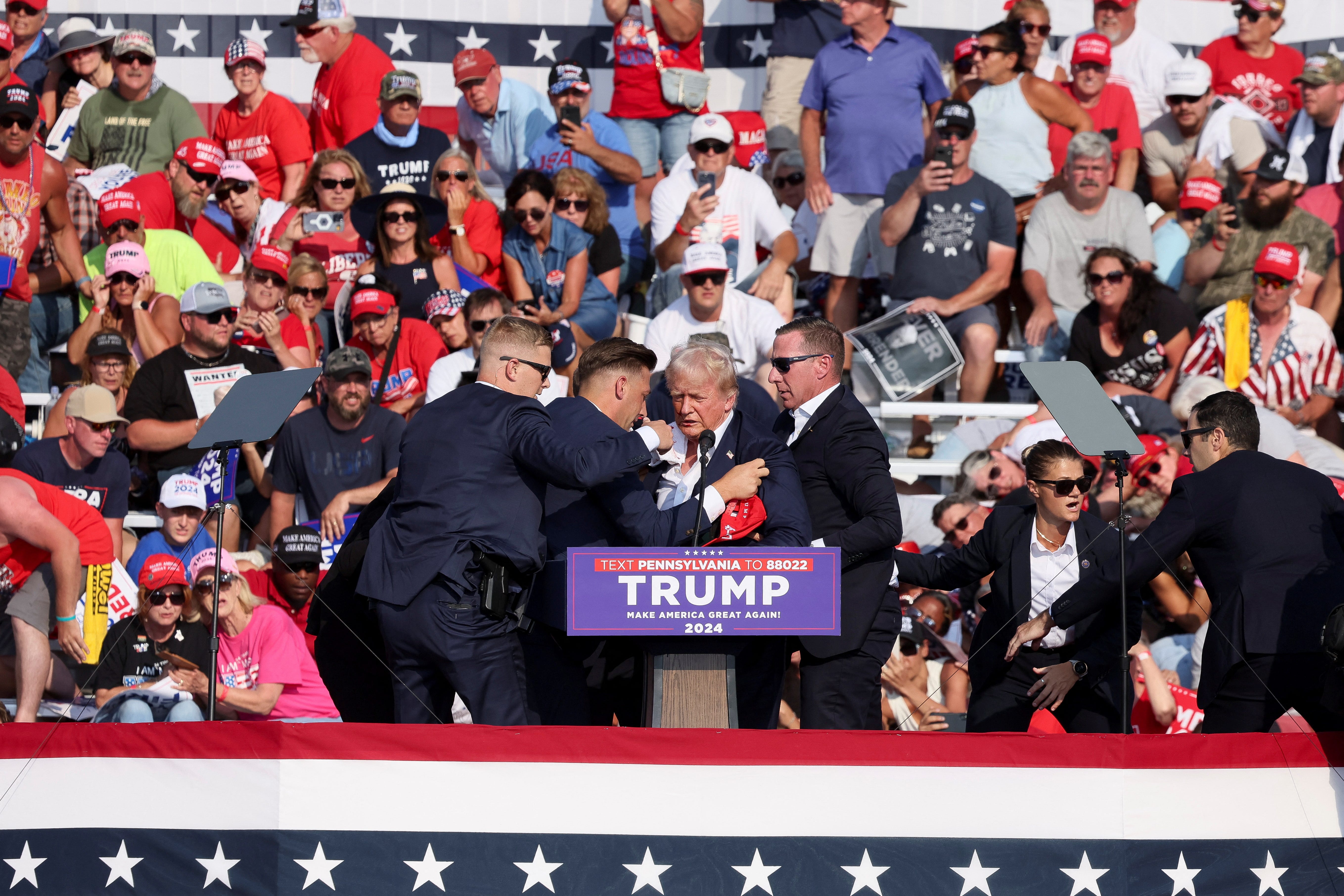

The recent assassination attempt on former President Donald Trump has sparked a flurry of conspiracy theories across social media platforms, highlighting the challenges of information dissemination in the digital age. This incident, which occurred on July 15, 2024, during a rally in Pennsylvania, has become a focal point for speculation, misinformation, and debate across the political spectrum[1][2].
The Immediate Aftermath
Within minutes of the news breaking about the assassination attempt, the word "staged" began trending on X (formerly Twitter) in the United States[1]. This rapid spread of skepticism is indicative of a broader trend in online discourse, where events of significant magnitude are often met with immediate doubt and conspiracy theories.
The frenzy that ensued gripped all sides of the political spectrum, demonstrating that conspiracy theories are not confined to any particular ideological group[2]. This widespread engagement with speculative content was further amplified by X's algorithm, which actively recommended these posts to users trying to make sense of the event[1].
Key Conspiracy Narratives
Several main conspiracy narratives emerged in the wake of the assassination attempt:
1. Staged Event Theory
One of the most prevalent theories suggested that the entire incident was staged. Proponents of this theory pointed to alleged inconsistencies in crowd behavior and questioned the authenticity of the reported gunshots[1]. A post claiming, "It looks very staged," garnered over a million views on X, despite being later labeled with a fact-check note[1].
2. False Flag Operation
Some conspiracy theorists proposed that the assassination attempt was a "false flag" operation, orchestrated to garner sympathy for Trump or to distract from other political issues. This narrative gained traction among both Trump supporters and critics, albeit for different reasons[2].
3. Government Involvement
More extreme theories suggested direct involvement from government officials. For instance, Congressman Mike Collins, a Republican from Georgia, posted that "Joe Biden sent the orders," referencing an out-of-context comment Biden had made earlier about putting "Trump in a bullseye"[1]. This post received over 6 million views on X before being labeled with a community note refuting the claim[1].
4. Misidentification of the Shooter
Before the FBI officially named the gunman as 20-year-old Thomas Matthew Crooks, false accusations about the shooter's identity spread rapidly. One notable case involved football commentator Marco Violi, who was falsely accused of being a member of Antifa and behind the attack[1].
5. Secret Service Conspiracy
Theories questioning the role of the Secret Service in preventing (or not preventing) the shooting circulated widely. Some posts suggested that the Secret Service was complicit in the attempt or had deliberately failed in their duties[2].
RELATED

Factors Fueling Conspiracy Theories
Several factors contributed to the rapid spread and acceptance of these conspiracy theories:
1. Social Media Algorithms
Platforms like X played a significant role in amplifying conspiracy theories. The site's algorithm recommended speculative posts to users, creating echo chambers that reinforced existing beliefs[1][2].
2. Distrust in Mainstream Media
A pervasive distrust in mainstream media outlets led many to seek alternative explanations for the events. This skepticism towards official narratives created fertile ground for conspiracy theories to take root[2].
3. Political Polarization
The highly polarized political climate in the United States contributed to the rapid adoption of conspiracy theories that aligned with individuals' existing political beliefs[2].
4. Real-Time Information Flow
The assassination attempt was the first to play out in real-time on social media, allowing for immediate speculation and the rapid spread of unverified information[1].
5. Visual Analysis and Misinterpretation
Many conspiracy theories stemmed from the analysis of images and videos from the rally. For example, a widely-circulated AP photograph showing Trump with blood on his face became a subject of intense speculation[1].
The Role of Social Media Platforms
Social media platforms, particularly X, faced criticism for their handling of the situation. The incident was seen as a test for Elon Musk's new Twitter, and many observers felt the site failed to adequately control the spread of misinformation[1].
Musk himself played a role in amplifying some conspiracy theories, further complicating the platform's position[5]. Other platforms like Facebook and YouTube also struggled to contain the spread of false information, with their content moderation policies coming under scrutiny[4][5].
The "Blueanon" Phenomenon
The incident highlighted the emergence of left-leaning conspiracy theories, sometimes referred to as "Blueanon"[2]. This term, mirroring the right-wing QAnon conspiracy, demonstrates that susceptibility to conspiracy thinking is not limited to any particular political ideology.
Debunking Efforts and Challenges
Fact-checkers and journalists worked to debunk false claims as they emerged. For instance, a widely-shared image purporting to show a bullet hole in Trump's suit jacket was proven to be a fold in a Secret Service agent's jacket[3]. Similarly, an edited photo showing Secret Service agents smiling after the shooting was exposed as a manipulation of the original image[3].
However, the speed at which conspiracy theories spread often outpaced fact-checking efforts, highlighting the challenges of combating misinformation in real-time.
Broader Implications
The proliferation of conspiracy theories surrounding Trump's assassination attempt raises several concerns:
1. Erosion of Trust in Institutions
The widespread skepticism towards official narratives and mainstream media reports could further erode public trust in institutions and the press.
2. Political Polarization
The incident has the potential to deepen political divisions, as different groups interpret the event through their own ideological lenses.
3. Information Literacy
The rapid spread of misinformation underscores the need for improved information literacy and critical thinking skills among the general public.
4. Platform Responsibility
The event highlights the ongoing debate about the responsibility of social media platforms in moderating content and preventing the spread of harmful misinformation.
5. Impact on Democratic Processes
As the 2024 presidential election approaches, the spread of conspiracy theories could have significant implications for the democratic process and public discourse.
Conclusion
The assassination attempt on Donald Trump and the subsequent flood of conspiracy theories represent a critical moment in the intersection of politics, media, and technology. It demonstrates the power of social media to shape narratives and influence public perception, often at the expense of factual information.
As society grapples with these challenges, there is an urgent need for improved media literacy, more effective content moderation strategies, and a renewed commitment to factual reporting. The incident serves as a stark reminder of the complexities of information dissemination in the digital age and the potential consequences of unchecked misinformation.
Moving forward, it will be crucial for all stakeholders - from tech companies and policymakers to educators and individual users - to work together in fostering a more discerning and responsible information ecosystem. Only through such collective efforts can we hope to navigate the complex landscape of truth and misinformation in our increasingly connected world.
SOURCE: Osint