

Ujasusi Blog Originals | Intelligence Explainers
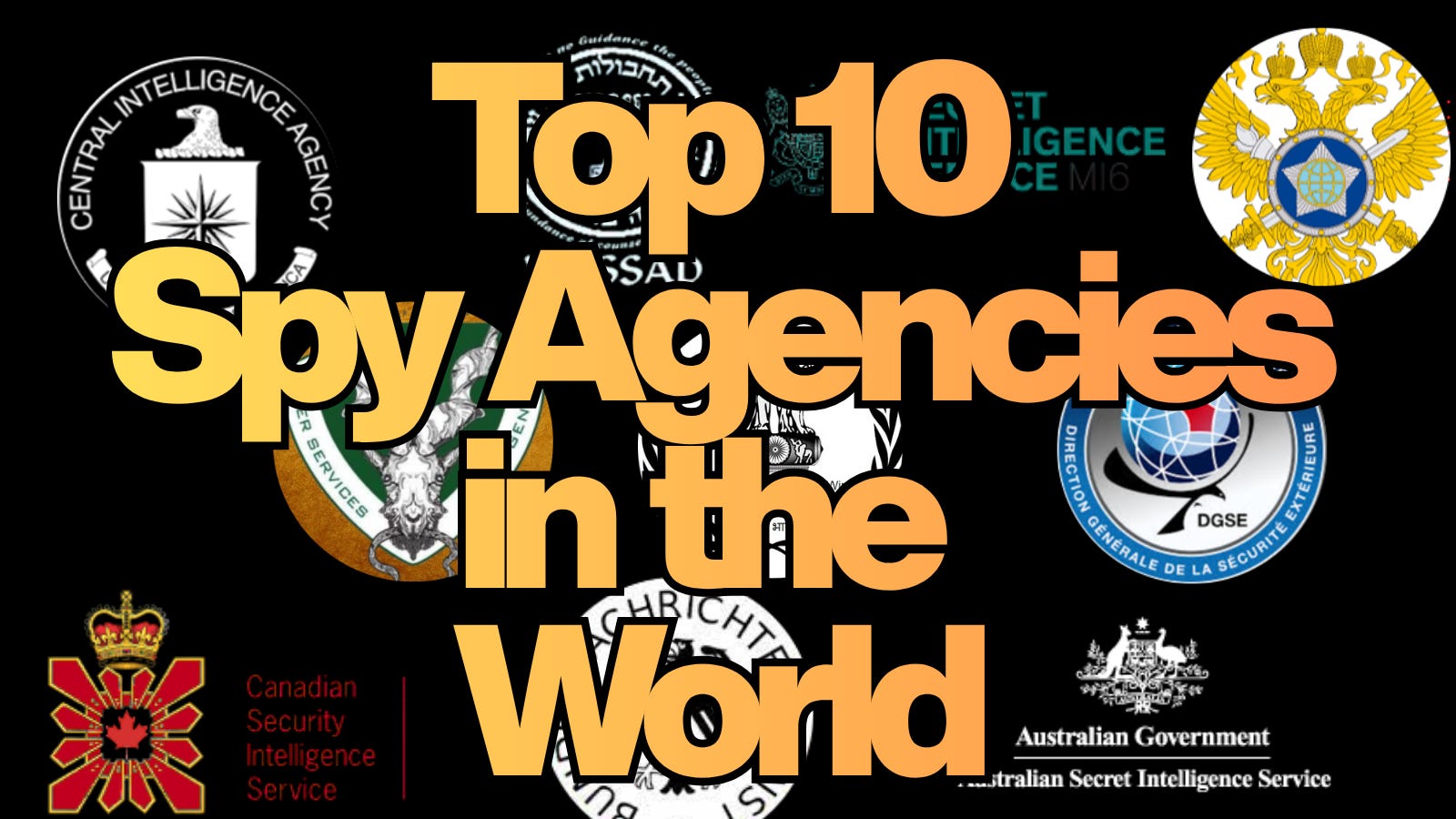
In the digital age, where listicles dominate search engine results and social media feeds, it’s no surprise that queries like “top 10 spy agencies in the world” yield millions of hits. From glossy infographics to speculative YouTube videos, these rankings often present intelligence services—such as the CIA, MI6, Mossad, or Russia’s SVR—as if they were competing sports teams, complete with scorecards and medals. Yet this popular exercise is not only misleading; it is fundamentally flawed. The very nature of intelligence work renders comparative rankings not just inaccurate, but potentially dangerous. This explainer analyses why the concept of a “top 10 spy agencies” list is a fallacy, explores the inherent opacity of intelligence operations, and examines how even the most vaunted agencies can—and do—fail catastrophically.
The Core Paradox: Secrecy vs. Measurement
At the heart of intelligence work lies secrecy. By definition, successful espionage operates in the shadows—undetected, unacknowledged, and often unverifiable. Unlike military strength, economic output, or technological innovation, intelligence capabilities cannot be objectively quantified using public metrics. There are no balance sheets for covert operations, no press releases for thwarted coups, and no verified statistics for human intelligence (HUMINT) networks operating deep within hostile territories.
This fundamental opacity makes any attempt to rank intelligence agencies inherently speculative. Rankings typically rely on proxies—historical reputation, geopolitical influence, budget size, or media portrayals—but these are poor substitutes for actual performance. For instance, the U.S. Central Intelligence Agency (CIA) boasts a multi-billion-dollar annual budget and global reach, but budget size does not equate to operational success. Similarly, Mossad’s legendary status stems from a handful of high-profile operations (e.g., the capture of Adolf Eichmann or the Entebbe raid), yet these are exceptions, not consistent indicators of day-to-day efficacy.
Moreover, intelligence success is often invisible. When an agency prevents a terrorist attack or uncovers a foreign plot, the public rarely learns of it—because revealing such successes could compromise sources, methods, or ongoing operations. Conversely, failures tend to dominate headlines precisely because they become public. This asymmetry skews perception: we remember 9/11, not the thousands of threats quietly neutralised.
The Illusion of Metrics: What “Success” Really Means
Some analysts attempt to measure intelligence effectiveness through indirect indicators: national security outcomes, diplomatic leverage, or technological surveillance capabilities. While these offer contextual clues, they conflate intelligence with broader state power. A nation’s ability to counter threats depends on a complex ecosystem—military readiness, cybersecurity infrastructure, political leadership, inter-agency coordination—not just its spy service.
Consider China’s Ministry of State Security (MSS). It operates with minimal public visibility yet has been linked to extensive cyber-espionage campaigns and influence operations worldwide. Does its low profile indicate weakness—or strategic discipline? Conversely, the UK’s Secret Intelligence Service (MI6) enjoys a glamorous reputation thanks in part to James Bond, but its real-world impact remains largely classified.
Even when agencies collaborate—as in the Five Eyes alliance (U.S., UK, Canada, Australia, New Zealand)—success is collective, not individual. Attributing outcomes to a single agency ignores the networked nature of modern intelligence.
When the “Best” Fail: Mossad, CIA, and the Limits of Reputation
If rankings were meaningful, one might expect the so-called “elite” agencies to be immune to catastrophic failure. History proves otherwise.
The CIA’s failure to prevent the September 11, 2001, terrorist attacks remains one of the most scrutinized intelligence breakdowns in modern history. Despite possessing fragmented warnings and intercepts, the agency—and the broader U.S. intelligence community—failed to connect the dots. The 9/11 Commission later cited systemic issues: bureaucratic silos, analytical blind spots, and a lack of imagination regarding the scale of the threat. Yet the CIA retained its reputation as a global leader in intelligence—a testament to branding over measurable performance.
More recently, on October 7, 2023, Israel’s vaunted Mossad and military intelligence (Aman) were caught off guard by Hamas’s coordinated assault on southern Israel. Despite Israel’s sophisticated surveillance infrastructure, signals intelligence (SIGINT) dominance, and dense network of informants in Gaza, the attack achieved near-total strategic surprise. The failure was not merely tactical; it was institutional. Post-crisis analyses pointed to overreliance on technology, underestimation of the adversary, and a dangerous complacency born of past successes.
These cases underscore a critical truth: no intelligence agency, regardless of budget, history, or prestige, is infallible. Reputation is a lagging indicator—and often a misleading one.
Can National Resilience Offer Clues?
While direct comparison is impossible, a nation’s ability to anticipate, deter, and respond to existential threats may offer indirect insights into its intelligence apparatus. Countries that consistently avoid strategic surprises, neutralize foreign interference, or maintain stable internal security might be said to possess effective intelligence ecosystems.
For example, Singapore’s Internal Security Department (ISD) has successfully thwarted multiple terrorist plots since the early 2000s, often through preemptive arrests based on intelligence sharing and community engagement. Similarly, Germany’s Federal Intelligence Service (BND) has played a key role in countering Russian hybrid warfare in Europe, though much of this work remains undisclosed.
However, even this approach has limits. National resilience depends on factors beyond intelligence: civil society trust, legal frameworks, economic stability, and political will. An effective spy agency in an authoritarian state may excel at domestic surveillance but falter in foreign intelligence due to ideological blinders or lack of international access.
Furthermore, the absence of visible threats does not prove intelligence success—it may simply reflect a benign threat environment. Conversely, a country under constant siege (e.g., Ukraine since 2014) may demonstrate remarkable intelligence agility not because its agencies are “better,” but because they operate in a high-stakes, high-feedback environment.
The SEO Trap: Why “Top 10” Lists Persist
Despite their flaws, “top spy agency” lists thrive online because they satisfy human curiosity and algorithmic preferences. They are easily digestible, shareable, and keyword-rich—perfect for SEO. Search engines reward content that answers common queries, and “best spy agencies” is a perennial favorite. But optimizing for clicks often comes at the cost of accuracy.
These lists frequently recycle the same agencies—CIA, MI6, Mossad, FSB, MSS—based on pop culture prominence rather than evidence. Rarely do they include lesser-known but potentially formidable services like India’s Research and Analysis Wing (RAW), Turkey’s MIT, or Iran’s Ministry of Intelligence, whose operations are equally opaque but no less consequential in their regions.
Worse, such rankings can fuel geopolitical misconceptions. Portraying one agency as “superior” may encourage adversaries to overinvest in countering it while underestimating others. In the world of espionage, perception is a weapon—and misinformation, even in the form of a benign listicle, can have strategic consequences.
Toward a More Nuanced Understanding
Rather than chasing rankings, analysts and the public should adopt a more sophisticated framework for evaluating intelligence:
Context over comparison: Assess agencies based on their specific mandates, operating environments, and historical constraints—not against an artificial global standard.
Process over prestige: Focus on institutional health—analytical rigor, source diversity, ethical oversight, and adaptability—rather than past glories.
Humility in assessment: Acknowledge that even experts operate in the dark. As former CIA Director George Tenet once noted, intelligence is “a mosaic with most of the pieces missing.”
Ultimately, the most effective intelligence agencies are those that recognise their own limitations, learn from failures, and resist the seduction of their own mythologies.
Embracing the Unknown
The quest to rank spy agencies reveals more about our desire for order in a chaotic world than about the agencies themselves. Intelligence, by its very essence, defies measurement. Its successes are silent; its failures echo loudly. In an era of disinformation and hybrid warfare, clinging to simplistic hierarchies distracts from the real challenge: building resilient, adaptive, and ethically grounded intelligence institutions capable of navigating uncertainty.
So the next time you encounter a “Top 10 Spy Agencies” list, remember: the most powerful spies are the ones you’ve never heard of—and the most effective operations are the ones that never made the news.
Please consider becoming a paid subscriber
You can also donate.