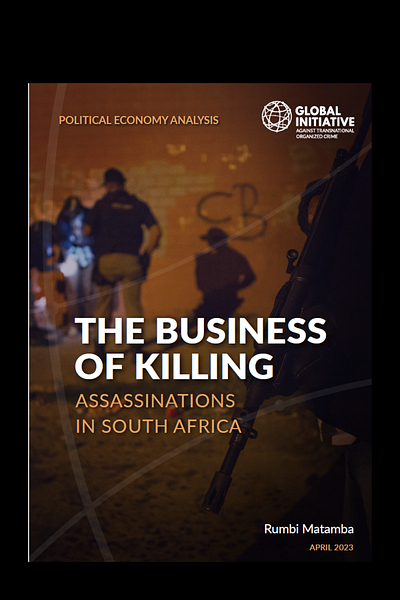
The document "Political Economy Analysis - The Business of Killing Assassinations in South Africa" by Rumbi Matamba, published by the Global Initiative Against Transnational Organized Crime, provides a comprehensive analysis of targeted killings in South Africa from 2021 to 2022. The report acknowledges the alarming frequency of assassinations in the country, recording 141 cases in 2022 alone, with a notable increase in politically motivated hits. The prominence of victims and the strategic nature of these killings have raised concerns about their impact on the state and democratic processes, particularly within the African National Congress (ANC). Additionally, the document highlights the commercialization of violence in South Africa, with assassinations becoming a monetizable commodity, particularly within the taxi industry and organized crime markets. The report also emphasizes the lack of dedicated state-level databases for targeted killings, underscoring the need for consistent data collection and analysis.
The document presents a breakdown of targeted killings by category, including taxi-related killings, organized crime-related killings, political assassinations, and personal assassinations. It notes the trends in these categories, such as a decrease in taxi-related killings by 19% and an increase in politically motivated hits by 33%. The report also delves into the methodology used for data collection, emphasizing the undercount of cases due to limited data sources and incomplete information from news articles. Furthermore, the document discusses the prevalence of violence in South Africa's political, economic, and social spheres, highlighting the impact of targeted killings on various sectors, including the taxi industry, organized crime, and political landscape.
Key findings in the report include the steady increase in politically motivated hits, the impact of violence on democratic processes, and the commercialization of violence within South Africa. The document also sheds light on specific cases of targeted killings and their implications for democratic institutions and civil society. Additionally, the report emphasizes the need for strategic and long-term interventions to address the underlying causes of targeted killings, including the proliferation of illegal firearms and the recruitment of hitmen.
In conclusion, the report provides a comprehensive analysis of targeted killings in South Africa, highlighting the increasing frequency of assassinations and their impact on democratic processes, organized crime, and the taxi industry. It emphasizes the need for consistent data collection, dedicated state-level databases, and strategic interventions to address the underlying drivers of targeted killings. The document also underscores the commercialization of violence and its profound impact on South African society.
DOWNLOAD