

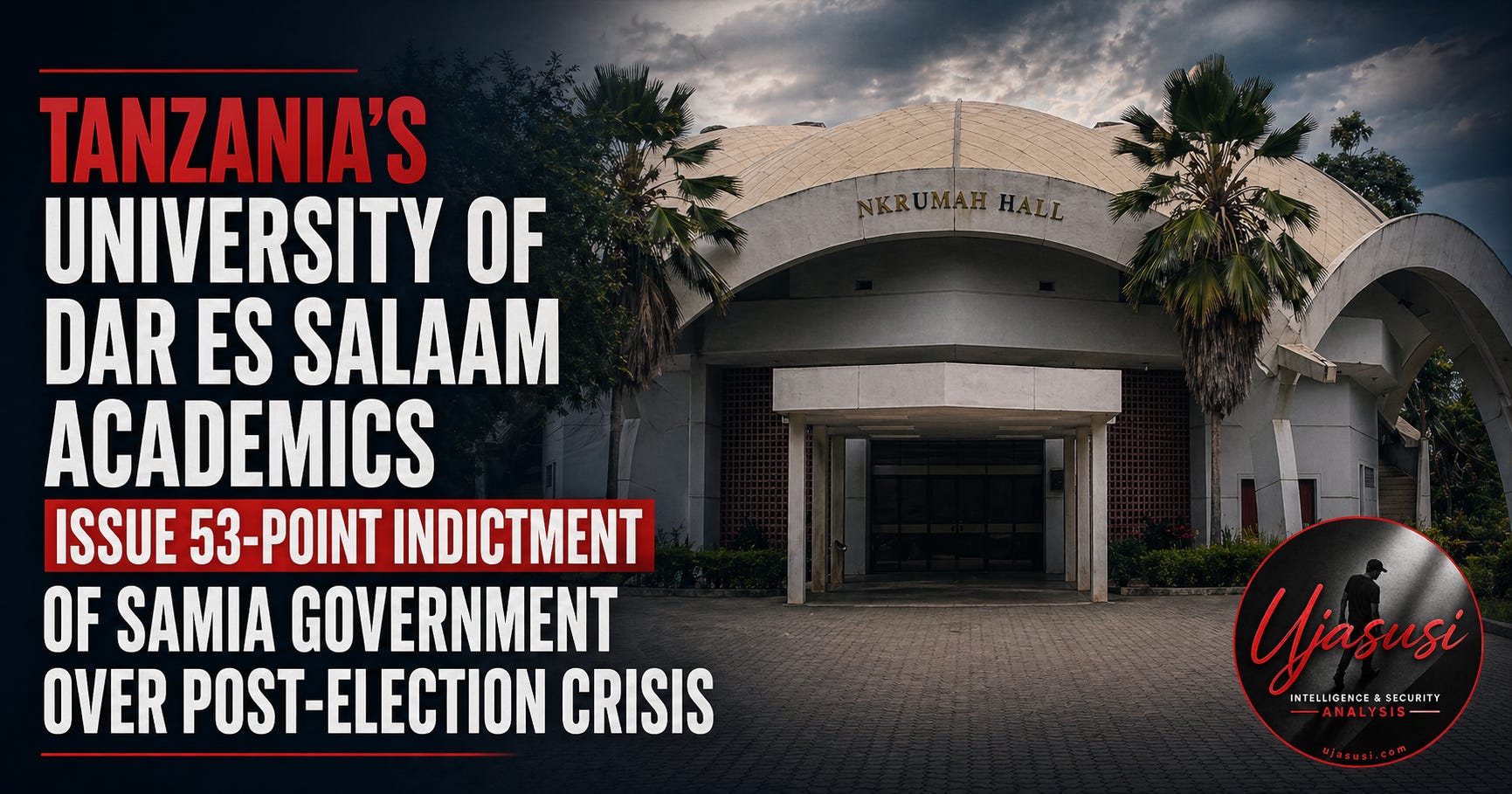
Ujasusi East Africa Monitoring Team | 29 April 2026 | 0400 BST
Tanzania’s University of Dar es Salaam Academic Staff Assembly (UDASA), through a 28 April 2026 statement signed by chairperson Professor Elgidius Bwinabona Ichumbaki, identified 53 governance failures it considers the structural drivers of the East African nation’s October 2025 post-election violence. Issued five days after the Chande Commission’s submission of its report to President Samia Suluhu Hassan, the document positions Tanzania’s oldest academic body as an institutional critic of the Sixth Phase Government’s accountability framework.
UDASA’s Statement Reframes the Diagnostic Boundary the Chande Commission Set
The UDASA statement, titled Jicho la UDASA Kwenye Wasilisho la Mwenyekiti wa Tume ya Rais ya Kuchunguza Matukio ya Uvunjifu wa Amani ya Oktoba 2025 (UDASA’s View on the Submission of the Presidential Commission Chairperson on the Events of Peace Disturbance of October 2025), accepts the Commission’s procedural legitimacy while expanding its diagnostic frame. Where retired Chief Justice Mohamed Chande Othman’s submission of 23 April 2026 framed causation as “incidents of breach of peace,” UDASA’s enumeration treats those events as the surface manifestation of fifty-three deeper institutional pathologies. The opening framing of the document is explicit: after reviewing Justice Chande’s presentation, UDASA “identified more than fifty issues that constitute citizens’ grievances, whether one, many, or none of them is the actual trigger” of the October 2025 violence.
The methodological choice matters. The Chande Commission, operating under the Commission of Inquiry Act, produced findings of fact about events. UDASA, operating under its university charter as a statutory academic assembly, has produced findings of structural causation. The two documents do not contradict each other. They occupy different analytical levels, and the academic body has filled the upstream space that the judicial body left vacant.
The 53 Points Cluster Around Six Institutional Failures
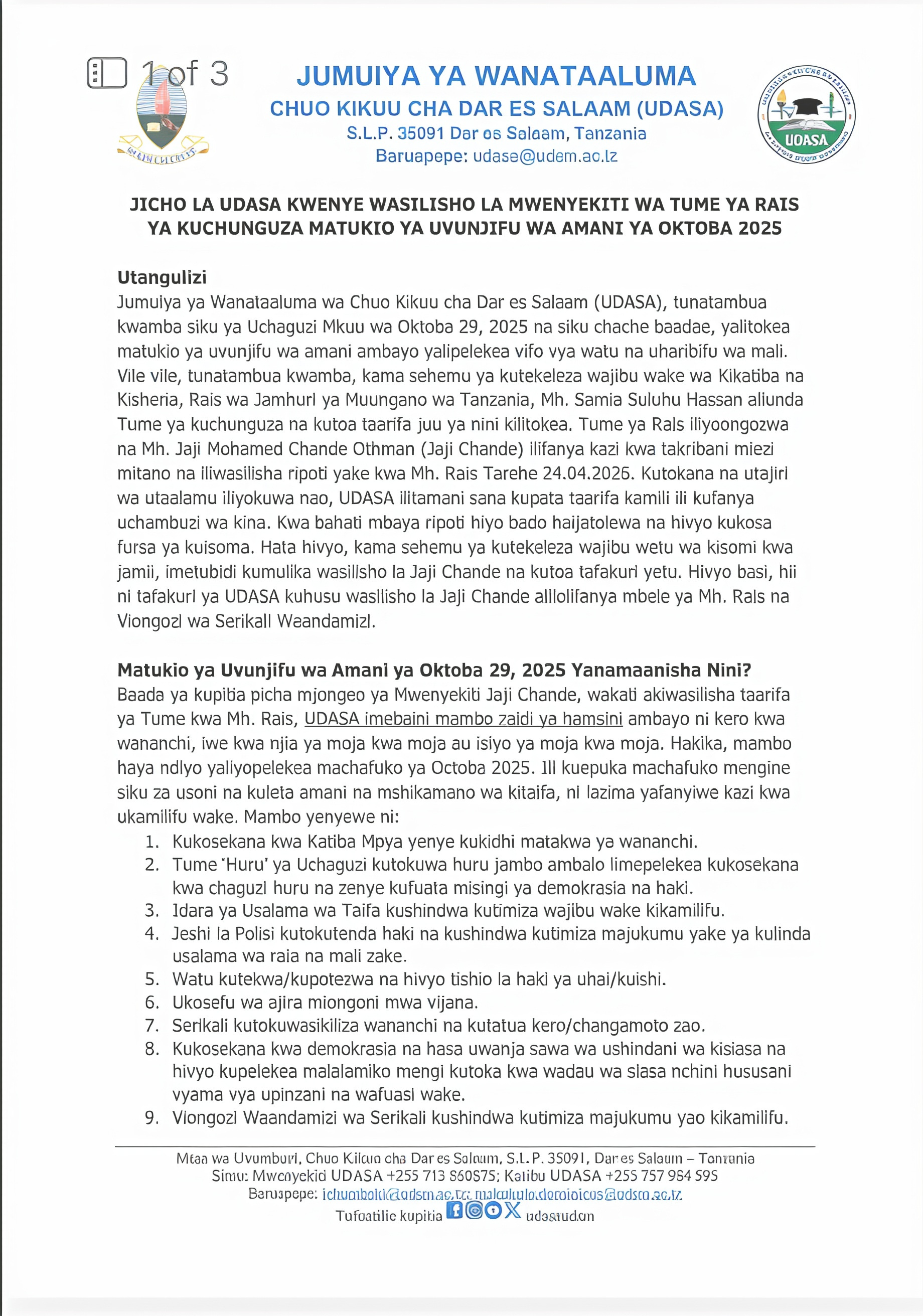
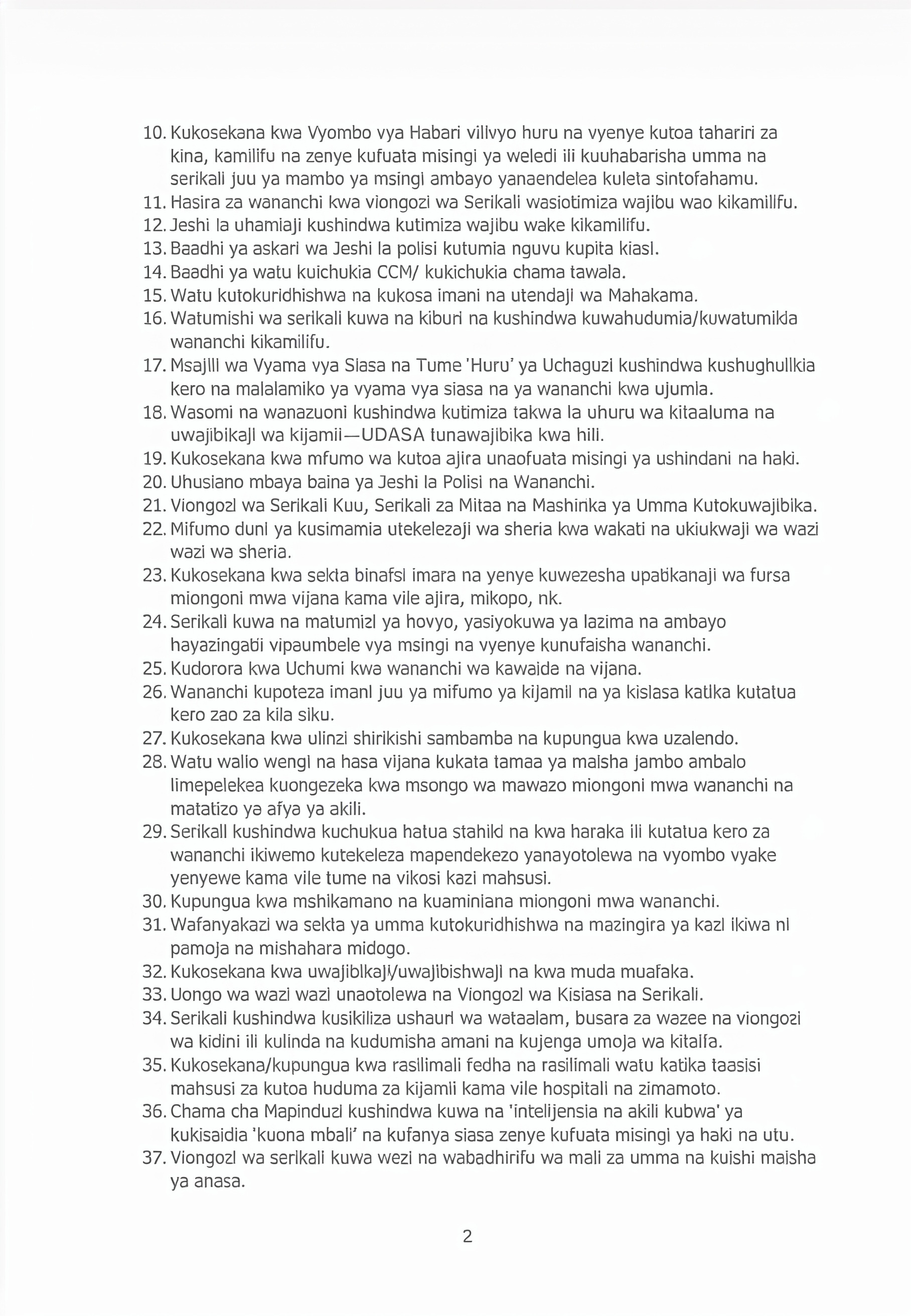
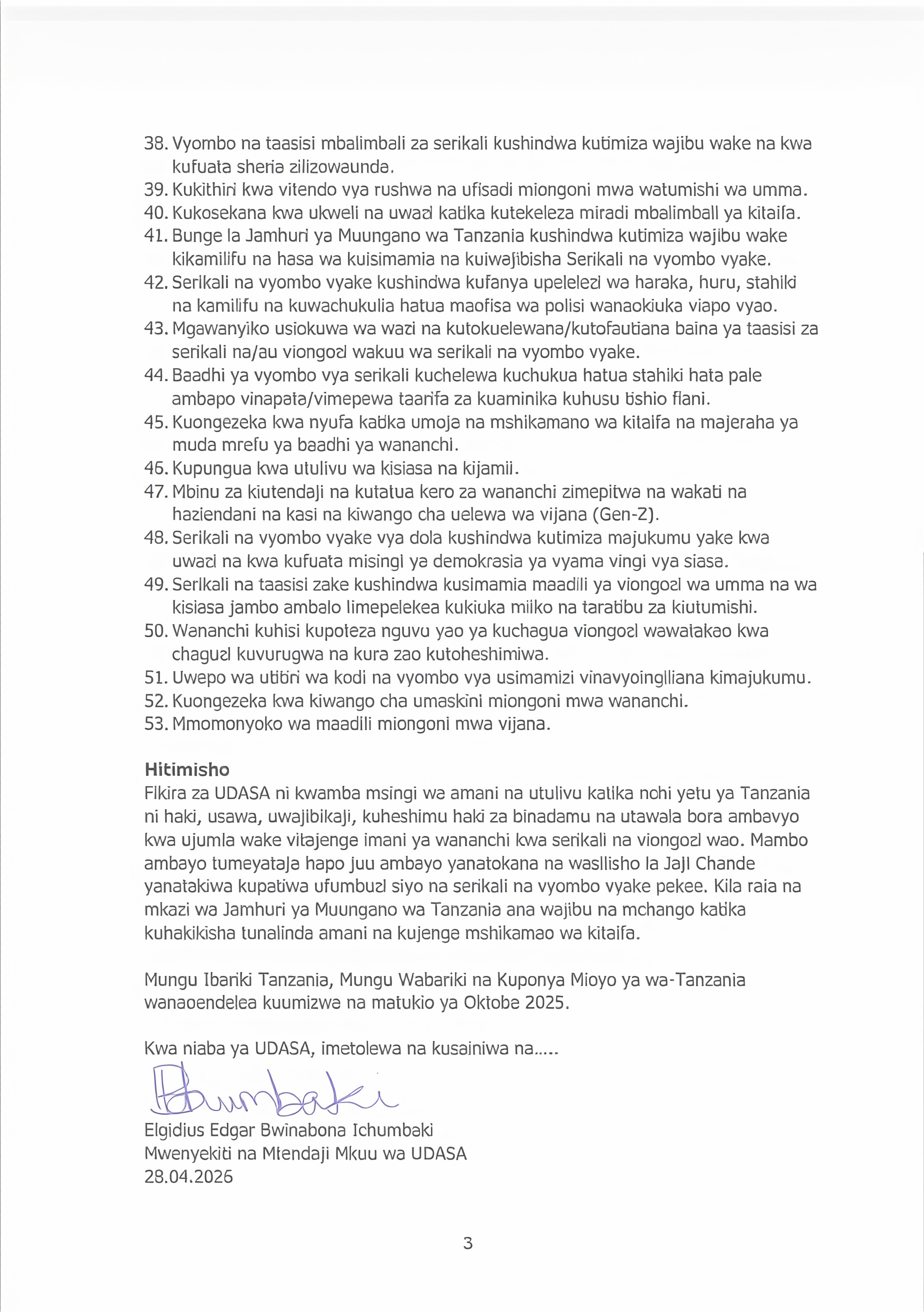
The fifty-three numbered grievances fall into six analytically distinct categories. The clustering is the analytical contribution of the document; the individual items, considered in isolation, repeat criticisms long aired by the Legal and Human Rights Centre and the Tanzania Human Rights Defenders Coalition. Considered together, they form a structural diagnosis of Tanzanian state failure.