

Ujasusi Blog’s East Africa Monitoring Team | 10 January 2026 | 1030 GMT
Table of Contents
Free Preview Section
Snapshot
What Strategic Objectives Does This Cabinet Reshuffle Serve?
Why Was Major General Mkeremy Appointed as Ambassador?
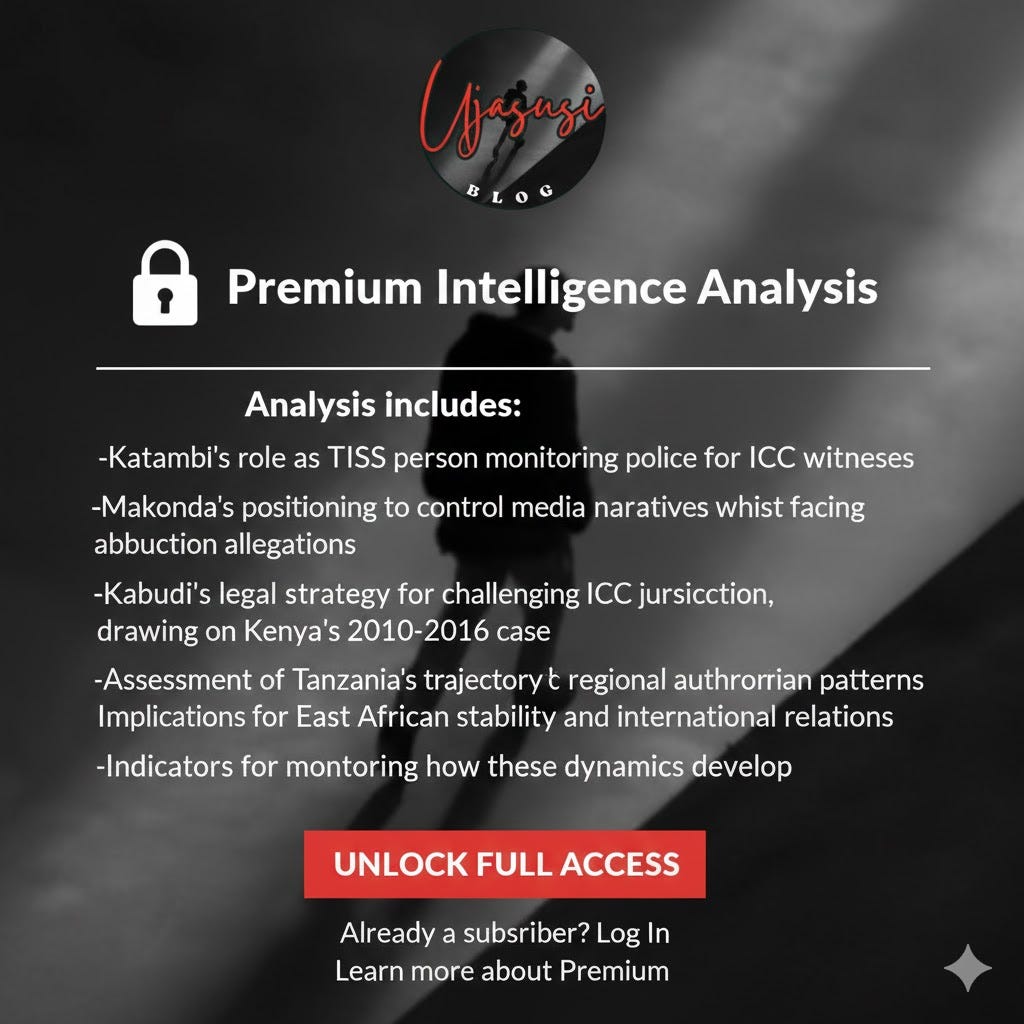
Premium Intelligence Analysis
Why Was Simbachawene Dismissed and Who Replaced Him?
Why Is Paul Makonda’s Elevation Particularly Concerning?
What Does Professor Kabudi’s Appointment Reveal About ICC Defence Strategy?
What Do These Appointments Signal?
Snapshot
President Samia Suluhu Hassan’s 8 January 2026 security cabinet reshuffle represents systematic consolidation of executive control over Tanzania’s security and intelligence apparatus. The dismissal of Home Affairs Minister George Simbachawene, removal of Defence Intelligence Chief Major General Mbaraka Naziad Mkeremy (granted diplomatic immunity for alleged October 29, 2025 massacre involvement), elevation of trusted aide Paul Makonda (accused of ongoing abduction operations), and installation of Tanzania Intelligence and Security Service (TISS) officer Patrobas Paschal Katambi demonstrates calculated authoritarian entrenchment whilst protecting perpetrators from International Criminal Court prosecution.
What Strategic Objectives Does This Cabinet Reshuffle Serve?
The 8 January 2026 personnel changes serve four primary strategic objectives:
Perpetrator Protection Through Diplomatic Immunity
Mkeremy shielding: Defence Intelligence Chief granted ambassadorial status provides Vienna Convention diplomatic immunity against ICC arrest warrants for alleged October 29, 2025 massacre involvement
Evidence compartmentalisation: Removal of senior security officials with direct knowledge of systematic violence from domestic jurisdiction
Witness neutralisation: Diplomatic postings prevent cooperation with international investigations
Impunity architecture: Signals protection for security personnel implementing violent suppression operations
Intelligence Apparatus Control Over Police Force
TISS officer installation: Patrobas Paschal Katambi’s appointment as Home Affairs Minister creates direct intelligence service oversight of police operations
October 29 fallout monitoring: TISS officer positioned to identify and neutralise potential police dissent regarding massacre participation
Whistleblower prevention: Monitoring police force for officers potentially cooperating with ICC preliminary examinations
Institutional integration: Intelligence-police fusion eliminates bureaucratic separation enabling unified political suppression
Trusted Loyalist Media Control
Inner circle placement: Paul Makonda, one of Samia’s closest and most trusted aides, granted ministerial authority over information sector
Narrative suppression: Loyalist control prevents independent journalism investigating post-election violence and ongoing abductions
Dual operational function: Makonda’s alleged involvement in abduction operations combined with media regulatory powers creates comprehensive control architecture
Investigative journalism elimination: Regulatory weaponisation targeting outlets documenting systematic human rights violations
Legal Defence Infrastructure for ICC Proceedings
Constitutional expertise positioning: Professor Palamagamba John Aidan Kabudi appointed to Ministry of Home Affairs (Kazi Maalum) provides legal architecture for ICC defence
Command responsibility mitigation: Legal expertise positioned to develop defences against crimes against humanity charges
Complementarity strategy: Kabudi coordinates domestic investigation façade to challenge ICC admissibility
Why Was Major General Mkeremy Appointed as Ambassador?
Presidential communications dated 8 January 2026 confirm Major General Mbaraka Naziad Mkeremy’s appointment as Ambassador (Balozi), effective 13 January 2026. This represents strategic protection of an alleged October 29, 2025 massacre perpetrator rather than bureaucratic neutralisation.
Political-Military Patronage Networks
Intelligence assessments reveal:
Kikwete connection: Mkeremy is the closest person to former President Jakaya Kikwete
Appointment origins: Kikwete orchestrated Mkeremy’s initial appointment as Defence Intelligence Chief during his presidency
Liability transformation: Kikwete connections became protective liability following October 2025 election violence requiring strategic shielding
October 29, 2025 Massacre Operational Role
Intelligence assessments indicate Mkeremy’s direct involvement:
Command responsibility: As Defence Intelligence Chief, Mkeremy held command authority over military intelligence operatives deployed in systematic political suppression
Operational coordination: Defence Intelligence provided targeting intelligence on opposition strongholds for security force deployment
Intelligence-led killings: Military intelligence collaboration with TISS and police Special Zone units in coordinated massacre operations
Mass casualty operations: Hundreds of deaths attributed to security forces operating under intelligence directives across Dar es Salaam, Mwanza, Zanzibar
ICC Exposure and Diplomatic Immunity Strategy
The ambassadorial posting serves as sophisticated protective mechanism:
Vienna Convention protection: Diplomatic agents enjoy immunity from criminal jurisdiction preventing ICC arrest warrant execution
Territorial refuge: Posting to non-ICC State Party (likely China, Russia, or sympathetic African state) eliminates arrest risk
Evidence gathering obstruction: Diplomatic immunity complicates witness testimony and evidence collection
Potential ICC Charges
Mkeremy faces exposure to multiple Article 7 crimes against humanity charges including murder, enforced disappearance, imprisonment, torture, and persecution under command responsibility doctrine.
Comparative Precedent
Mkeremy’s diplomatic protection parallels strategies employed for ICC-indicted officials. Sudan’s Omar al-Bashir successfully evaded arrest for 13 years using similar immunity exploitation before his 2019 removal via military coup.
Why Was Simbachawene Dismissed and Who Replaced Him?