

Ujasusi Blog’s East Africa Monitoring Team | 07 February 2026 | 0345 GMT
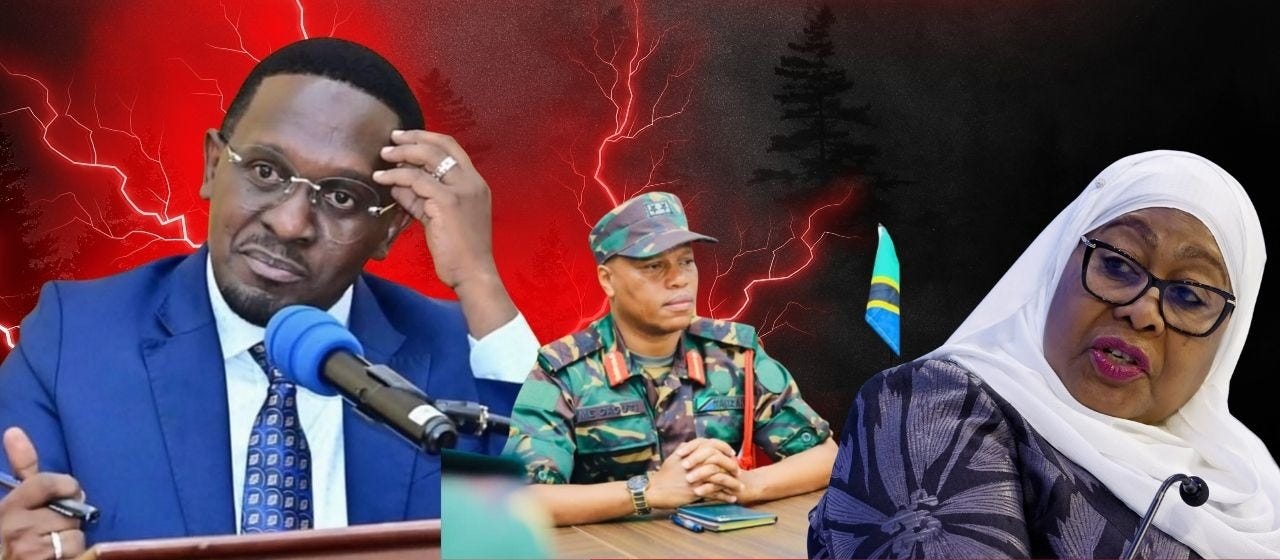
Tanzania’s President Samia Suluhu Hassan's reassignment of her most trusted personal secretary, Ambassador Wazir Rajabu Salum, to Permanent Secretary at the Ministry of Industry and Trade represents a calculated political distancing operation as Tanzania faces International Criminal Court scrutiny over post-election violence that killed approximately 10,000 people according to Intelwatch's ICC submission. Announced on 6 February 2026, the reshuffle also saw Major General Marco Elisha Gaguti, Tanzania People's Defence Forces Chief of Personnel, appointed as ambassador—the second senior TPDF officer removed within 30 days following Major General Mbaraka Naziad Mkeremy's appointment on 8 January 2026. Salum, who intelligence sources indicate refused a prior ambassadorial posting to China, occupies a unique position as both alleged architect of repressive policies and potential ICC witness with intimate knowledge of executive decision-making during the October 2025 election crisis.
What Does Wazir Rajabu Salum’s Removal Signify for Tanzania’s Power Structure?
The removal of Ambassador Wazir Rajabu Salum from Presidential Secretary to Permanent Secretary at the Ministry of Industry and Trade constitutes a strategic demotion announced on 6 February 2026 by Chief Secretary Dr Moses Kusiluka.
The Documented Context:
• China Posting Refusal: Intelligence sources indicate Salum was previously appointed ambassador to China but refused the diplomatic assignment, necessitating this alternative placement at the Ministry of Industry and Trade where he replaces Dr Hashil Twaib Abdallah
• Presidential Secretary Role: As Presidential Secretary, Salum served as President Hassan’s closest confidant with access to executive decision-making processes and inter-ministerial coordination
• Appointment Influence: Sources within the Tanzanian political establishment indicate Salum exercised influence over presidential appointments including ministerial selections and dismissals, though specific appointments cannot be verified from available documentation
• ICC Investigation Context: The reassignment occurs as 82-page ICC dossier submitted by Madrid Bar Association, World Jurists Association, and Intelwatch on 18 November 2025 accuses Hassan and senior officials of crimes against humanity. According to Intelwatch Executive Director Cristina Roque, approximately 10,000 people were killed over three days following election protests
Intelligence Significance: This personnel action creates institutional distance between the President and a figure possessing comprehensive knowledge of decision-making processes during the October 2025 post-election crisis whilst maintaining the appearance of routine administrative rotation.
Why Does Wazir Rajabu Salum’s Dual Status as Architect and Witness Create Strategic Vulnerabilities?
Salum’s positioning creates a complex threat matrix for the Hassan administration. He simultaneously represents both a liability (as alleged architect of policies during the election period) and a potential destabilising factor (as witness with intimate knowledge of executive operations).
Documented Operational Knowledge:
• Presidential Access: As Presidential Secretary, Salum’s position granted access to executive decision-making processes during the election period when, according to the ICC dossier, killings were “carried out pursuant to orders from the highest levels of government, including President Hassan’s explicit authorisation to ‘take all actions and involve all security agencies’”
• Witness Potential Under ICC Framework: The ICC’s Rome Statute allows Hassan and senior officers to be charged under the principle of “command responsibility” of superior officers for actions of forces under their direct control. Salum’s potential testimony could establish executive knowledge and authorisation chains
• Evidentiary Context: According to Intelwatch’s submission, evidence includes “morgue documentation, hospital records, and thousands of videos showing execution-style killings, with one morgue alone reportedly containing 800 bodies.” The submission claims operations were “potentially directed by the president’s son, who allegedly heads Tanzania’s intelligence services”
How Does Concurrent Removal of Senior Military Officers Signal Institutional Restructuring?
The appointment of Major General Marco Elisha Gaguti as ambassador represents the second senior TPDF officer removed through diplomatic assignment within 30 days, following Major General Mbaraka Naziad Mkeremy’s appointment on 9 January 2026.
Documented Military Removals:
Officer Previous Position Appointment Date New Position Source Maj Gen Mbaraka Naziad Mkeremy Head of Defence Intelligence (TPDF) 9 January 2026 Ambassador (destination unannounced) The Chanzo Maj Gen Marco Elisha Gaguti Chief of Personnel (TPDF) 6 February 2026 Ambassador (destination unannounced) The Citizen
Documented Background:
• Mkeremy’s Career: Major General Mkeremy previously served as Aide-de-Camp (ADC) to both former President Jakaya Kikwete and late President John Pombe Magufuli before being promoted to Brigadier General in April 2018 and subsequently appointed Head of Defence Intelligence
• Gaguti’s Background: Major General Gaguti was promoted from Colonel to Brigadier General in April 2018 under President Magufuli’s administration and later advanced to Major General before serving as TPDF Chief of Personnel
• Pattern Analysis: The consecutive removal of two senior TPDF officers—one responsible for military intelligence operations and another for personnel deployments—within 30 days represents significant military leadership restructuring during the ICC investigation period
What Cabinet Vulnerabilities Does Salum’s Departure Create?
Your request notes that Salum “was behind many presidential appointments including ministerial, as well as the sackings” and that “his departure could prompt another cabinet reshuffle which could see those he influenced their appointments gone.”
Documented Changes:
• Regional Commissioners: The 6 February 2026 announcement included appointments of new regional commissioners alongside Salum’s reassignment, suggesting broader administrative restructuring
• Previous Cabinet Reshuffles: President Hassan conducted a cabinet reshuffle on 8 January 2026, including:
Removal of Home Affairs Minister Boniface George Simbachawene (appointment revoked)
Appointment of Patrobas Katambi as new Home Affairs Minister
Promotion of Paul Makonda to Minister for Information, Culture, Arts and Sports
• Simbachawene’s Reform Agenda: The Chanzo reports Simbachawene “had become the face of reconciliation drive” and “spoken frequently about the need to reform the Tanzania Police Force and restore public trust in security organs.” His removal on 8 January raised questions about the administration’s commitment to reform
Potential Cascading Effects:
While specific ministers influenced by Salum cannot be verified from available sources, the pattern of consecutive reshuffles (8 January 2026 and 6 February 2026) suggests ongoing administrative restructuring that could continue as the administration responds to ICC investigation pressure.
How Does China Ambassadorship Refusal Illuminate Salum’s Strategic Calculus?
Intelligence sources indicate Salum refused the Chinese ambassadorship before accepting the Permanent Secretary position. This refusal reveals sophisticated risk assessment balancing several factors.
Strategic Considerations:
• ICC Jurisdiction: China, as non-ICC member state, would provide jurisdictional sanctuary from potential arrest warrants. The refusal suggests either confidence that ICC prosecution risk remains manageable or that other considerations outweigh geographic safety
• Domestic Positioning: Accepting a Chinese posting would remove Salum from Tanzanian political discourse during the critical ICC investigation period and eliminate ability to influence the administration’s response to international pressure
• Alternative Explanation: The refusal may simply reflect personal or professional preferences unrelated to ICC considerations, though the timing during ICC investigation makes strategic calculation more probable
What Does This Personnel Architecture Reveal About Hassan’s Response to ICC Investigation?
The coordinated removal of Salum and two senior military officers suggests Hassan implementing a defensive strategy as the ICC investigation develops.
Documented ICC Investigation Status:
• Submission Details: The 82-page dossier submitted on 18 November 2025 details accusations of state-sponsored murder, torture, enforced disappearances, sexual violence, and mass displacement of civilians
• Death Toll Documentation: According to Intelwatch Executive Director Cristina Roque, approximately 10,000 people were killed over three days following election protests. The ICC dossier also notes varying estimates from other sources including 10 deaths confirmed by United Nations, at least 500 according to diplomatic sources, and more than 1,000 according to opposition parties
• Command Responsibility Allegations: The dossier invokes Rome Statute’s command responsibility doctrine, stating killings were “carried out pursuant to orders from the highest levels of government, including President Hassan’s explicit authorisation to ‘take all actions and involve all security agencies’”
• Use of Force Documentation: According to Intelwatch, “security forces used live ammunition rather than standard crowd control measures, with evidence of targeted executions including sniper attacks from significant distances”
Hassan Administration’s Response:
• National Commission: President Hassan announced a national commission to investigate the violence and “exact number of victims,” whilst claiming young protesters “were paid to do so”
• ICC Withdrawal Consideration: Tanzania is considering withdrawing from the Rome Statute of the International Criminal Court, with debate strengthening after ICC submission
• Personnel Changes: The removal of key figures (Salum, Mkeremy, Gaguti) who possessed operational knowledge of the election period creates distance between the presidency and potential witnesses
What Regional Security Implications Emerge From These Personnel Decisions?
The personnel restructuring occurs within broader East African security context characterised by cross-border security cooperation and regional authoritarian consolidation.
Documented Regional Cooperation:
• Uganda-Tanzania Security Ties: Major General Gaguti previously led a Tanzanian military delegation to meet Uganda’s Chief of Defence Forces Gen Muhoozi Kainerugaba in June 2024, with “discussions centered on strengthening the historical alliance between Uganda and Tanzania”
• Ugandan Involvement Allegations: The New Humanitarian reports “numerous reports suggest that plainclothed Ugandan security forces took part in some of the civilian shootings,” with witnesses stating: “Some of these mercenaries were pinned down by protesters. And when they were pinned down, they could not speak Swahili”
• Defence Cooperation Framework: Tanzania and Uganda “recently concluded a framework for Defence and security cooperation to cement their military ties” and “agreed to operationalise the intergovernmental security committee for the East African Crude Oil Pipeline project”
Regional Accountability Context:
• ICC Withdrawal Movement: Tanzania’s consideration of ICC withdrawal aligns with Mali, Burkina Faso, and Niger’s creation of the Sahel International Court in September 2025 to “deal with war crimes, terrorism, and serious human rights violations in their region”
• Regional Observer Missions: While African Union and SADC election observer missions issued statements noting the elections “did not meet democratic standards,” these were “undercut by a blandly uncritical East African Community report”
What Are the Documented Opposition Actions and Government Response?
Opposition Leadership Status:
• Tundu Lissu: The Chadema presidential candidate was arrested in April 2025 on treason charges for calling for an election boycott after Hassan failed to follow through on electoral reform promises. He was subsequently disqualified by the electoral commission
• Luhaga Mpina: The ACT-Wazalendo presidential candidate was also disqualified by the electoral commission
• Post-Election Releases: The New Humanitarian reports that “a day later [after Vice President’s dialogue statement], senior Chadema figures were released from detention” on 10 November 2025
• Pre-Election Targeted Killings: The ICC dossier documents assassination of Ally Kibao, senior Chadema strategist, who “was abducted from a bus in Dar es Salaam on 6 September 2024. His body was discovered the following day in a forest near the Indian Ocean, his face burned with acid”
Government Communications Blackout:
• Internet Shutdown: An internet blackout ran from 29 October to 4 November 2025, which the ICC dossier cites as facilitating crimes against humanity by preventing real-time documentation and creating “an information vacuum within which security forces could commit mass atrocities without contemporaneous documentation”
• Medical Professional Threats: According to Intelwatch, “medical professionals were reportedly threatened with death if they released casualty information”
Strategic Assessment of Salum Removal
Ambassador Wazir Rajabu Salum’s removal from Presidential Secretary to Permanent Secretary at Ministry of Industry and Trade represents calculated political manoeuvre as President Hassan faces ICC investigation into post-election violence that killed approximately 10,000 people according to Intelwatch’s submission. The coordinated removal of Salum and senior military officers (Mkeremy, Gaguti) within 30 days creates institutional distance between the presidency and figures possessing operational knowledge of the October 2025 election period.
Documented Facts:
• Personnel Changes: Salum refused Chinese ambassadorship before accepting demotion to Permanent Secretary; two senior TPDF officers appointed to ambassadorial positions within 30 days
• ICC Investigation: 82-page dossier submitted 18 November 2025 invokes command responsibility doctrine against Hassan and senior officials for crimes against humanity including murder, torture, enforced disappearances, and sexual violence
• Death Toll: Approximately 10,000 people killed according to Intelwatch’s ICC submission based on morgue documentation, hospital records, and witness testimony
• Operational Context: ICC dossier alleges killings “carried out pursuant to orders from the highest levels of government, including President Hassan’s explicit authorisation to ‘take all actions and involve all security agencies’”
Intelligence Assessment Limitations:
Available open-source reporting does not provide sufficient detail to assess:
• Specific ministerial appointments influenced by Salum
• Salum’s precise role in authorising security operations during election period
• Whether Salum intends to cooperate with ICC investigators
• Which additional cabinet members face removal in potential future reshuffles
Monitoring Indicators:
• Cabinet Stability: Further reshuffles within 90 days would confirm systematic administrative restructuring
• ICC Proceedings: ICC Prosecutor’s decision on preliminary examination will determine investigation trajectory
• International Pressure: Western donor responses and potential sanctions will influence Hassan administration’s cooperation level
• Regional Positioning: Tanzania’s formal decision on Rome Statute membership will signal broader accountability approach
The Salum removal ultimately represents Hassan administration’s calculation that creating distance from key figures with operational knowledge provides better legal positioning than maintaining administrative continuity. The success of this strategy depends on whether ICC Prosecutor pursues preliminary examination with sufficient vigour to overcome Tanzania’s evident non-cooperation, and whether international pressure proves sufficient to compel meaningful accountability mechanisms.
Primary Sources: • The Citizen - Samia transfers personal secretary • EWN - ICC investigation request • The Chanzo - Mkeremy ambassadorial appointment • AllAfrica - ICC case submission • Daily Maverick - ICC crimes against humanity • The New Humanitarian - Election killings investigation • African Arguments - Is CCM losing Tanzania