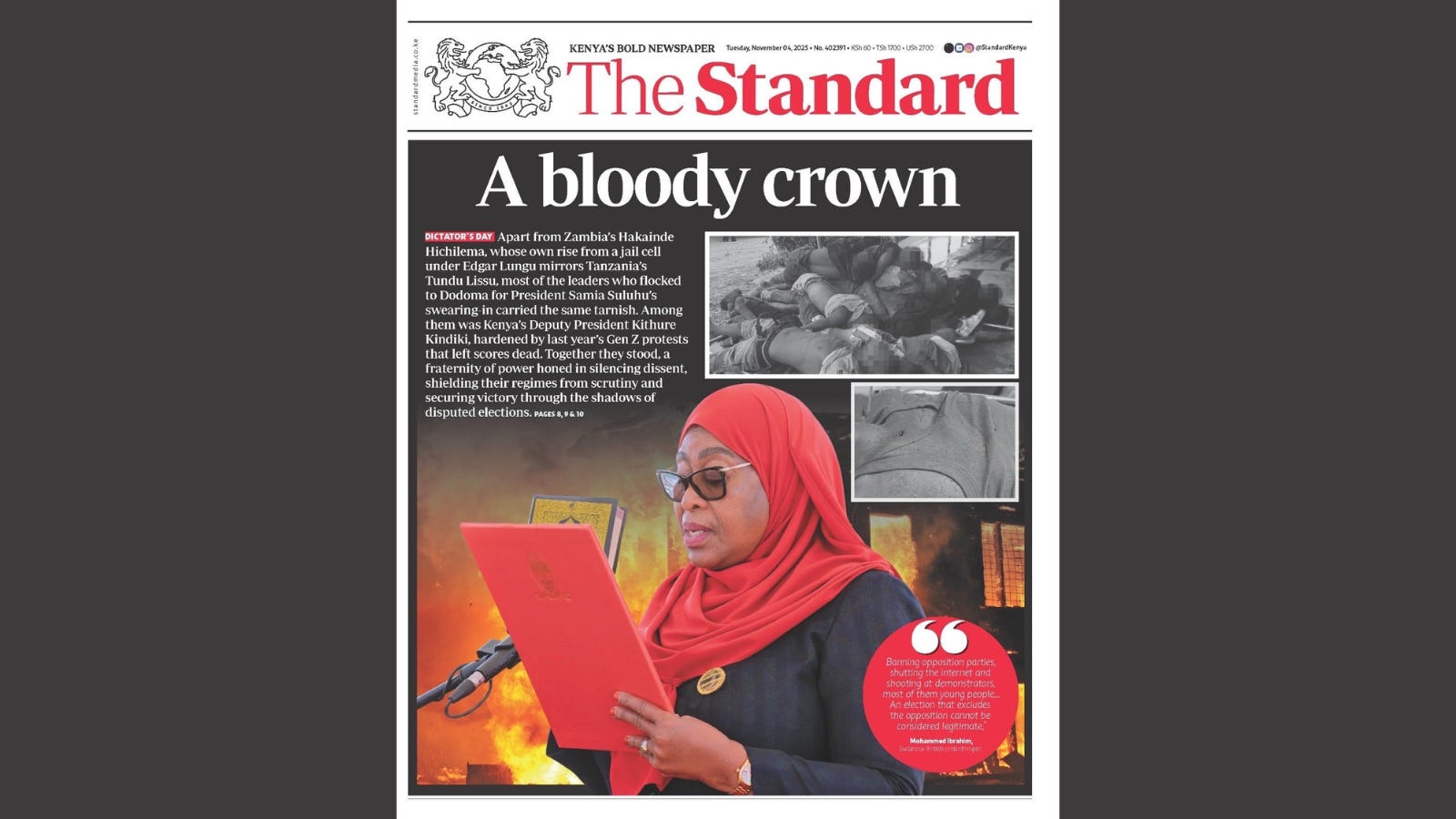
Tanzania Dec 9 Protests After-Action Review: Security Siege, Citizen Demobilisation, and Regime Collapse Pathways

đ¨ What Happened
Tanzaniaâs December 9, 2025 citizen-led protests proceeded under massive security lockdown that forced the Hassan regime to deploy thousands of police and soldiers at significant financial cost. The demonstrations, called to coincide with Independence Day, produced paradoxical outcomes that some observers interpreted as tactical victories despite limited physical turnout.
Security forces blanketed Dar es Salaam, Dodoma, Arusha, and Mbeya in what some Tanzanians characterised as âsoldiers and police protesting on behalf of citizensâ through massive visible deployment across deserted streets. The regimeâs defensive posture demonstrated the threat level posed by the spontaneous citizen movement that emerged October 29, 2025.
President Samia Suluhu Hassanâs government cancelled official Independence Day celebrations whilst shutting down public transport and ordering non-essential workers home. The lockdown imposed substantial economic costs including transport paralysis, business closures, and security apparatus mobilisation expenses that strained government resources.
Physical turnout remained âscattered and smallâ especially outside Mwanza, according to Journal of Democracy analysis. The regimeâs response nevertheless revealed its vulnerability to citizen mobilisation and willingness to deploy extraordinary resources preventing demonstrations.
đŻ Why It Happened
The subdued December 9 outcome resulted from multiple converging factors including fear from Octoberâs mass killings, strategic planning gaps, systematic state countermeasures, and alleged intelligence service penetration of organising networks.
Fear from October Massacre: The primary deterrent was demonstrated state lethality. October 29-November 3 crackdown killed an estimated 700-10,000 civilians according to various sources. Diplomatic estimates suggest 1,000 deaths whilst civil society organisations including Jumuiya ni Yetu cite evidence suggesting 5,000-10,000 killed based on hospital records and morgue documentation. OSINT analysis indicates death toll could reach 10,000.
Bodies reportedly disappeared from morgues, were incinerated, or buried in mass graves during the five-day internet blackout. Government sources provided AFP with coordinates for two suspected mass grave sites near Dar es Salaam at Kondo and Mabwepande. The Hassan regime proved willing to deploy lethal force at unprecedented scale. This calculus fundamentally altered risk assessment for potential protesters weighing participation against family survival.
Strategic Planning Failures: The citizen movement lacked tactical depth for December 9. No contingency plan existed for massive police and military presence scenario. Octoberâs spontaneous uprising succeeded through surprise and momentum. December 9 organisers faced known heavy security deployment without alternative strategies.
Protest objectives remained vague and overambitious. Discussions centred on marching to either State House or UN offices in Dar es Salaam. Disagreements over tactical targets generated accusations and counteraccusations amongst organisers. No clear theory articulated how merely reaching these locations would force Hassan to relinquish power.
The ambitious plans possibly reflected anger over losing thousands during October protests rather than sober strategic assessment. Organisers aimed for regime change without operational framework for achieving it through single demonstration.
Critical Organiser Removal: Mange Kimambiâs Instagram account deactivation dealt severe blow to protest coordination. Kimambi served as primary strategic architect behind October 29 demonstrations. Her removal eliminated crucial organisational capacity during November-December preparation period when movement required sustained coordination.
Coordination Network Disruption: According to reports from activist networks, Tanzania Intelligence and Security Service (TISS) heavily penetrated TikTok-based protest coordination channels. Internal disagreements over tactical objectives fractured the unity observed during October preparations.
A TikTok figure identifying as âHabil and Kabilâ emerged promising extraordinary capabilities including hacking skills. The figure built substantial following amongst protesters but ultimately did not deliver on stated promises during December 9 preparations. The role this figure played in coordination dynamics remains subject to ongoing discussion within activist networks.
Regime Psychological Operations: The Hassan government conducted sustained propaganda campaign portraying protesters as harming businesses and disrupting daily life. This strategy aimed to turn ordinary citizens against the movement by emphasising economic costs rather than addressing political grievances over stolen elections and mass killings.
State media amplified narratives blaming protesters for Octoberâs transport paralysis, supply chain disruptions, and business losses. The regime sought to pit citizens against demonstrators by framing protests as selfish acts damaging collective welfare.
Pre-emptive Mass Arrests: Tanzanian police detained dozens throughout November including Kibaba Furaha Michael, Clemence Mwandambo, and Winfrida Charles Malembeka on charges of âinciting violenceâ through WhatsApp and social media posts. At least 10 activists were arrested specifically for December 9 organising activities.
Hassan personally warned in December 2, 2025 speech to elders stating âwhenever they come, we are preparedâ. Tanzania Communications Regulatory Authority sent mass SMS alerts threatening legal consequences for participation.
đĽ Who Was Involved
Citizen Movement Coordinators:
Mange Kimambi, Instagram-based coordinator, primary October 29 strategic architect (account deactivated pre-December 9)
âHabil and Kabilâ, TikTok figure with substantial following, promised capabilities that did not materialise
Decentralised network of youth activists coordinating via TikTok, WhatsApp, Instagram
Gen Z protesters demanding Hassanâs resignation under #WenyeNchiWananchi banner
Hospital workers, teachers, informal sector workers arrested pre-December 9
Opposition Political Figures (Largely Sidelined from Citizen Movement):
Tundu Lissu, Chadema chairman, imprisoned on treason charges since April 2025
John Heche, Chadema vice chairman, arrested October 22, 2025, released November 11
Luhaga Mpina, ACT-Wazalendo candidate, disqualified September 2025
Government Leadership and Inner Circle:
President Samia Suluhu Hassan, Commander-in-Chief, now Tanzaniaâs most unpopular president viewed as murderer of own citizens
Vice President Emmanuel Nchimbi, Catholic, recently accused by Muslim clerics of working with Catholic Church to remove Muslim president Hassan
Abdul Halim Hafidh Ameir, Hassanâs son, reportedly de-facto TISS chief operating âprivate militiaâ involved in pre-election abductions
Suleiman Abubakar Mombo, Director-General Intelligence and Security Service (DGIS)
General Jacob Mkunda, Chief of Defence Forces (CDF)
Camillus Wambura, Inspector-General Police (IGP)
Waziri Salum, Hassanâs private secretary, member of inner cabal
Angela Kizigha, East African Parliament member, member of inner cabal
Haji Omar Kheir, Hassanâs advisor frequently mentioned in connection to brutality and repression
Faustine Mafwele, senior police officer
Jumanne Muliro, senior police officer
Tanzania Communications Regulatory Authority (TCRA), digital censorship coordination
VP Nchimbi Associates (Targeted):
Geofrey Mwambe, Nchimbi associate, reported arrested this week (December 2025)
International Actors:
International Criminal Court received 82-page dossier November 13, 2025 naming Hassan personally
United States State Department initiated âcomprehensive reviewâ of bilateral relations
European Parliament passed resolution November 26, 2025 calling for targeted sanctions
Thabo Mbeki Foundation declared Tanzania âlacks legitimate governmentâ November 23, 2025
đ
Timeline
October 29, 2025: General election held. Hassan declared winner with 98% vote. Spontaneous citizen protests erupt Dar es Salaam neighbourhoods including Ubungo and Kariakoo. Mange Kimambiâs Instagram coordination proves decisive. Security forces deploy live ammunition against unarmed civilians.
October 29-November 3: Five-day internet shutdown imposed nationwide preventing documentation. Death toll estimates range 700-10,000. Bodies systematically removed from morgues. Opposition Chadema claims 2,000 deaths. Civil society sources suggest 5,000-10,000 killed based on hospital records. OSINT analysis indicates 10,000 possible. Government sources tell AFP of suspected mass graves at Kondo and Mabwepande near Dar es Salaam.
November (ongoing): According to activist reports, TISS penetrates TikTok coordination networks. âHabil and Kabilâ emerges with promises of capabilities but does not deliver during December 9 preparations. Mange Kimambiâs Instagram account deactivated removing primary coordinator. Disagreements emerge over protest targets (State House vs UN offices) creating internal divisions and accusations. Sectarian tensions emerge as Muslim clerics believed working with Hassan accuse Catholic VP Emmanuel Nchimbi of working with Catholic Church to remove Muslim president.
November 12-30: Security forces conduct pre-emptive arrests targeting alleged December 9 organisers. At least 10 activists detained for WhatsApp and social media posts. Kibaba Furaha Michael (hospital worker), Clemence Mwandambo (teacher), Winfrida Charles Malembeka arrested on âincitementâ charges.
November 13: 82-page ICC dossier filed by Madrid Bar Association, World Jurists Association, and Intelwatch naming Hassan personally for crimes against humanity including murder, extermination, torture, enforced disappearance, persecution.
November 23: Thabo Mbeki Foundation declares Tanzania âcurrently lacks legitimate governmentâ stating Hassan administration âimposed through force and fraudulent meansâ. Former Botswana presidents refuse to recognise Hassan presidency.
November 26: European Parliament condemns killings, passes resolution calling for targeted sanctions. EU objects to âŹ156 million funding allocation to Tanzania citing democratic backsliding.
December 2: Hassan defends security forces in speech to elders, asks âwhat would less force have looked like?â Claims protesters were paid by foreign actors. Warns December 9 organisers âwhenever they come, we are prepared.â
December 3: Tanzania Police Force issues nationwide protest ban declaring demonstrations illegal and equivalent to âcoup attemptsâ. TCRA sends mass SMS alerts threatening arrest.
December 9: Protests subdued nationwide. Streets empty in Dar es Salaam, Dodoma, Arusha. Heavy security deployment across major cities. Public transport shut down. Small gatherings reported only in Mwanza. Regime deploys thousands of security personnel at substantial economic cost.
December 2025 (this week): Reports emerge that Geofrey Mwambe, associate of VP Emmanuel Nchimbi, has been arrested. Arrest interpreted as campaign against VP amid sectarian tensions.
đŽ What Happens Next: Executive Assessment
Regime Collapse Within Six Months (Give or Take)
Analysis of converging pressures suggests Hassanâs regime faces untenable position with medium-high confidence (55-65%) of collapse within six-month timeframe. Multiple simultaneous crises create compounding vulnerabilities:
Critical Vulnerabilities:
Hassan emerges as Tanzaniaâs most unpopular president, viewed as murderer of 10,000 citizens
Sectarian campaign against Catholic VP Emmanuel Nchimbi risks constitutional crisis
Economic pressure mounts: USD 500 million donor shortfall, PEPFAR review threatens $7 billion
ICC prosecution threat creates elite defection incentives
Tiny cabal marginalises traditional CCM structures creating internal fractures
Recent arrest of VP associate Geofrey Mwambe signals escalating internal purge
Three Primary Collapse Triggers: ICC arrest warrants forcing elite calculations (40% probability), economic collapse producing popular uprising (35% probability), or internal coup by marginalised CCM factions (25% probability). Alternative scenario sees Hassan surviving through massive Chinese financial intervention and total authoritarian lockdown (35-45% probability).
Timeline Variables: Speed of ICC investigation, magnitude of Chinese support, VP Nchimbiâs response strategy, security force loyalty thresholds, and citizen movementâs organisational adaptation determine whether collapse occurs in six months or extends to twelve-plus months.
đ FULL PREMIUM ANALYSIS CONTINUES BELOW:
đ Short-term (0-3 months): Internal Elite Fractures Accelerating
đ Medium-term (3-6 months): Multiple Simultaneous Crises Converge
đ Collapse Triggers - Detailed Scenarios with Probabilities
đ Hassanâs Survival Strategies and Their Limitations
đ Assessment Confidence and Variables
đ Strategic Implications for All Actors