

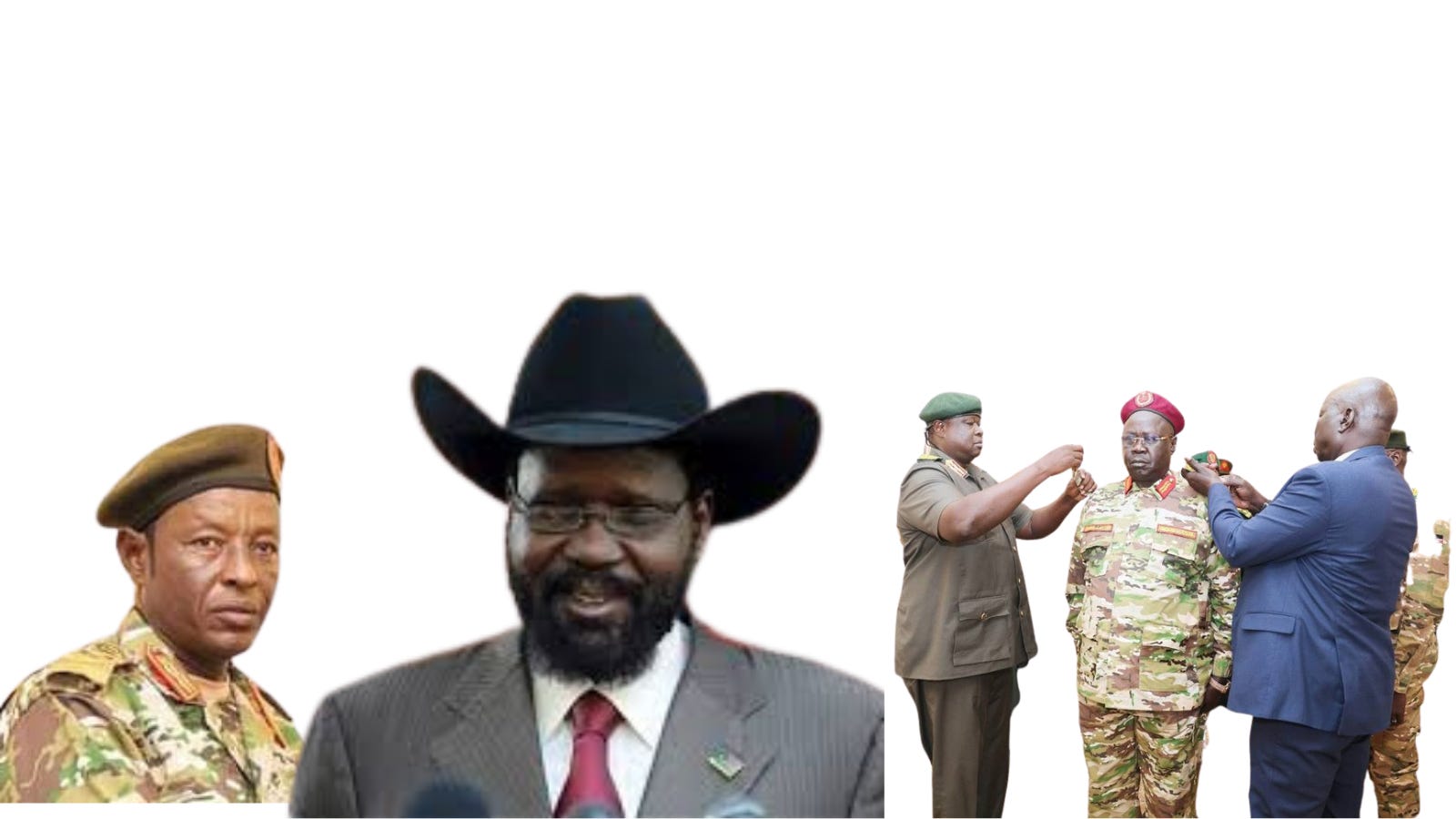
In a significant reshuffling of South Sudan's security apparatus, President Salva Kiir Mayardit has appointed General Charles Chiec Mayor as the new Director General of the Internal Security Bureau (ISB) within the National Security Service (NSS). This appointment, announced on February 17, 2025, marks the third leadership change in the nation's intelligence agency since its independence in 2011. The frequent turnover at the helm of the NSS reflects the dynamic and often turbulent nature of South Sudan's political landscape, especially as the country approaches its long-delayed elections scheduled for December 2026.
Background of the National Security Service (NSS)
The NSS is one of South Sudan's most influential security institutions, endowed with extensive authority, including the power to arrest individuals without a warrant. Established in the aftermath of South Sudan's secession from Sudan in 2011, the agency was designed to safeguard national security during a period marked by political fragility and internal conflicts. However, the NSS has faced substantial criticism over the years for its alleged heavy-handedness, particularly concerning crackdowns on opposition figures, activists, and journalists. Reports have surfaced accusing the agency of arbitrary arrests and other human rights abuses, allegations that the NSS has consistently denied.
Leadership Changes within the NSS
The leadership trajectory of the NSS has been marked by notable shifts:
General Akol Koor Kuc (2011 - October 2024): Serving as the inaugural Director General since the country's independence, General Kuc's tenure was characterized by a firm grip on the agency. However, in October 2024, President Kiir dismissed him, a move interpreted by analysts as indicative of internal power struggles within the government. This dismissal coincided with the transitional government's announcement of yet another delay in national elections, further intensifying political tensions. After his removal, in November 2024, a violent confrontation occurred at General Kuc's residence in Juba when security forces attempted to arrest him, leading to heavy gunfire and highlighting the volatility within the nation's security framework.
General Akec Tong Aleu (October 2024 - February 2025): Appointed immediately following General Kuc's dismissal, General Aleu's tenure was notably brief. Before leading the NSS, he held various governmental roles, including Deputy Governor of Warrap State and Undersecretary for Veteran Affairs at the Ministry of Defense. His sudden removal in February 2025, after just four months in office, underscores the ongoing instability and the intricate power dynamics within South Sudan's political and security institutions.
General Charles Chiec Mayor (February 2025 - Present): Ascending from his role as Deputy Director General for Administration and Finance within the NSS, General Mayor's promotion to Director General signifies the latest attempt to stabilize the agency's leadership. His appointment comes at a critical juncture as South Sudan endeavours to navigate its complex political environment and prepare for the forthcoming elections.
Implications of the Recent Appointment
The elevation of General Mayor to the position of Director General carries several implications:
Consolidation of Power: Analysts suggest that President Kiir's recent appointments, including that of General Mayor, are part of a broader strategy to consolidate power ahead of the elections. By positioning trusted allies in key security roles, the administration aims to fortify its control over the nation's security apparatus during this pivotal period.
Institutional Stability: The frequent changes in leadership within the NSS may impact the agency's operational stability. Consistent leadership is often crucial for the effective functioning of security institutions, and the rapid turnover could affect morale and the implementation of long-term strategies.
Human Rights Concerns: Given the NSS's contentious history concerning human rights, the international community and local civil society organizations will likely monitor General Mayor's tenure closely. There is an anticipation that the new leadership might address past grievances and implement reforms to enhance transparency and accountability within the agency.
Broader Political Context
These leadership changes within the NSS are occurring against a backdrop of significant political manoeuvres:
Vice Presidential Reshuffle: Concurrently with General Mayor's appointment, President Kiir dismissed two vice presidents, including the long-serving James Wani Igga. Such high-level reshuffles are perceived as efforts to reconfigure the political landscape in favour of the ruling party as the nation approaches the 2026 elections.
Delayed Elections: Since its independence, South Sudan has yet to conduct a national election. The repeated postponements, which now set the elections for December 2026, have been a source of domestic and international criticism. These delays are often attributed to ongoing political disputes and security challenges, underscoring the fragile nature of the nation's peace and democratic processes.
Conclusion
The appointment of General Mayor as the new Director General of the Internal Security Bureau reflects the intricate and often volatile nature of South Sudan's political and security sectors. As the country navigates its path toward the long-awaited elections, the stability and direction of key institutions like the NSS will play a pivotal role in shaping South Sudan's future. The international community, alongside the South Sudanese populace, will be observing closely, hopeful that these leadership changes herald a period of enhanced security, respect for human rights, and genuine progress toward lasting peace and democracy.
SOURCE: Osint