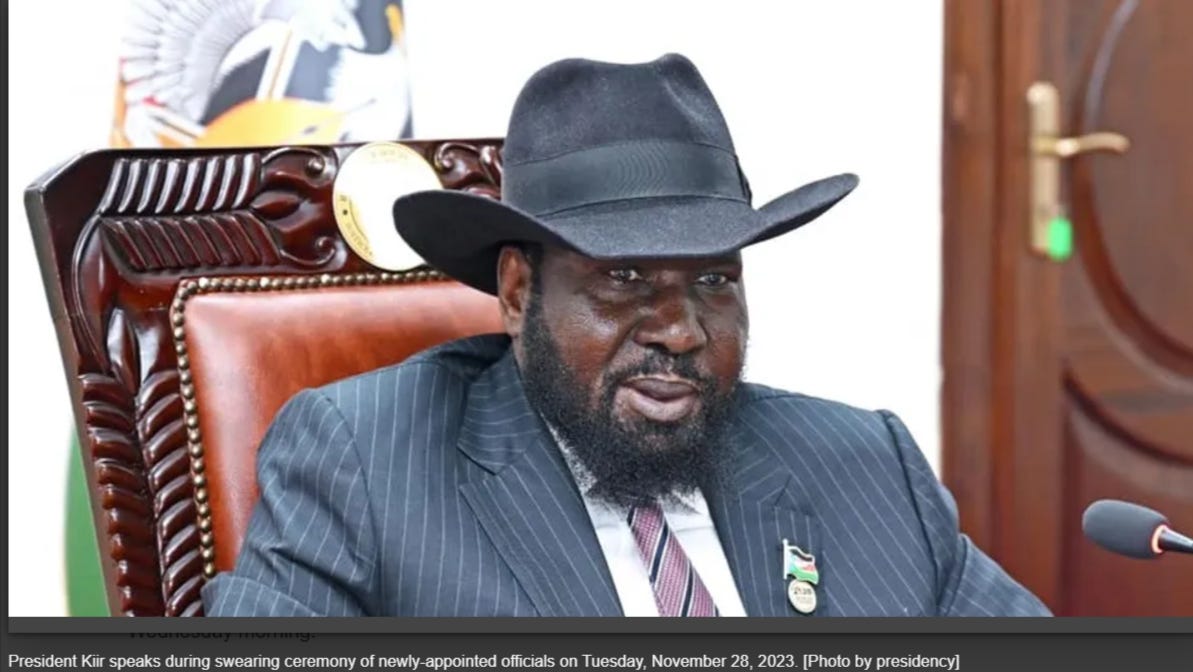
đ¸đ¸ President Kiir's Purge Marathon: 10 Senior Officials Sacked in Five Weeks Including Two Intelligence Chiefs
Ujasusi Blogâs East Africa Monitoring Team | 31 January 2026 | 2325 GMT
In Brief
Between December 2025 and January 2026, South Sudanâs President Salva Kiir executed coordinated purges of senior intelligence and security officials, removing the National Security Service Director General and the military intelligence chief whilst ordering mandatory prayer gatherings for leadership. These dismissals coincide with escalating military operations in Jonglei State against SPLA-IO forces and appear designed to consolidate presidential control over intelligence apparatus amid deteriorating battlefield conditions.
What Triggered South Sudanâs Intelligence Leadership Shake-Up?
President Salva Kiir Mayardit initiated two distinct but strategically linked purges of intelligence leadership within a five-week period:
December 2025 NSS Restructuring
18 December 2025: Gen. Charles Chiec Mayor dismissed as Director General of the Internal Security Bureau (ISB) of the National Security Service after only 10 months in post
Replacement: Gen. Mawien Mawien Ariik (also known as Mawien Magol), promoted from Major General, originating from Warrap State
Official justification: None provided by the presidency
January 2026 Military Intelligence Overhaul
22 January 2026: Lt. Gen. David Ohucholi removed as military intelligence chief
Replacement: Lt. Gen. Abud Stephen Thiongkol Ijong, returning to a position he held until 2024
Immediate deployment: Gen. Abud departed Juba for Jonglei frontlines on 22 January 2026, same night as appointment
Operational context: SSPDF massing reinforcements in Bor following battlefield setbacks
The timing correlation between intelligence dismissals and military operations suggests these were not routine administrative changes but strategic interventions responding to specific intelligence failures or political imperatives.
Why Did President Kiir Replace Military Intelligence Leadership During Active Combat Operations?
Security sources and operational indicators point to three primary drivers:
đŻ Intelligence Failure Hypothesis
Recent territorial losses: SPLA-IO captured Pajut in Duk County and Panyume in Central Equatoria
Strategic concern: Opposition forces positioned for coordinated push toward population centres
Assessment gap: Growing presidential frustration regarding reliability of battlefield intelligence
Historical pattern: Kiirâs pattern of high-level purges following operational setbacks
âď¸ Pre-Offensive Command Consolidation
Seven-day ultimatum: Army Chief Gen. Paul Nang Majok issued strict deadline to troops in Baidit on 21 January 2026
Force concentration: Units from 3rd, 5th, and 12th infantry divisions mobilised to Jonglei
Strategic objective: âThe rebellion which is here must endâ through shift from defensive to offensive operations
Leadership requirement: New intelligence chief needed to provide real-time battlefield assessment during critical offensive
đ Political Control Architecture
Lt. Gen. Abudâs reappointment (having held the post until 2024) indicates preference for:
Known operational loyalty over institutional continuity
Personal trust networks in high-stakes military intelligence positions
Proven track record in previous tenure managing military intelligence apparatus
The immediate frontline deployment patternâGen. Abud travelling to Jonglei same night as appointmentâdemonstrates the operational urgency underpinning this personnel change.
Who Is Gen. Mawien Mawien Ariik and Why Does His NSS Appointment Matter?
Gen. Mawien Mawien Ariik represents a significant departure from typical NSS leadership profiles:
Known Characteristics
Rank elevation: Promoted directly from Major General to General upon appointment
Geographic origin: Warrap State
Public profile: âNot widely known publiclyâ according to Radio Tamazuj
Previous role: Not disclosed in available reporting
Strategic Implications
Limited institutional visibility: Low public profile may indicate intelligence background or deliberate operational security
Rapid promotion trajectory: Two-rank jump signals exceptional presidential confidence or political necessity
Centralisation pattern: Continuation of Kiirâs practice of appointing personally loyal figures to security apparatus
The opacity surrounding Gen. Mawienâs background contrasts sharply with his predecessor Gen. Chiecâs relatively documented career, suggesting either deliberate compartmentalisation or emergency appointment from shadow intelligence structures.
What Broader Purge Pattern Accompanied These Intelligence Dismissals?
The intelligence leadership changes formed part of systematic governmental restructuring across multiple sectors:
Concurrent Dismissals (December-January)
Dr. Benjamin Bol Mel: Removed from vice presidency (November 2025)
Director-General of the General: Fired 21 January 2026
Minister of Interior: Dismissed 21 January 2026
Engineer Caesar Oliha Marko: Undersecretary, Ministry of Transport
Dr. Santino Mathiok: Undersecretary, Ministry of Mining
John Woja Elinana: Director General, Civil Aviation Authority
Prof. Robert Mayom Deng: Vice Chancellor, University of Juba
John Daniel Kipa: Commissioner, Financial Intelligence Unit (NSS)
Replacement Pattern Analysis
Financial Intelligence Unit: John Daniel Kipa â Bona Ngong Nguen (maintaining NSS financial surveillance capability)
University of Juba: Prof. Robert Mayom Deng â Prof. John Akec Apurout (institutional continuity through reappointment)
Technical ministries: Complete personnel turnover in transport, mining, and aviation oversight
This comprehensive purge spans intelligence, security, economic oversight, and educational institutionsâindicating consolidation beyond immediate military necessity.
What Is the Strategic Significance of the Mandatory National Prayer Breakfast?
President Kiirâs decree establishing an annual National Prayer Breakfast with mandatory attendance carries intelligence and political dimensions:
Operational Specifications
First event: Saturday following 18 December 2025 announcement
Venue: The Presidency, Juba
Duration: 07:30â12:00 (4.5 hours)
Mandatory attendees: Vice presidents, ministers, military commanders, state governors, legislators, judiciary members
Intelligence Assessment
đ Control Mechanism Hypothesis
Physical assembly of entire leadership enables visual verification of compliance and loyalty
Extended duration (4.5 hours) creates informal networking opportunities for presidential monitoring
Religious framing provides ideological justification for political centralisation
đ Reconciliation Theatre
Civil society activist Edmund Yakani interpreted as âseeking serious forgiveness and reconciliationâ
Follows one day after approval of sweeping peace agreement amendments
Positions government as spiritual authority whilst purging political opposition
â ď¸ Historical Precedent
Mirrors authoritarian governance patterns using religious legitimacy for political purposes
Creates parallel loyalty structure outside formal institutional frameworks
Establishes annual ritual for demonstrating subordination to presidential authority
What Are the Immediate Operational Implications for South Sudanâs Intelligence Architecture?
Military Intelligence Reconfiguration
Battlefield integration: Lt. Gen. Abudâs frontline deployment indicates embedded command model
Offensive intelligence support: New leadership specifically positioned to enable Jonglei operations
Chain of command clarity: Direct presidential appointment ensures unambiguous authority during combat
Internal Security Restructuring
NSS continuity questions: Gen. Mawienâs limited profile creates information vacuum regarding operational priorities
Financial surveillance maintenance: Financial Intelligence Unit replacement suggests continued focus on economic intelligence
Institutional knowledge disruption: 10-month tenure for Gen. Chiec insufficient for deep structural familiarity
Strategic Assessment
The December-January purges demonstrate:
Presidential primacy over institutional continuity in intelligence appointments
Operational responsiveness prioritised over bureaucratic stability
Political loyalty valued above technical expertise or public legitimacy
Systematic consolidation extending beyond immediate security apparatus
Intelligence Implications
South Sudanâs coordinated intelligence leadership purges reveal a presidency under operational and political pressure, responding through traditional authoritarian consolidation rather than institutional strengthening. The simultaneity of NSS restructuring, military intelligence replacement, broader governmental dismissals, and mandatory religious gatherings indicates:
Immediate trigger: Battlefield intelligence failures in Jonglei requiring urgent command changes
Medium-term objective: Pre-electoral consolidation ahead of December 2026 polls
Long-term pattern: Continued erosion of institutional independence in favour of personal loyalty networks
For regional intelligence services and international observers, these developments signal reduced reliability of South Sudanâs intelligence apparatus as an interlocutor, increased prospects for politically-motivated intelligence manipulation, and heightened risks of operational failures as experienced personnel are systematically replaced with politically compliant but potentially less capable appointees.