

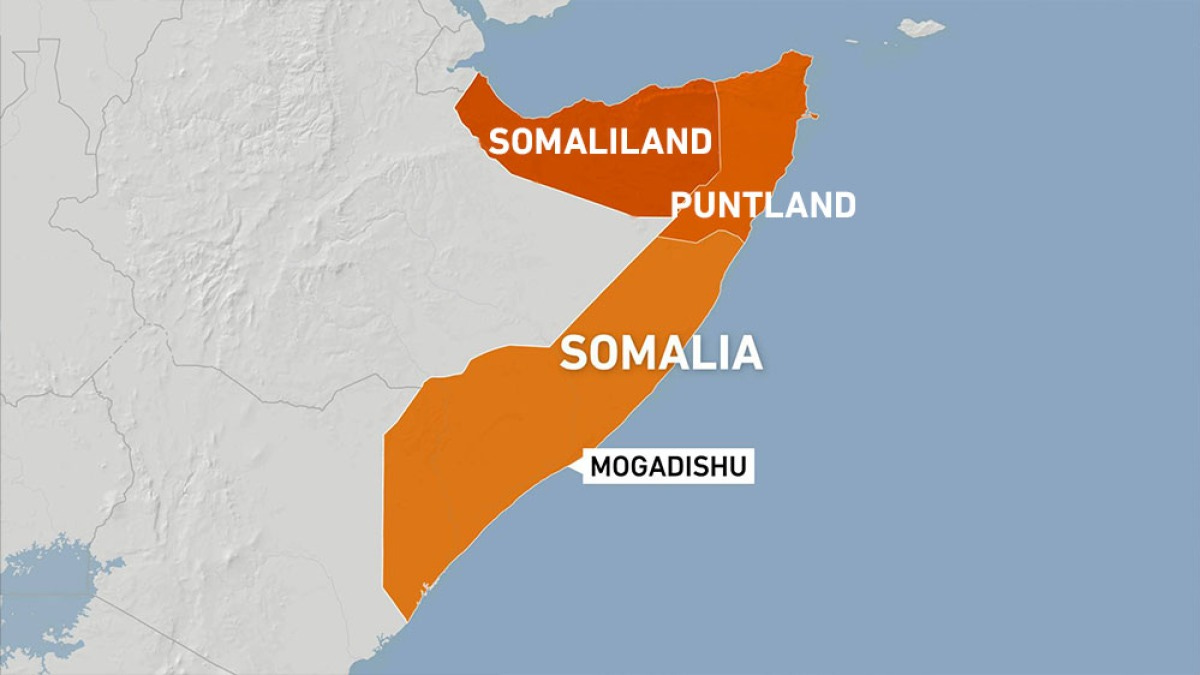

Somalia’s president signed a bill on Saturday voiding a preliminary agreement for Somaliland to provide landlocked Ethiopia with port access to Somaliland’s coast, in a largely symbolic move intended to rebuke the parties involved over a deal that has inflamed tensions across the Horn of Africa.
In a post on X, formerly Twitter, on Saturday Hassan Sheikh Mohamud said the bill was an “illustration of our commitment to safeguard our unity, sovereignty & territorial integrity as per international law”.
Somaliland declared independence from Somalia in 1991 amid a civil war in the country’s south and has operated autonomously since. Hargeisa, Somaliland’s capital, claims the borders of the former British protectorate of Somaliland in northern Somalia.
The memorandum of understanding, signed between Somaliland’s president, Muse Bihi, and Ethiopia’s prime minister, Abiy Ahmed, last Monday, outlined the broad sketches of a possible future pact between Addis Ababa and Hargeisa.
Though the details of the memorandum remain contested and have not been made public, officials have said Somaliland would grant Ethiopia access to the Gulf of Aden with a naval base, in exchange for shares in Ethiopian Airlines and Ethiopian recognition of Somaliland’s independence from Somalia.
Somalia's President Hassan Sheikh Mohamud addresses the Parliament regarding the Ethiopia-Somaliland port deal in Mogadishu, Somalia January 2, 2024. REUTERS/Feisal Omar
Somalia vows to defend sovereignty after Ethiopia-Somaliland deal
Read more
In an interview with Ethiopia’s state broadcaster, EBC, Redwan Hussein, security adviser to prime minister Abiy Ahmed, said his country would be granted 20km of land across Somaliland’s Gulf of Aden coast for a period of at least 50 years, with Ethiopia granting Somaliland an equivalent value of shares in Ethiopian Airlines to the land acquired.
Senior Somaliland officials have said the memorandum, which at this point isn’t legally binding, would also involve diplomatic recognition for Hargeisa, a long-sought goal for the self-declared republic.
Ethiopian officials have given mixed messages on this aspect of the deal, with several making arguments for Somaliland’s recognition, but none committing Ethiopia at this stage. A communique released by Addis Ababa said it would only make an “in-depth assessment” on taking a position on the issue.
The deal has faced significant international condemnation and has infuriated Somalia, which has described the move as an act of “aggression”.
Urging Ethiopia and Somaliland to reverse course, Somalia’s president said a “Somali territory cannot be exchanged for a [share] in a company like Ethiopian Airlines, Ethiopian Telecom, GERD … even if you combine them we cannot swap for a territory”.
Somalia also recalled its ambassador from Ethiopia and has appealed to the international community for support.
The US state department spokesperson, Matthew Miller, told reporters at a press conference on Wednesday that the US, a significant aid and security partner of Somaliland and Somalia, recognises Somalia within its 1960 borders, which include Somaliland, and called on all parties to resolve their issues through dialogue.
On Thursday, the UK released a statement calling for “full respect for the sovereignty and territorial integrity”, urging “restraint and dialogue” to resolve issues. The spokesperson for Turkey’s foreign ministry also expressed its support for the “unity, sovereignty and territorial integrity” of Somalia.
The EU, African Union, Organisation of Islamic Cooperation and Arab League have also made appeals to Ethiopia not to proceed with the deal, which threatens to inflame tensions across the Horn of Africa.
Somaliland appears undeterred by the pushback from Mogadishu, saying it would go ahead with a preliminary pact it agreed with Ethiopia.
The deal has divided public opinion across Somalia and Somaliland, sparking several demonstrations and counter-demonstrations against the handover of territory to Ethiopia, with which Somalia has a history of conflict.
MEANWHILE
US Says No Recognition For Breakaway Somaliland After Ethiopia Deal
The United States on Wednesday rejected international recognition for breakaway Somaliland and called for calm after the region's leaders signed a deal with Ethiopia.
Somalia accused landlocked Ethiopia of attacking its sovereignty after Addis Ababa reached the agreement with Somaliland that gives long-sought access to the Red Sea.
Somaliland, a former British protectorate of about 4.5 million people, declared independence from Somalia in 1991, a move not recognized internationally and staunchly opposed by Mogadishu.
"The United States recognizes the sovereignty and territorial integrity of the Federal Republic of Somalia within its 1960 borders," State Department spokesman Matthew Miller told reporters.
"We join other partners in expressing our serious concern," he said, "about the resulting spike in tensions in the Horn of Africa."
"We urge all stakeholders to engage in diplomatic dialogue," he said.
Somaliland president Muse Bihi Abdi, who signed the deal with Ethiopian Prime Minister Abiy Ahmed, said that in return for providing sea access, Ethiopia would "formally recognize" Somaliland.
The Ethiopian government has not confirmed that it would recognize Somaliland. Somalia has withdrawn its ambassador from Addis Ababa and vowed to defend its sovereignty.
But Somalia has been in near constant chaos the past three decades. Somaliland has been seen as offering an oasis of stability, although it has failed to achieve international recognition.
Ethiopia was cut off from the coast after Eritrea seceded and declared independence in 1993 following a three-decade war, forcing Africa's second-most populous nation to channel commerce through an expensive arrangement with Djibouti.