

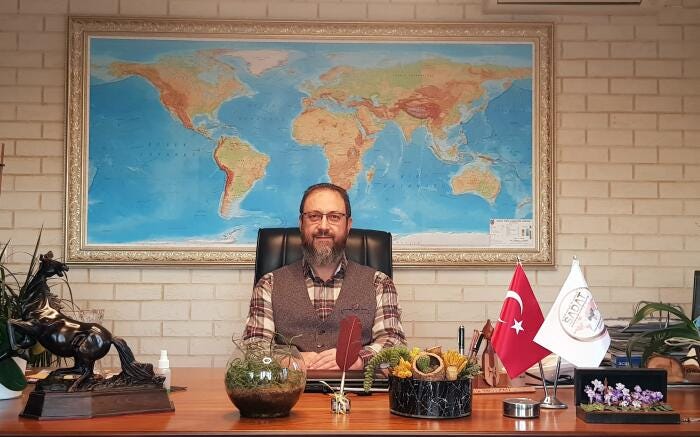

In recent years, SADAT Defence Inc has emerged as a significant player in the Turkish defence and security sector. Often referred to as the "Turkish Wagner" by critics and analysts, this comparison stems from its perceived parallel role to the infamous Russian private military company, Wagner Group. However, SADAT’s operations, objectives, and affiliations present a complex picture that warrants a closer examination.
Origins and Mission
Founded in 2012 by retired Brigadier General Adnan Tanrıverdi, SADAT was established with the aim of providing consultancy, training, and supply services to national and international armed forces and security institutions. Tanrıverdi, a prominent figure with a deep military background, envisioned SADAT as a means to bolster Turkey's defence capabilities and influence abroad, particularly in regions of strategic interest to Ankara.
SADAT's official mission, as stated on its website, is to support the Turkish armed forces and allied countries by enhancing their defence and security capabilities. This includes a broad spectrum of services, from military training and strategic consultancy to logistics and supply chain management. The company positions itself as a legitimate entity working within the framework of international law and Turkish national interests.
Activities and Operations
SADAT’s activities are multifaceted and span across several countries, predominantly in the Middle East and Africa. The company has been linked to providing military training and advisory services to various armed groups and governments in conflict zones. Notably, it has been reported to have a presence in Syria and Libya, where Turkey has vested interests.
In Syria, SADAT is believed to have played a role in training and equipping Syrian opposition groups aligned with Turkish objectives. Similarly, in Libya, the company has been accused of supporting the Government of National Accord (GNA) against the Libyan National Army (LNA), reflecting Turkey's geopolitical ambitions in the region.
While SADAT asserts that its operations are purely for the purpose of enhancing defence and security capacities of allied nations, the lack of transparency around its activities has led to significant scrutiny and speculation.
The Controversies
The parallels drawn between SADAT and the Wagner Group are rooted in the shadowy nature of their operations and their alleged involvement in conflicts where their respective nations have strategic interests. Wagner, known for its clandestine military activities in Ukraine, Syria, and several African nations, operates as an extension of Russian geopolitical strategy without direct state attribution. Similarly, SADAT is viewed by critics as a tool of Turkish foreign policy, extending Ankara’s influence under the guise of a private entity.
Critics argue that SADAT operates in a grey area, where its actions, while ostensibly independent, serve to further Turkish state interests. This has led to accusations of SADAT being a de facto arm of Turkish intelligence and military apparatus. For instance, there have been allegations of SADAT providing support to militias and armed groups that align with Turkey's regional ambitions, including in contentious areas such as the Eastern Mediterranean and the Caucasus.
Moreover, SADAT has faced accusations of violating international arms embargoes and participating in covert operations that blur the lines between state and private military actions. Such allegations have not only drawn international scrutiny but have also raised concerns about the role of private military companies in modern warfare and their impact on global security dynamics.
Government Connections and Influence
One of the most contentious aspects of SADAT is its purported close ties to the Turkish government. Adnan Tanrıverdi, the founder, served as a chief advisor to President Recep Tayyip Erdoğan, which has fuelled speculations about SADAT’s activities being closely aligned with government policy. Although Tanrıverdi resigned from his official advisory role in 2020, the perception of SADAT as an instrument of Turkish statecraft persists.
SADAT’s influence extends beyond military operations to ideological spheres. The company promotes a vision of a unified Islamic military force, which aligns with Erdoğan’s broader neo-Ottoman and pan-Islamist ambitions. This ideological underpinning differentiates SADAT from purely mercenary outfits and embeds it within a larger narrative of Turkey's assertive foreign policy under Erdoğan’s leadership.
International Response
The international response to SADAT’s activities has been mixed. On one hand, allies of Turkey, particularly in the Muslim world, view SADAT as a legitimate enterprise providing necessary support to bolster regional security. On the other hand, Western nations and rival regional powers perceive SADAT as a destabilising force that exacerbates conflicts and undermines international norms.
The United States and European Union have expressed concerns about the rise of private military companies like SADAT and their role in perpetuating conflicts. These concerns are compounded by the opaque nature of SADAT’s operations and the difficulty in holding such entities accountable under international law.
The Future of SADAT
Looking ahead, SADAT’s trajectory appears intertwined with Turkey’s broader geopolitical strategy. As Ankara continues to assert its influence in regional conflicts and project power beyond its borders, entities like SADAT are likely to play a critical role. The company’s ability to operate in the shadows provides Turkey with a flexible tool to navigate the complex landscape of modern warfare without direct state engagement.
However, the future of SADAT also hinges on the evolving international regulatory framework governing private military companies. Increased scrutiny and potential regulatory measures could impact SADAT’s operations and its ability to function as an instrument of Turkish foreign policy.
Conclusion
SADAT Defence Inc represents a new paradigm in the use of private military companies to further national interests. Often dubbed the "Turkish Wagner," SADAT embodies the blend of private enterprise and state strategy, operating in a realm where conventional military operations and covert actions intersect. Its activities, shrouded in secrecy and controversy, highlight the changing nature of warfare and the growing influence of non-state actors in global security dynamics.
As SADAT continues to expand its footprint, it will remain a focal point of debate and scrutiny, symbolising both the opportunities and challenges presented by private military companies in the 21st century. Whether viewed as a legitimate defence contractor or a shadowy proxy of state power, SADAT undeniably plays a pivotal role in shaping Turkey’s military and geopolitical landscape.
SOURCE: Osint