Ujasusi Blog Originals
🔓FREE ACCESS
1. Introduction
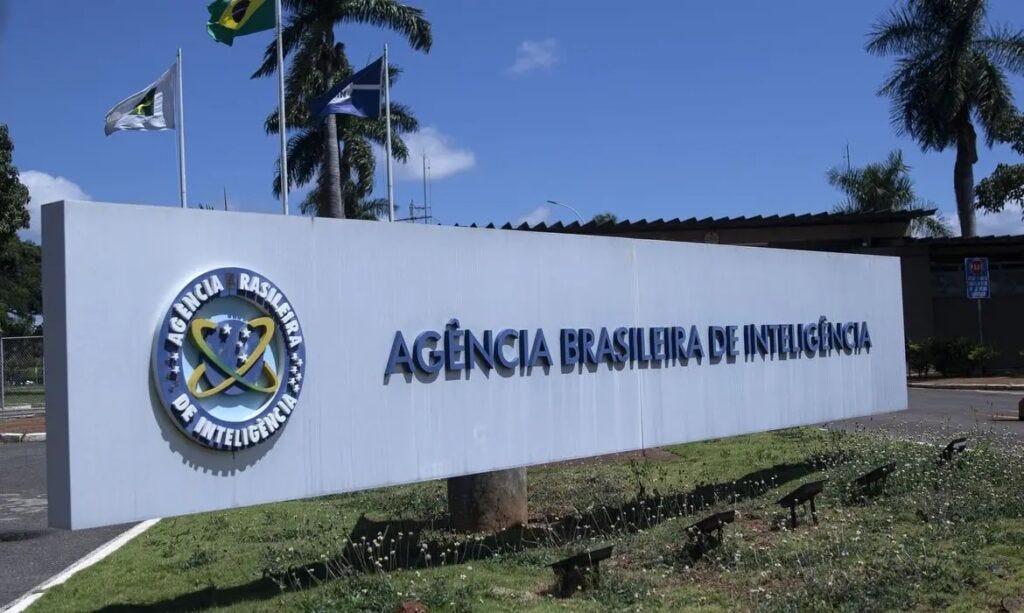
The Agência Brasileira de Inteligência (ABIN), or Brazilian Intelligence Agency, is the central pillar of the country’s intelligence architecture. Based in Brasília, within the Southern Police Sector (SPO), ABIN serves as the core agency of the Brazilian Intelligence System (SISBIN) and reports directly to the President of the Republic through the Civil House. Its mandate encompasses the planning, execution, coordination, supervision, and control of Brazil's intelligence activities in support of national strategic decision-making.
In a country marked by an authoritarian past and significant political transitions, ABIN symbolises an ongoing effort to anchor intelligence operations within a democratic framework. However, this process has not been devoid of controversy, with past scandals still casting a long shadow over current operations.
2. Founding Values and Institutional Identity
2.1 Core Values
ABIN publicly articulates a set of institutional values that frame the conduct and ethos of its officers:
Loyalty
Impartiality
Professionalism
Cooperation
Safety
Excellence of Products
These principles are not only internal guidelines but also a form of public accountability meant to reassure citizens of ABIN’s commitment to the democratic Rule of Law.
2.2 The Symbol of ABIN
ABIN’s current insignia, approved in 2021, draws directly from Brazil’s national imagery. At its centre is a blue globe, representing rational intelligence and Brazil’s geopolitical awareness. Inside the globe, five white stars signify the Southern Cross constellation—evoking both national identity and a forward-looking vision. The intersecting rings that encircle the globe denote Brazil’s place in the world and its understanding of global opportunities and threats.
3. Historical Evolution of Brazilian Intelligence
3.1 Intelligence under Military Rule
Brazil’s intelligence foundations were laid in 1946 with the creation of the Federal Information and Counterinformation Service under the Department of Political and Social Order. The 1964 military coup marked a dramatic shift, leading to the establishment of the National Information Service (SNI). Embedded within the machinery of Cold War ideological confrontation, SNI became notorious for its penetration into nearly every facet of public life—universities, unions, state corporations—and its association with forced disappearances and human rights abuses.
3.2 Transition to ABIN
Following the return to democracy in the 1990s, Brazil sought to transform its intelligence landscape. Law No. 9.883, enacted on 7 December 1999, established ABIN as the civilian successor to the SNI. Tasked with informing the President on matters of national importance, ABIN was conceived as a democratic intelligence agency, designed to function under civilian oversight and with defined legal parameters.
Institutional reforms have continued over time. In 2015, ABIN moved from the Presidential Security Office to the Government Secretariat. In 2023, another structural reform placed it under the Civil House of the Presidency, making the Director General accountable to the Minister of State of the Civil House.
4. Institutional Structure and Strategic Reach
4.1 Governance and National Deployment
ABIN operates as the hub of SISBIN, with the Minister of State—head of the Civil House—acting as the intermediary between the agency and the President. The current Director General is Luiz Fernando Corrêa (since 2023).
Nationally, ABIN maintains 26 state-level superintendencies, one per state capital, and a network of strategic subunits in key locations like the Amazon. These field offices are empowered to conduct both intelligence and counterintelligence operations.
4.2 Recruitment and Training
ABIN recruits through public selection processes, ensuring a merit-based intake of officers. The Brazilian Center for Research advertises these competitive exams, open to all eligible citizens. The five-phase process includes:
Written Examination
Social Background Investigation
Medical and Psychological Evaluation
Physical Fitness Test
Completion of an Intelligence Training Course
In 2018, ABIN offered 300 vacancies: 220 for intelligence analysts, 60 for technical officers, and 20 for intelligence agents. Although the agency declares all vacancies filled, it continues to encourage applications—possibly to maintain a pipeline of qualified candidates.
4.3 Signature Programs
ABIN is notable for its transparency in advertising its strategic programs:
a. PNPC (National Program for Protection of Sensitive Knowledge)
This program offers consultancy to public and private institutions to shield sensitive knowledge from espionage, sabotage, and leaks. Services include risk assessments, training manuals, awareness campaigns, and tailored lectures.
b. PANGEA
Initiated in 2018, this program promotes interagency coordination to prevent Chemical, Biological, Radiological, and Nuclear (CBRN) incidents. It targets risks to agriculture, society, and the environment.
c. PRONABENS (National Program for State-Business Integration in Sensitive Goods)
In partnership with the Ministry of Science and Technology, this initiative enhances awareness of dual-use technologies and aligns with Brazil’s non-proliferation and disarmament commitments.
4.4 International Presence
ABIN maintains 18 overseas liaison offices in: Argentina, Australia, Chile, China, Colombia, France, Germany, India, Italy, Japan, Jordan, Mexico, Peru, Russia, South Africa, Spain, the United States, and Venezuela.
These posts support intelligence exchange, policy alignment, and situational awareness of foreign developments relevant to Brazilian interests.
4.5 National Intelligence Policy
ABIN’s work is governed by the Brazilian National Intelligence Policy, which identifies threats such as:
Espionage
Sabotage
Cyberattacks
Terrorism
Foreign Interference
Illegal Activities involving Dual-use Goods
Organised Crime
Corruption
Actions against National Sovereignty
This policy sets the legal and strategic framework for all intelligence activities conducted by ABIN.
5. Scandals and Institutional Challenges
Despite its democratic aspirations, ABIN has been plagued by recurrent scandals that raise questions about oversight and integrity.
5.1 Operation Satyagraha (2008)
In 2008, ABIN’s Director General was dismissed following illegal cooperation with the Federal Police, unauthorised wiretaps, and leaking of classified material. The operation investigated corruption and bribery allegedly connected to then-President Lula.
5.2 Bolsonaro-era Surveillance (2019–2022)
In 2024, allegations emerged that ABIN had operated a clandestine surveillance programme under Director General Alexandre Ramagem. This illegal effort allegedly monitored opposition figures and deployed unauthorised tracking technologies.
These episodes illustrate the continued tension between ABIN’s security mandate and Brazil’s democratic oversight mechanisms.
6. Final Reflections
The Agência Brasileira de Inteligência stands at a critical intersection of national security and democratic governance. While the agency has made commendable strides in shedding its authoritarian past, its susceptibility to political abuse underscores the urgent need for robust and independent oversight mechanisms.
ABIN’s public engagement through consultancy programmes, open recruitment, and visible foreign missions marks it as one of the more transparent intelligence agencies in Latin America. Nonetheless, lasting legitimacy will depend not only on operational effectiveness but also on institutional accountability.
For Brazil, the task remains clear: to ensure its intelligence apparatus evolves into a reliable, apolitical, and rights-respecting institution—fully embedded within the Rule of Law.
☕ Support Ujasusi Blog
If you value the intelligence insights shared here, consider showing your support through a small donation. Your contribution helps keep this platform independent, focused, and thriving.
Scan below to donate: