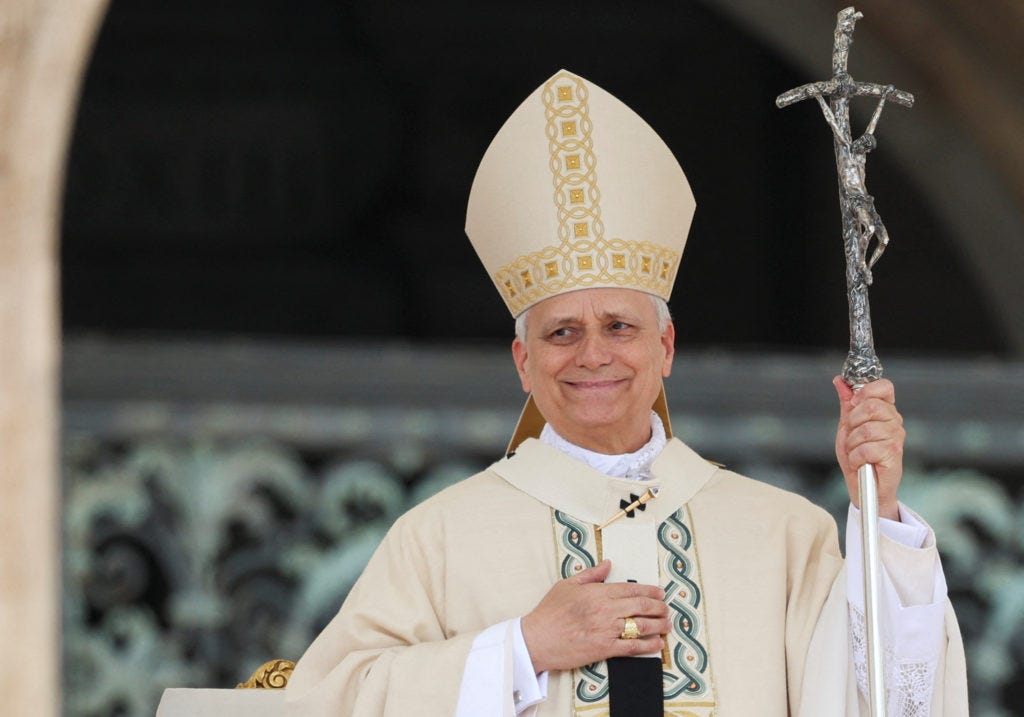
Pope Leo XIV Issues Unprecedented Warning on Intelligence Agencies Targeting the Catholic Church
Ujasusi Blog | Religion & Intelligence Desk - Dec 22, 2025 at 0115 GMT
🔓FREE ACCESS
Please consider becoming a paid subscriber
You can also donate.
📋 Snapshot
Pope Leo XIV warned on December 12, 2025, that intelligence agencies in certain countries actively oppress the Catholic Church’s freedom by exploiting confidential information for “nefarious purposes”—including intimidation, manipulation, blackmail, and discreditation of clergy and Church officials. This unprecedented statement to Italy’s intelligence sector highlights systemic ethical failures in intelligence operations targeting religious institutions.
What Specific Warnings Did Pope Leo XIV Issue to Intelligence Agencies?
Pope Leo XIV’s address to Italy’s intelligence sector identified five critical areas requiring ethical reform:
Primary Warnings:
• Confidential Information Weaponisation: Agencies must not use classified data to intimidate, manipulate, blackmail, or discredit politicians, journalists, or civil society actors
• Ecclesial Targeting: Intelligence operations against Church personnel and institutions constitute violations of religious freedom
• Digital Surveillance Risks: Advanced technologies create “constant dangers” requiring critical oversight of information collection
• Individual Rights Protection: Security agencies must establish limits based on human dignity criteria
• Vulnerable Population Exploitation: Prohibition on manipulating psychologically, economically, or socially vulnerable individuals
Rights Requiring Protection:
Source: EWTN Vatican, December 15, 2025
🌍 Which Intelligence Agencies Have Targeted the Catholic Church?
While Pope Leo XIV didn’t name specific nations, documented intelligence operations against Catholic institutions span multiple eras and geopolitical contexts:
Historical Operations (1945-1991):
Soviet KGB: Operation “Outstretched Hand” targeted Vatican officials; Mitrokhin Archive documented extensive infiltration attempts
Polish SB: Approximately 10% of Polish clergy were registered informants by 1989
Czechoslovak StB: “Pacem in Terris” operation recruited priests; Cardinal Josef Beran imprisoned 1949-1965
Romanian Securitate: Systematic surveillance of 15,000+ clergy members
Contemporary Operations (2000-2025):
China’s MSS: Active surveillance of underground Catholic churches; Human Rights Watch documented operations against Vatican-aligned bishops
Russian FSB: Intelligence activities against Ukrainian Greek Catholic Church intensified post-2022
NSA (USA): Snowden revelations indicated potential Vatican communications surveillance during 2013 papal conclave
Regional Intelligence Penetration Assessment:
🔍 What Constitutes “Nefarious Purposes” in Intelligence Operations?
Pope Leo XIV’s terminology carries specific intelligence ethics implications:
Definition Framework:
Nefarious Intelligence Operations involve:
Activities Exceeding National Security Mandates: Operations lacking credible threat nexus
Human Rights Law Violations: Breaches of ICCPR Articles 17-18 (privacy, religious freedom)
Coercive Manipulation: Blackmail, kompromat, extortion
Protected Activity Targeting: Surveillance of legitimate religious practice
Operational Categories:
Coercive Information Operations:
• Clergy blackmail using personal information (sexual orientation, finances, family vulnerabilities)
• Kompromat production through engineered compromising situations
• Financial pressure via tax investigations or property threats
Institutional Destabilisation:
• Intelligence asset placement in seminaries or diocesan administration
• Disinformation campaigns against Church leadership
• Support for schismatic movements
Strategic Exploitation:
• Confessional surveillance attempts
• Vatican diplomatic intelligence collection
• Political manipulation using Church influence
Case Study: KGB Operation Outstretched Hand
Objective: Penetrate Vatican decision-making and influence papal policy
Methods: Recruitment of 15-20 priests with Vatican access; technical surveillance (1960s-1980s); disinformation campaigns
Outcome: Partially successful; minimal core policy impact
Source: Christopher Andrew & Vasili Mitrokhin, The Sword and the Shield, Basic Books, 1999
⚖️ What Ethical Standards Should Govern Intelligence Operations?
Pope Leo XIV’s address references three overlapping ethical frameworks:
International Human Rights Law:
Legal Instrument Key Provisions Intelligence Application
ICCPR Article 17 Privacy protection Limits surveillance scope
ICCPR Article 18 Religious freedom Prohibits targeting religious practice
ECHR Article 8 Private/family life Requires proportionality
Catholic Social Teaching on Intelligence Ethics:
Principle of Human Dignity: Intelligence activities must respect intrinsic human worth regardless of operational objectives
Common Good Doctrine: National security interests cannot override fundamental human rights protections
Subsidiarity Principle: Intelligence oversight should occur at appropriate institutional levels with judicial review
Professional Intelligence Ethics:
IC Directive 203 (U.S. Intelligence Community) establishes baseline standards:
• Analytic objectivity and independence
• Timeliness and responsiveness
• Candour and transparency with policymakers
• Protection of civil liberties and privacy
📊 How Do Digital Technologies Amplify Intelligence Threats to Churches?
Pope Leo XIV specifically warned that “new and increasingly advanced technologies” create exponential risks:
Digital Surveillance Capabilities:
Communications Intelligence (COMINT):
• End-to-end encryption breaking via quantum computing advances
• Metadata analysis revealing Church organisational networks
• Bulk collection of ecclesiastical communications
Cyber Intelligence Operations:
• Spear-phishing campaigns targeting bishops and Vatican officials
• Malware deployment on Church administrative systems
• Cloud storage exploitation for pastoral records
Social Media Intelligence (SOCMINT):
• Sentiment analysis of clergy social media activity
• Network mapping of Catholic influencers and activists
• Disinformation campaign coordination
Technology-Specific Risks:
🛡️ What Oversight Mechanisms Can Prevent Intelligence Abuses?
Pope Leo XIV’s call for “vigilance” implies institutional safeguards:
Recommended Oversight Structures:
Legislative Controls:
• Parliamentary intelligence committees with ecclesiastical representatives
• Mandatory reporting of religious institution surveillance
• Judicial warrant requirements for clergy-related operations
Internal Agency Mechanisms:
• Ethics officers with religious liberty training
• Quarterly audits of ecclesial-related intelligence activities
• Whistleblower protections for agents reporting violations
International Frameworks:
• UN Special Rapporteur on Freedom of Religion engagement
• Inter-state intelligence sharing restrictions for religious surveillance
• Vatican diplomatic protest mechanisms
Best Practice: Germany’s G10 Commission
Germany’s G10 Commission provides parliamentary oversight of intelligence surveillance, including religious institutions, with:
• Independent judicial review of surveillance warrants
• Annual public reporting (classified details redacted)
• Victim notification when surveillance concludes
Effectiveness: Rejected 12% of surveillance requests in 2023; identified 3 cases of inappropriate religious targeting
🎯 Key Implications for Intelligence Community
Pope Leo XIV’s December 2025 warning represents unprecedented papal intervention in intelligence ethics:
Strategic Significance:
• First Explicit Papal Statement: No previous pope has directly addressed intelligence agency ethics regarding Church operations
• Italy-Specific Context: Address to Italian intelligence suggests concerns about European democratic nations, not just authoritarian regimes
• Digital Era Focus: Emphasis on technology risks indicates contemporary threats beyond historical Cold War operations
• Moral Authority Assertion: Vatican positioning itself as arbiter of intelligence ethics in religious sphere
Operational Implications:
For Intelligence Agencies:
• Review of collection priorities affecting religious institutions
• Enhanced legal review for ecclesial-related operations
• Potential diplomatic consequences for discovered violations
For the Catholic Church:
• Increased counterintelligence awareness among clergy
• Digital security training for Vatican communications
• Documentation of suspected intelligence operations
Unanswered Questions:
• Which specific countries prompted this warning?
• Has the Vatican identified active operations against Church officials?
• Will Leo XIV establish formal intelligence liaison protocols?
• What consequences exist for nations conducting Church surveillance?
📚 Sources and Further Reading
Primary Source: • EWTN Vatican: Pope Leo XIV Warns Intelligence Agencies, December 15, 2025
Intelligence History: • Christopher Andrew & Vasili Mitrokhin, The Sword and the Shield, Basic Books, 1999 • Wilson Centre: Mitrokhin Archive
Human Rights Framework: • OHCHR: International Covenant on Civil and Political Rights • European Convention on Human Rights
Contemporary Intelligence Ethics: • Human Rights Watch: China World Report 2024 • The Guardian: NSA Surveillance of World Leaders
Analysis: Pope Leo XIV’s warning exposes persistent intelligence threats to religious freedom in both authoritarian and democratic contexts, demanding enhanced oversight mechanisms and ethical frameworks for 21st-century intelligence operations.