

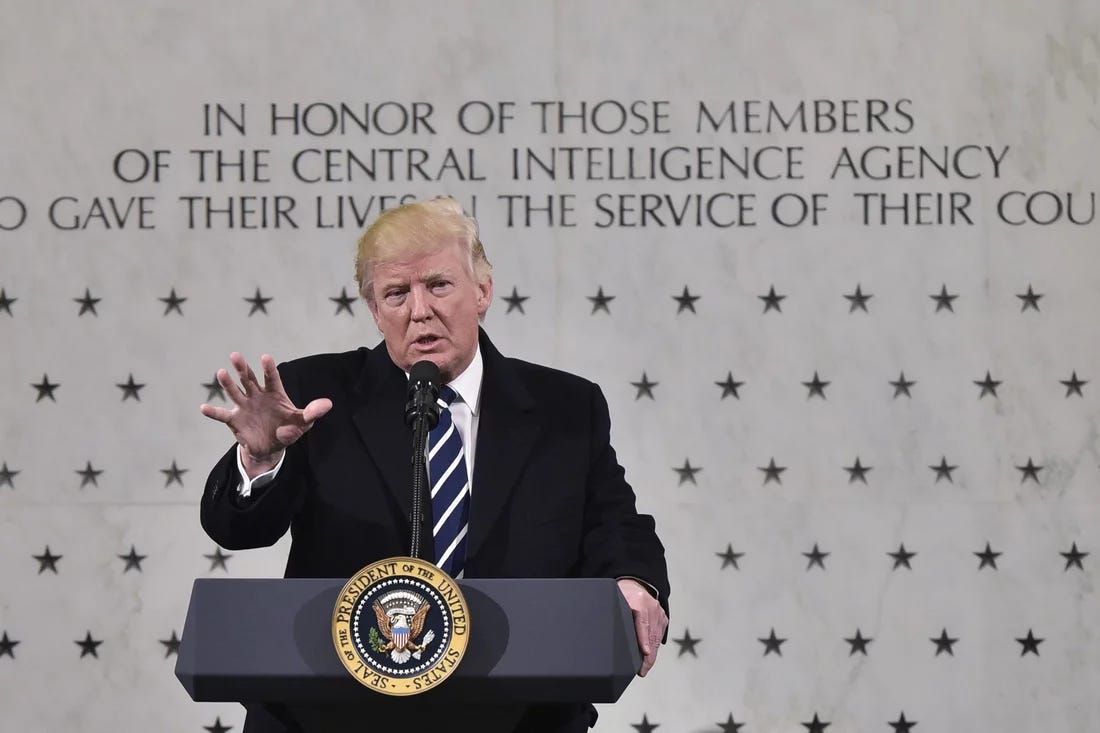

Tuesday’s victory of Donald Trump in the 2024 presidential election has sent shockwaves through the U.S. intelligence community, raising serious concerns about the future of America's spy agencies under a second Trump administration. Given Trump's long-standing criticism and distrust of intelligence agencies, coupled with his promises to overhaul the federal government, the intelligence community is bracing for potentially dramatic changes that could reshape its operations, priorities, and very structure.
A History of Tension
Trump's relationship with the intelligence community has been fraught since before he first took office in 2017. During his initial term, he frequently clashed with intelligence officials, accusing agencies of being part of a "deep state" conspiracy against him.
This antagonistic stance only intensified after he left office, particularly in light of his indictment for mishandling classified documents.
The roots of this conflict trace back to the investigations into Russian interference in the 2016 election and the use of the Steele dossier, which Trump viewed as part of a politically motivated effort to undermine his presidency.
These events set the stage for four years of tension between Trump and the intelligence agencies he was meant to oversee.
Potential Restructuring and Politicization
As Trump prepares to return to the White House, there are grave concerns about the extent to which he may attempt to reshape the intelligence community to suit his political aims. Former officials warn that Trump could intensify efforts to replace career intelligence professionals with loyalists who lack experience but are willing to align intelligence assessments with his preferences.
.This potential politicization of intelligence agencies could manifest in several ways:
Expanded Political Appointments: Trump may seek to increase the number of political appointees within intelligence agencies, particularly in key decision-making roles.
Implementation of "Schedule F": There are indications that Trump may revive his plan to reclassify a significant portion of the federal workforce under a new "Schedule F" category, making it easier to fire career officials and replace them with loyalists.
Pressure on Analysis: Intelligence analysts may face increased pressure to produce assessments that align with Trump's views, potentially skewing objective analysis on critical issues like Russia, China, and Iran.
Purges of Perceived Opponents: Trump has vowed to seek "retribution" against his political opponents, raising fears that he may use intelligence agencies as tools for settling scores.
Impact on Specific Agencies
Different intelligence agencies may face varying challenges under a second Trump administration:
CIA
The Central Intelligence Agency could see significant changes, including:
Potential revival of controversial programs like enhanced interrogation techniques
Increased political pressure on analysis related to key foreign policy issues
Possible reduction of in-house analytical teams in favor of politically appointed oversight.
NSA
The National Security Agency might face:
Pressure to expand domestic surveillance programs
Demands to target Trump's political opponents.
FBI
The Federal Bureau of Investigation, which has been a particular target of Trump's ire, could experience:
Continued scrutiny and criticism over past investigations
Potential purges of leadership seen as disloyal to Trump.
ODNI
The Office of the Director of National Intelligence may see:
A reduced role and influence within the intelligence community
Staffing with Trump loyalists to control the flow of intelligence to the president.
Legislative and Oversight Challenges
A second Trump term could bring significant changes to the legislative and judicial oversight of intelligence activities:
Attempts to weaken FISA court oversight of surveillance operations
Resistance to congressional oversight and investigations
Potential executive orders to expand presidential authority over intelligence matters.
These moves could significantly alter the checks and balances that have traditionally governed U.S. intelligence operations.
International Implications
The impacts of Trump's approach to intelligence would likely extend far beyond U.S. borders:
Reduced trust in U.S. intelligence assessments by allies and partners
Potential withdrawal from international intelligence cooperation forums
Emboldening of adversaries like Russia and China who seek to undermine Western intelligence capabilities.
There are particular concerns about the future of the "Five Eyes" intelligence-sharing arrangement, given Trump's past handling of classified information and his skepticism towards traditional alliances.
Resistance and Mitigation Efforts
While Trump would have significant authority to reshape intelligence agencies, he would likely face resistance from multiple quarters:
Career officials working to maintain the objectivity and integrity of intelligence products
Potential resignations or whistleblowing by senior officials
Congressional pushback, especially if Democrats control one or both chambers
Legal challenges to some of Trump's more extreme actions.
Intelligence agencies may also take preemptive steps to "Trump-proof" their operations, such as:
Strengthening internal safeguards and whistleblower protections
Cultivating bipartisan congressional support
Enhancing public communication to build trust with the American people
Specific Policy Proposals
Trump has outlined several specific proposals that could directly impact intelligence operations:
Border Security: Trump has pledged to seal the southern border and end birthright citizenship, which could involve intelligence agencies in domestic surveillance and immigration enforcement.
Foreign Policy: His promise to end the Ukraine conflict within 24 hours, while likely exaggerated, suggests a potential shift in intelligence priorities regarding Russia and Eastern Europe.
Government Restructuring: Trump has vowed to work with figures like Elon Musk to drastically reduce government expenditures, which could impact intelligence agency budgets and operations.
Climate Change: Rolling back regulations designed to combat climate change could reduce intelligence focus on climate-related security threats.
Missile Defense: Trump's plan to construct a new missile defense system, with input from former NFL player Herschel Walker, raises questions about the role of intelligence in assessing and responding to missile threats.
Long-Term Consequences
The potential impacts of a second Trump term on U.S. intelligence could have lasting consequences beyond his presidency:
Erosion of the intelligence community's reputation for objectivity and non-partisanship
Loss of experienced personnel and institutional knowledge
Damage to long-standing international intelligence partnerships
Increased politicization of intelligence that could persist under future administrations.
These changes could fundamentally alter the nature and effectiveness of U.S. intelligence operations for years to come.
Conclusion
As Donald Trump prepares to return to the White House, the U.S. intelligence community faces a period of unprecedented uncertainty and potential upheaval. The prospect of increased politicization, structural changes, and shifts in priorities raises serious concerns about the future effectiveness and integrity of America's spy agencies.
While the full extent of Trump's plans for the intelligence community remains to be seen, his past actions and rhetoric suggest a desire for significant change. The challenge for intelligence professionals will be to navigate these changes while maintaining their core mission of providing objective, accurate intelligence to policymakers.
In the coming years, we will likely see a complex struggle between Trump's desire to reshape the intelligence community and the resistance of career officials, congressional overseers, and international partners. The outcome of this struggle will have profound implications not just for U.S. national security but for the global intelligence landscape and America's position on the world stage.
As this situation unfolds, it will be crucial for the American public, policymakers, and international observers to monitor developments within the intelligence community closely. The ability of U.S. intelligence agencies to maintain their independence, integrity, and effectiveness in the face of political pressure will be a critical test of the resilience of American democratic institutions.
SOURCE: Osint