
Ujasusi Blog’s OSINT Desk | 12 April 2026 | 0205 BST
Open-source intelligence (OSINT) in 2026 refers to the structured collection, verification, and analysis of publicly available information using digital tools, network protocols, and cross-platform methodologies. Practised by professional analysts, investigative journalists, and security-aware citizens alike, OSINT now underpins threat monitoring, disinformation tracking, geolocation verification, and personal digital security across both state and non-state environments. Several tools in this guide require no technical background; others demand specialist infrastructure. Both categories are covered.
OSINT in 2026 Is a Structured Discipline, Not a Search Engine Habit
The term “open-source intelligence” is frequently misapplied to any activity involving internet searches. The professional definition is narrower: OSINT is intelligence produced through a repeatable, documented methodology applied to publicly available sources, yielding findings that are verifiable, attributable, and defensible under scrutiny.
The gap between casual information retrieval and structured OSINT production is where analytical value is created or lost — but that gap is narrowing. Browser extensions, web-based calculators, and zero-installation platforms have placed credible verification tools within reach of any citizen willing to apply a documented methodology. The ten tools covered here span the full spectrum: five are accessible to any internet user with no technical configuration; five require the infrastructure and tradecraft of a professional analyst.
Why the OSINT Discipline Has Shifted Since 2022
Three developments have materially changed how OSINT is practised since 2022, each relevant to both analysts and citizens navigating information environments in African security contexts.
The first is the proliferation of AI-assisted analysis tools. Large language models can process and cross-reference document sets that previously required days of analyst time. The risk is that speed substitutes for rigour: outputs that appear authoritative can embed factual errors that survive unchallenged into finished products — a failure mode as dangerous for a citizen fact-checking a viral video as for a professional producing an intelligence brief. The second is the democratisation of satellite imagery: platforms that once sold commercial imagery exclusively to government clients now distribute daily coverage at sub-five-metre resolution through civilian interfaces. The third is platform restriction — the progressive closure of social media APIs since 2018 has forced practitioners at every level to rebuild collection workflows from the ground up.
Social Media Intelligence Requires Platform-Specific Protocols — Particularly in Africa
In sub-Saharan Africa, political mobilisation and disinformation distribution occur disproportionately on WhatsApp, Facebook, and TikTok rather than Twitter/X — a platform bias that skews attention toward channels less representative of actual information flows. Identifying coordinated inauthentic behaviour requires cross-platform consistency checks: account creation dates, posting cadence, linguistic register, and reverse-image search results on profile photographs. The EU DisinfoLab’s 2019 “Indian Chronicles” investigation, which mapped 750 fake media outlets across 116 countries through WHOIS clustering and shared hosting analysis, remains the reference methodology — and its core techniques are replicable by any citizen with a browser.
TISS has, according to cases reviewed by the UN Human Rights Committee, monitored opposition social media activity as part of its domestic intelligence mandate; the Communications and Information Technology Commission holds legal authority to compel platform data disclosure under Tanzanian law. Social media intelligence methodology is therefore not only an analyst skill — it is a digital security imperative for civil society actors and ordinary citizens operating under active surveillance.
Geolocation from Images Is Now a Verifiable Discipline for Analysts and Citizens
Photo and video geolocation — determining where content was recorded using visual evidence rather than embedded metadata — is now a replicable, documentable methodology admissible in legal proceedings. It uses shadow angle and length to derive solar position; architectural features matched against street-level imagery; vegetation as a climatic indicator; and visible signage as jurisdictional anchors. Citizens applying this methodology to verify a viral image follow the same logical framework as professional investigators.
Bellingcat applied this methodology to verify Russian military hardware locations in Ukraine before the February 2022 invasion. The same technique, applied to footage from Tanzania’s October 2020 post-election violence, corroborated witness testimony with physical site evidence in accountability dossiers that state authorities could not plausibly dismiss. The specific tools that operationalise this methodology are covered in the subscriber section below.
Verifying Deepfake Videos Is Now a Citizen Responsibility, Not Only an Analyst Skill
Deepfake files circulating online surged from an estimated 500,000 in 2023 to a projected 8 million by 2025, with detected incidents rising tenfold between 2022 and 2023, according to data aggregated by Surfshark and corroborated by Recorded Future’s Insikt Group. Synthetic media has been deployed in electoral contexts in Nigeria (2023), India (2024), and South Africa (2024). At this volume, deepfake encounters are no longer an analyst-specific problem — any citizen consuming political video content is a potential target of synthetic deception.
The methodological error — relying on a single automated detection tool — applies equally to professional and lay users. Credible verification layers automated detection with provenance analysis, metadata examination, and audio spectrogram cross-referencing. The specific platforms implementing each layer, including free tools requiring no technical installation, are detailed in the subscriber section.
Advanced Google Dorking Recovers Indexed Material That Standard Searches Cannot Surface
Advanced Google dorking — the structured use of Boolean operators, site-specific filters, filetype restrictions, and date-range parameters — retrieves documents, databases, and exposed server directories that standard search interfaces never return. A compound query restricting results to spreadsheet files on a specific government domain, filtered by year, returns procurement records and budget annexes inadvertently indexed through misconfigured content management systems — a technique available to citizen journalists as much as professional analysts.
The approach intersects with the MITRE ATT&CK framework’s reconnaissance phase taxonomy: the same dorking sequences that expose misconfigured government servers to malicious actors expose them equally to legitimate investigators and informed citizens.
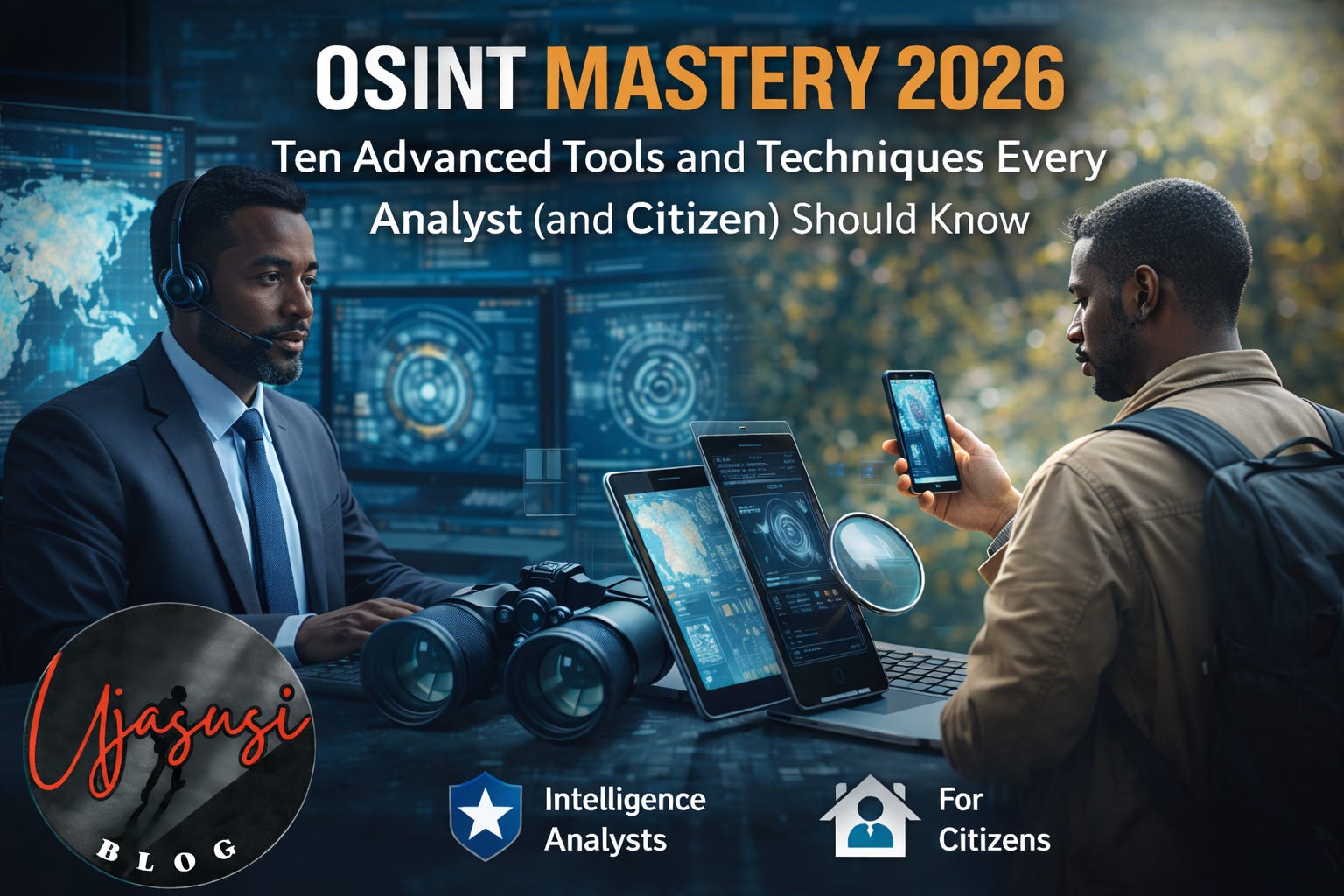
The Ten OSINT Tools Every Analyst (and Citizen) Should Master in 2026
Tools Accessible to both Analysts and Citizens