

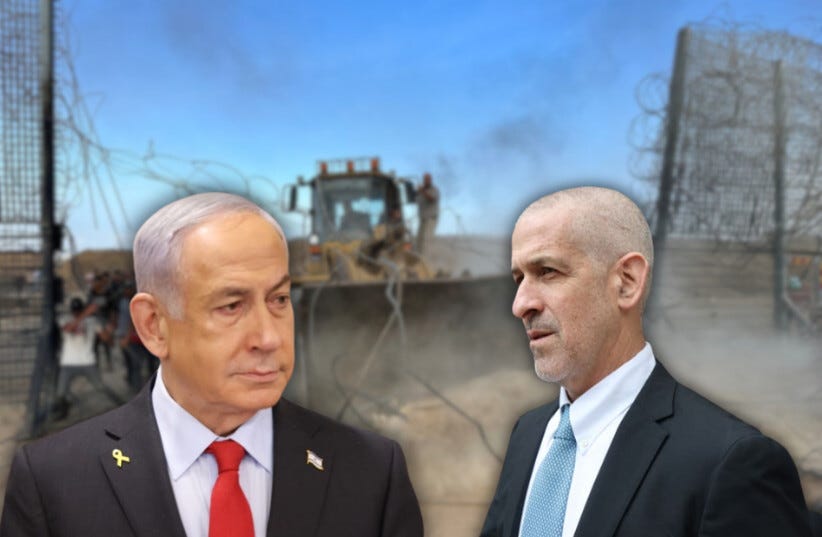
Introduction: An Unprecedented Security Crisis in Israel
In an unprecedented accusation that has sent shockwaves through Israel’s political and intelligence establishment, Shin Bet Director Ronen Bar has reportedly claimed that Prime Minister Binyamin Netanyahu wants him dead. The bombshell revelation highlights deep internal divisions within the Israeli state, where friction between elected leadership and top security officials is now playing out in public view.
This development marks a historic moment in Israel’s democratic evolution, calling into question the neutrality, independence, and resilience of its most vital institutions—including the Shin Bet (Shabak), Mossad, and the IDF.
Who is Ronen Bar? Profile of the Shin Bet Chief
Ronen Bar, appointed as head of Shin Bet in 2021, is a veteran of Israel’s elite intelligence and counter-terrorism operations. Known for his discreet style and operational expertise, Bar has overseen domestic intelligence during a turbulent time—including waves of Palestinian unrest, internal civil protests, and threats from Iran-backed proxies such as Hamas and Hezbollah.
Despite his traditionally non-political position, Bar has recently found himself at the centre of a storm. Accusations that he failed to prevent the October 7 Hamas attacks have placed him in the firing line—both figuratively and, according to his own words, perhaps literally.
The Allegation: “Netanyahu Wants Me Dead”
According to reports circulating within Israeli political and media circles, Bar has privately—and reportedly in briefings—accused Prime Minister Netanyahu of actively seeking to either imprison, discredit, or eliminate him. These claims have been described by insiders as a “mutiny” against the Prime Minister’s inner circle, suggesting that Israel’s internal intelligence leadership is now in open defiance of its elected political leadership.
This stark allegation comes amid reports that Netanyahu has been pressuring key officials, including Bar and Attorney General Gali Baharav-Miara, to resign or be removed—ostensibly due to their failure to safeguard national security. Yet behind the official reasons lies a deeper, more ominous struggle for control over Israel’s security narrative and future legal direction.
Why Does Netanyahu Want Ronen Bar Removed?
Multiple overlapping crises appear to have driven the Prime Minister's hostility toward the Shin Bet chief:
1. October 7 Intelligence Failure
The deadly October 7 Hamas attacks, which led to over 1,200 Israeli deaths and hostage-taking in Gaza, have been viewed as the most catastrophic intelligence failure since the 1973 Yom Kippur War. Bar has accepted responsibility on behalf of Shin Bet, but Netanyahu has been accused of scapegoating the agency while absolving himself of blame.
2. Shin Bet Probing Qatari Influence
Explosive reports suggest Shin Bet was quietly probing Netanyahu’s alleged links with Qatari intermediaries, possibly involving financial incentives to maintain Hamas's control in Gaza. This could undermine Netanyahu’s claim of strategic deterrence and bolster accusations that he preferred a divided Palestinian polity for political gain.
3. Targeting the Far Right
Shin Bet has also reportedly opened investigations into Itamar Ben-Gvir's ministry, warning of infiltration by extremist ideologues into the Israeli police and border forces. These probes may have clashed with Netanyahu’s political alliances, prompting efforts to rein in the intelligence service’s independence.
Attorney General and Judiciary Also Under Attack
Alongside Shin Bet chief Ronen Bar, Attorney General Gali Baharav-Miara has been targeted for removal. She has opposed Netanyahu’s controversial judicial reforms, stating that attempts to fire Bar lacked legal basis. Her continued resistance to Netanyahu’s policies has placed her in the same crosshairs as the Shin Bet leadership.
In response to Netanyahu’s moves, Israel’s Supreme Court issued an injunction freezing Bar’s dismissal, further highlighting the constitutional crisis. Legal experts have framed Netanyahu’s recent actions as an authoritarian power grab, aimed at neutralising checks and balances on his authority.
Netanyahu’s Broader Legal Woes: Motivation for a Purge?
Benjamin Netanyahu is currently being tried on multiple corruption charges, including bribery, breach of trust, and fraud. The criminal cases—collectively known as “Case 1000,” “Case 2000,” and “Case 4000”—have dogged him for years and are likely to determine his long-term political survival.
Critics argue that Netanyahu is weakening institutions like the Shin Bet, judiciary, and law enforcement to prepare a more compliant security establishment. Removing those who may expose damaging intelligence or refuse to back political overreach is seen as essential to his survival strategy.
Massive Protests and Civil Uprising
The unfolding crisis has not gone unnoticed by the Israeli public. Tens of thousands of protesters have taken to the streets in Tel Aviv, Haifa, and Jerusalem, accusing Netanyahu of eroding Israel’s democracy. Civil society groups, opposition leaders, and retired intelligence officers have condemned the Prime Minister’s assault on the Shin Bet and judiciary as the “death of Israeli democracy.”
Chants of “Bibi, go home!” and “Save our democracy!” have grown louder with each passing week. Demonstrators view the attack on Ronen Bar as the clearest evidence yet that Netanyahu seeks to politicise intelligence, destroy accountability, and entrench his grip on power.
Reactions from the Security Establishment
IDF and Mossad Officials Alarmed
Sources indicate that several senior Mossad and IDF officials have expressed private concern over the escalating crisis. While the intelligence community traditionally avoids open conflict with political leaders, the scale of internal instability has made silence untenable.
Retired Mossad chiefs, including Tamir Pardo and Efraim Halevy, have warned that Netanyahu’s actions could destroy institutional credibility and invite chaos. Pardo notably described Israel as being on the verge of becoming a “de facto dictatorship.”
Regional Implications: Security Vacuum and Geopolitical Risks
The internal chaos within Israel’s top leadership comes at a time of intense regional instability:
Iran continues to expand its regional influence through Hezbollah, the Houthis, and Hamas.
Lebanon’s southern border is tense, with regular rocket exchanges threatening to escalate into full-scale war.
Gaza remains a humanitarian and security crisis, with Israeli hostages still unaccounted for.
As Netanyahu wages political warfare at home, critics warn that external adversaries may exploit the leadership vacuum. With Shin Bet under attack, the IDF fatigued, and Mossad potentially compromised, Israel’s deterrence posture could face unprecedented challenges.
The Media War: Disinformation and Public Distrust
Amidst the power struggle, Israel’s media landscape has become a battleground. Right-wing outlets aligned with Netanyahu have depicted Ronen Bar as incompetent or disloyal, while independent and opposition-aligned platforms have portrayed Bar as a guardian of democratic norms.
The result is a polarised public with diverging interpretations of reality. Disinformation campaigns, social media manipulation, and deepfake videos have entered the fray—raising alarm bells about digital information warfare being used domestically.
International Response: Alarm in Washington and Brussels
Both the United States and the European Union have expressed growing unease over Netanyahu’s domestic actions. Although official statements remain measured, diplomatic channels are said to be urging caution.
The U.S., in particular, is concerned that weakening Israel’s internal security institutions could undermine counter-terrorism cooperation, particularly on Iran-related matters. There are also fears that such instability might damage the Abraham Accords and derail Saudi-Israeli normalisation talks.
Conclusion: A Nation at a Crossroads
The statement “Netanyahu wants me dead” from the head of Israel’s domestic intelligence agency is not merely a sensational headline. It signifies a historic rupture between the Israeli Prime Minister and the very organs responsible for preserving the nation’s internal security.
As Ronen Bar resists dismissal and the judiciary intervenes to prevent political overreach, the battle lines are drawn. The coming weeks will determine whether Israel’s democratic institutions can withstand the current assault—or if a dangerous precedent will be set for the future politicisation of intelligence.
SOURCE: Osint