
Ujasusi Blog’s East Africa Monitoring Team | 14 April 2026 | 0145 BST
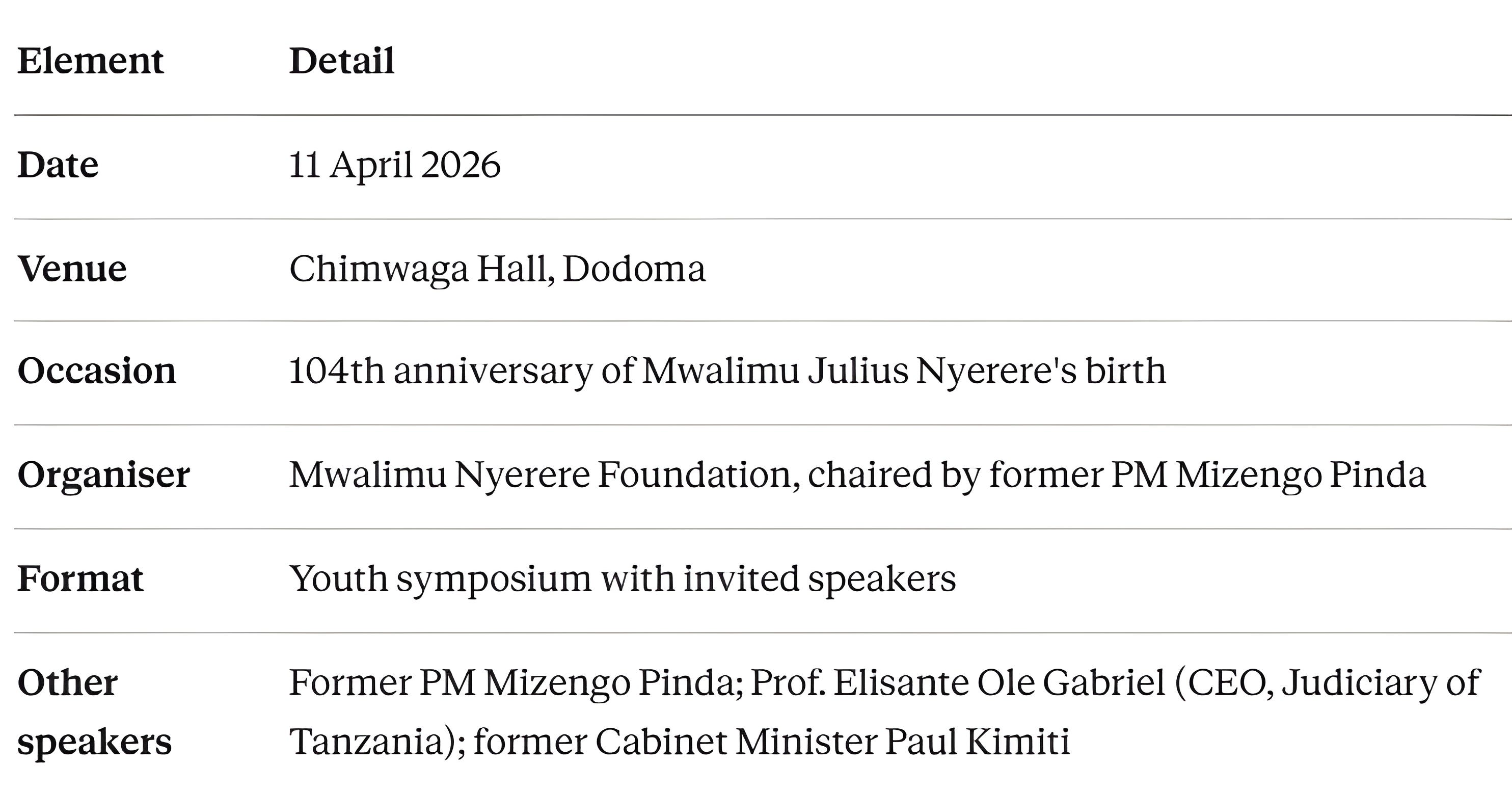
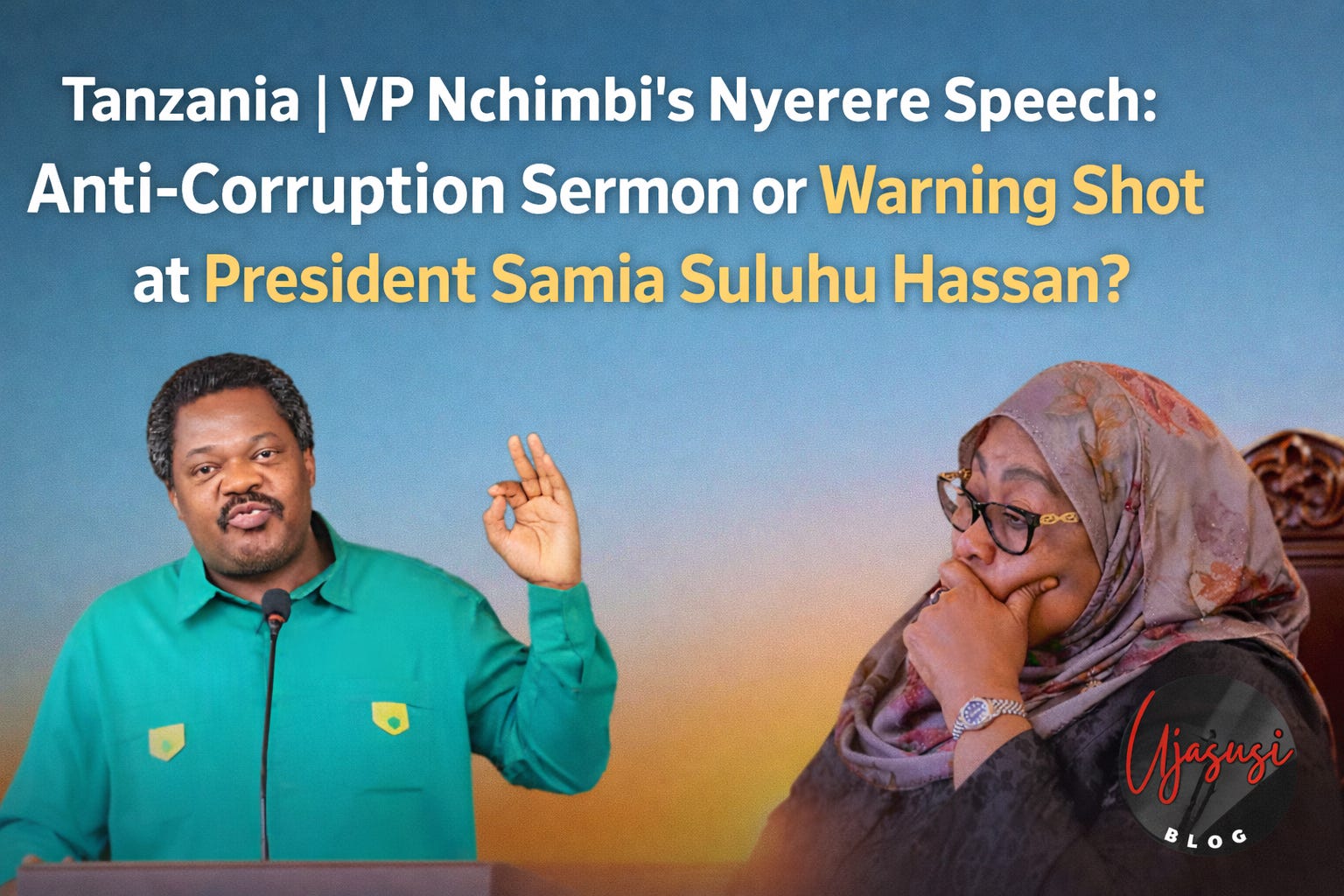
Vice President Emmanuel Nchimbi’s address at the Mwalimu Julius Nyerere 104th birthday symposium in Dodoma on 11 April 2026 deployed the founding president’s legacy as a framing device to challenge the misuse of public trust by sitting leaders publicly. The speech, delivered at Chimwaga Hall to a youth audience organised by the Mwalimu Nyerere Foundation, marks the second occasion in six weeks that Nchimbi has used a high-profile public forum to articulate values that contrast directly with the governance record of President Samia Suluhu Hassan’s administration.
Table of Contents
The Speech Text: What Did VP Nchimbi Say at the Nyerere 104th Birthday Forum?
How Does This Speech Connect to VP Nchimbi’s Remarks at Cardinal Pengo’s Funeral?
Why Is the Nyerere Birthday Platform Politically Significant in Tanzania?
Who Are the Intended Audiences for Nchimbi’s Anti-Corruption Message?
What Does the Speech Reveal About CCM’s Internal Power Dynamics?
What Are the Specific Risks Nchimbi Faces?
How Should Tanzania’s Political Risk Profile Be Assessed Through 2027?
Strategic Outlook: The Sermon Is the Strategy
The Speech Text: What Did VP Nchimbi Say at the Nyerere 104th Birthday Forum?
Nchimbi’s address at the youth symposium organised by the Mwalimu Nyerere Foundation centred on three interlocking propositions.
First, the defining failure of Tanzania’s current leadership class is the betrayal of public trust through the misuse of power.
Second, that Mwalimu Nyerere represented the antithesis of this failure. This leader rejected corruption “kwa maneno na vitendo” (in word and deed) and insisted that national resources remain the property of the nation.
Third, Tanzania requires leaders who love their country, possess personal integrity, and are willing to deploy their full capacity in public service rather than personal enrichment.
The core passage bears close reading. Nchimbi told the Chimwaga Hall audience: “Kosa kubwa ambalo viongozi wengi tunafanya ni kutumia vibaya imani tunayopata kutoka kwa wananchi wetu” — the greatest error committed by leaders is the abuse of the trust placed in them by citizens. The use of the first-person plural “tunafanya” (we commit) formally includes the Vice President himself in the indictment. The crowd’s response, sustained applause punctuated by shouting, confirmed that the audience decoded the remark as directed at the presidency.
Nchimbi then constructed a portrait of the ideal Tanzanian leader through Nyerere’s example: “mtu mweli, mtu mwadilifu, mtu anayeipenda nchi yake” — an honest person, a person of integrity, a person who loves their country. He added that such a leader would ensure “mali ya taifa itabaki kuwa mali ya taifa” — national wealth remains national wealth. He closed this section by observing that Tanzania’s greatest fortune was to have had a president who hated corruption in both word and action, a formulation that invites the listener to measure the incumbent against that standard.
The Vice President also addressed the instrumentalisation of religious identity in Tanzanian politics. He listed specific denominations, Muslim, Christian, Sunni, Shia, Anglican, Catholic, and stated that Nyerere brought Tanzanians to the point where seeking votes on religious grounds is recognised as foolish. This passage carries particular weight given the recurring political debates around President Samia Suluhu Hassan’s Zanzibari Muslim identity and allegations that confessional networks have influenced appointment patterns within her administration.