

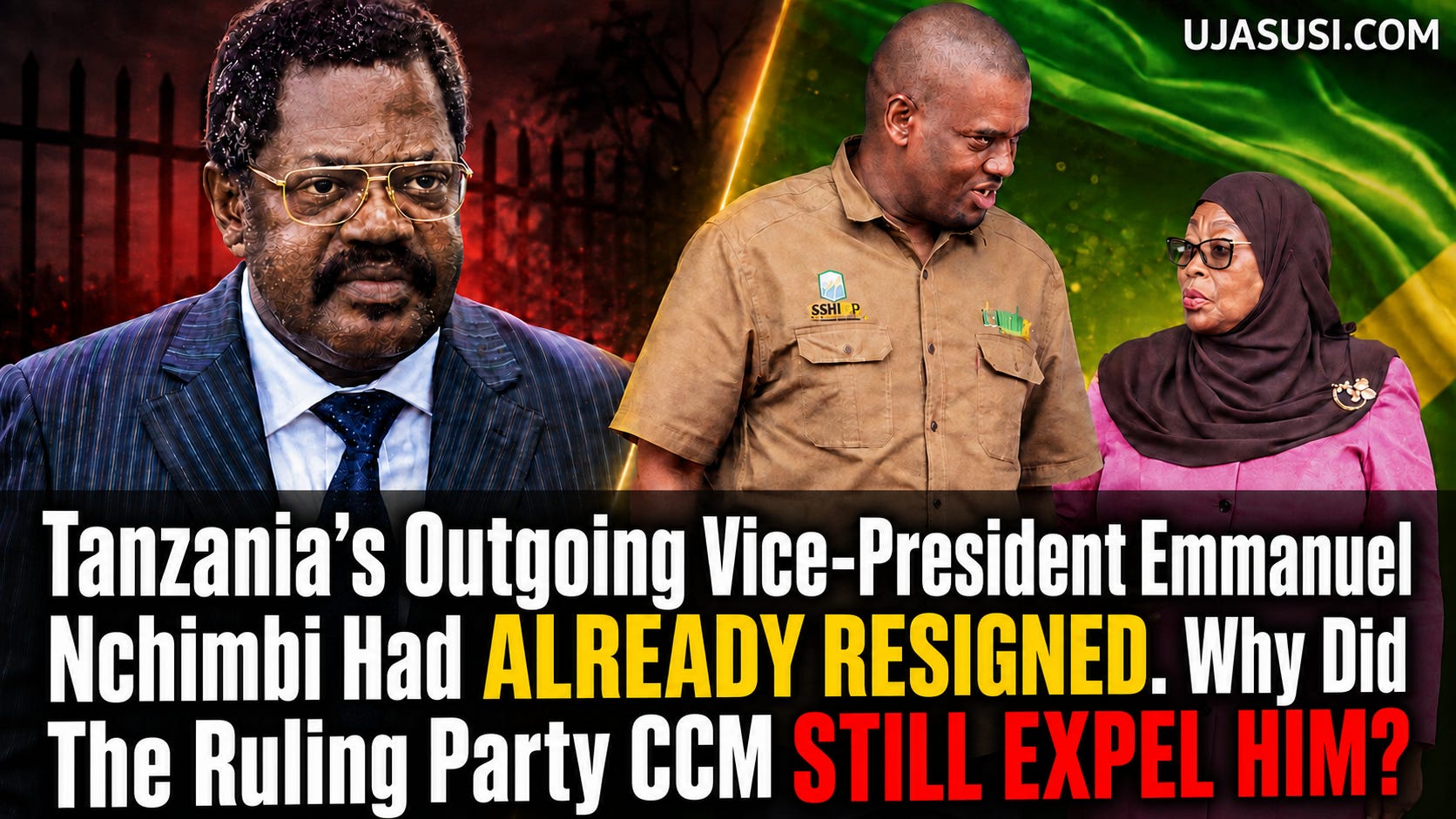
Emmanuel Nchimbi had already announced his resignation and retirement from politics. CCM’s decision to expel him and immediately nominate Deogratius Ndejembi raises deeper questions about political discipline, presidential power and the real reasons for his removal.
Publication date: 27 August 2026 | 0345 BST
Assessment status: Breaking and developing
Analytic confidence: Moderate. The institutional actions are confirmed, but the precise allegations against Emmanuel Nchimbi remain undisclosed.
SOURCE-OF-TRUTH BRIEF
Confirmed facts
On 25 August 2026, Vice-President Emmanuel John Nchimbi announced that he would resign, retire from active politics and leave public service, effective 4 September 2026.
Nchimbi said he was convinced President Samia Suluhu Hassan wanted a change and referred to a promise he had made on 27 August 2025 to step aside whenever she wanted another Vice-President.
President Samia accepted the resignation. The initial official statement did not explain why she wanted a change.
On 26 August, CCM’s National Executive Council terminated Nchimbi’s party membership, citing alleged violations of party ethics, rules and principles without publicly detailing the conduct involved.
The same party machinery approved Energy Minister Deogratius John Ndejembi as the proposed replacement.
Ndejembi still requires appointment by the President and confirmation by a majority of the National Assembly before assuming office.
On 24 July, Nchimbi had publicly urged Tanzanians to fight for a new constitution based on national consensus before 2030. His remarks drew criticism from CCM loyalists.
On 19 August, six days before Nchimbi announced his resignation, the government suspended MwanaHALISI’s publishing licence for six months after it reported that he was resisting pressure to step down. The report relied on unnamed sources and the allegation was not independently established.
Key intelligence gaps
What specific ethical violations formed the legal and evidentiary basis for Nchimbi’s expulsion?
Was he given notice, a hearing and an opportunity to respond under CCM procedures?
Why did his resignation take effect on 4 September rather than immediately?
Did the Presidency request his departure directly, and what precipitated that request?
Was his constitutional-reform speech the principal trigger, one indicator of a wider dispute, or merely a public manifestation of an older conflict?
What is the constitutional status of an incumbent Vice-President whose party membership is terminated before his resignation becomes effective?