

Ujasusi Blog’s East Africa Monitoring Team | 14 January 2026 | 0400 GMT
📊 The Central Question
Is Clemence Kenan Mwandambo, the nursery school teacher who appeared on pro-government media following his detention, a traitor who betrayed Tanzania’s activist movement (wanaharakati), or a victim of state pressure?
This intelligence assessment employs Analysis of Competing Hypotheses (ACH) methodology—a systematic framework used by intelligence services to evaluate alternative explanations when evidence permits multiple interpretations. The assessment examines observable patterns in publicly available information to determine which hypothesis best accounts for Mwandambo’s trajectory from activist prominence to post-detention statements widely interpreted as endorsing President Samia Suluhu Hassan’s government.
The question extends beyond one individual. Multiple prominent opposition figures have emerged from detention appearing to support the ruling Chama Cha Mapinduzi (CCM) party. Understanding the mechanisms behind these transformations carries implications for Tanzania’s opposition movements, international observers, and those monitoring democratic erosion in East Africa.
⚠️ Operational Context: The 10,000-Death Massacre
The Intelwatch submission to the International Criminal Court documents that security forces killed reportedly around 10,000 people over three days following the 29 October 2025 general election protests. Cristina Roque, Intelwatch Executive Director, stated that security forces deployed live ammunition rather than crowd control measures, with evidence including sniper attacks from significant distances, morgue documentation showing one facility alone contained 800 bodies, and thousands of videos documenting execution-style killings.
Medical professionals were threatened with death if they released casualty figures, explaining limited international media coverage. Security forces removed bodies from streets and hospitals to undisclosed locations, with government officials providing AFP with coordinates for suspected mass graves near Dar es Salaam at Kondo and Mabwepande, though sources stated they would “end up dead” if their names were published.
Operations were allegedly directed by Abdul Halim Hafidh Ameir, President Hassan’s son, who controls a private militia that “most people believe... [is] involved in the abductions from the beginning”, according to multiple government sources speaking to AFP. This violence began more than a year before the elections, indicating pre-planned operations rather than reactive crisis management.
This massacre forms the backdrop against which Mwandambo’s case must be understood. The scale of violence demonstrated the regime’s capacity and willingness to deploy lethal force against opposition, fundamentally altering the risk calculations facing activists and opposition figures.
👥 The Cabal and Post-Election Power Consolidation
A four-person cabal has consolidated power following the October 2025 elections, comprising Abdul Halim Hafidh Ameir (President Hassan’s son), Waziri Salum (president’s private secretary), Suleiman Abubakar Mombo (TISS director), and Angela Kizigha (East African Parliament member). Government insiders speaking to AFP described being “in shock” over the massacre but “too afraid to speak out”, noting that this power consolidation is “unprecedented and very un-Tanzanian”.
The post-election period has witnessed systematic pressure on opposition figures and activists. Kenyan activist Boniface Mwangi and Ugandan activist Agather Atuhaire testified to sexual assault and torture whilst detained in Tanzania in May 2025. United Nations human rights experts documented more than 200 enforced disappearances since 2019, with significant acceleration during 2024-2025.
Multiple Chadema members have defected to CCM, particularly following the October 2025 elections. Government sources told AFP that Abdul Halim Hafidh Ameir has allegedly been spending millions of shillings on operations targeting government critics, though the specific nature of these operations remains subject to competing claims and interpretations.
The Tanzania Intelligence and Security Service (TISS), under Director Mombo’s leadership, maintains responsibility for monitoring threats to national security—a mandate that encompasses opposition political activity under Tanzania’s current security framework.
📋 Case Overview: Mwandambo’s Timeline
Clemence Kenan Mwandambo, a nursery school teacher in Mbeya, gained prominence through short videos on TikTok and Instagram discussing public interest matters using colloquial Tanzanian language. His catchphrase “Nachoka mimi mzee wenu Mwandambo” (I’m tired, your elder Mwandambo) resonated with frustrated youth, earning him recognition as “Baba wa Gen-Z” (Gen-Z’s father).
21 November 2025: First arrest in Mbeya on charges of circulating “provocative” messages on Facebook and Instagram ahead of planned 9 December Independence Day protests. Released on bail.
29 December 2025: Second arrest whilst reporting to Mbeya Central Police Station as required by bail conditions. Held incommunicado for twelve days, violating Tanzania’s constitutional requirement that arrested persons appear before courts within 24 hours.
9 January 2026: Lawyers filed habeas corpus application after being unable to locate their client.
10 January 2026: Mwandambo produced at Temeke District Court in Dar es Salaam. Court proceedings occurred without lawyers’ or family’s prior knowledge. Prosecutors stated they were “not being able to gather sufficient evidence to charge the respondent”. Court issued binding over order requiring monthly police reporting for one year, surrender of all social media accounts to police, five million Tanzanian shilling bond, and prohibition from undefined “cybercrime-related offences”.
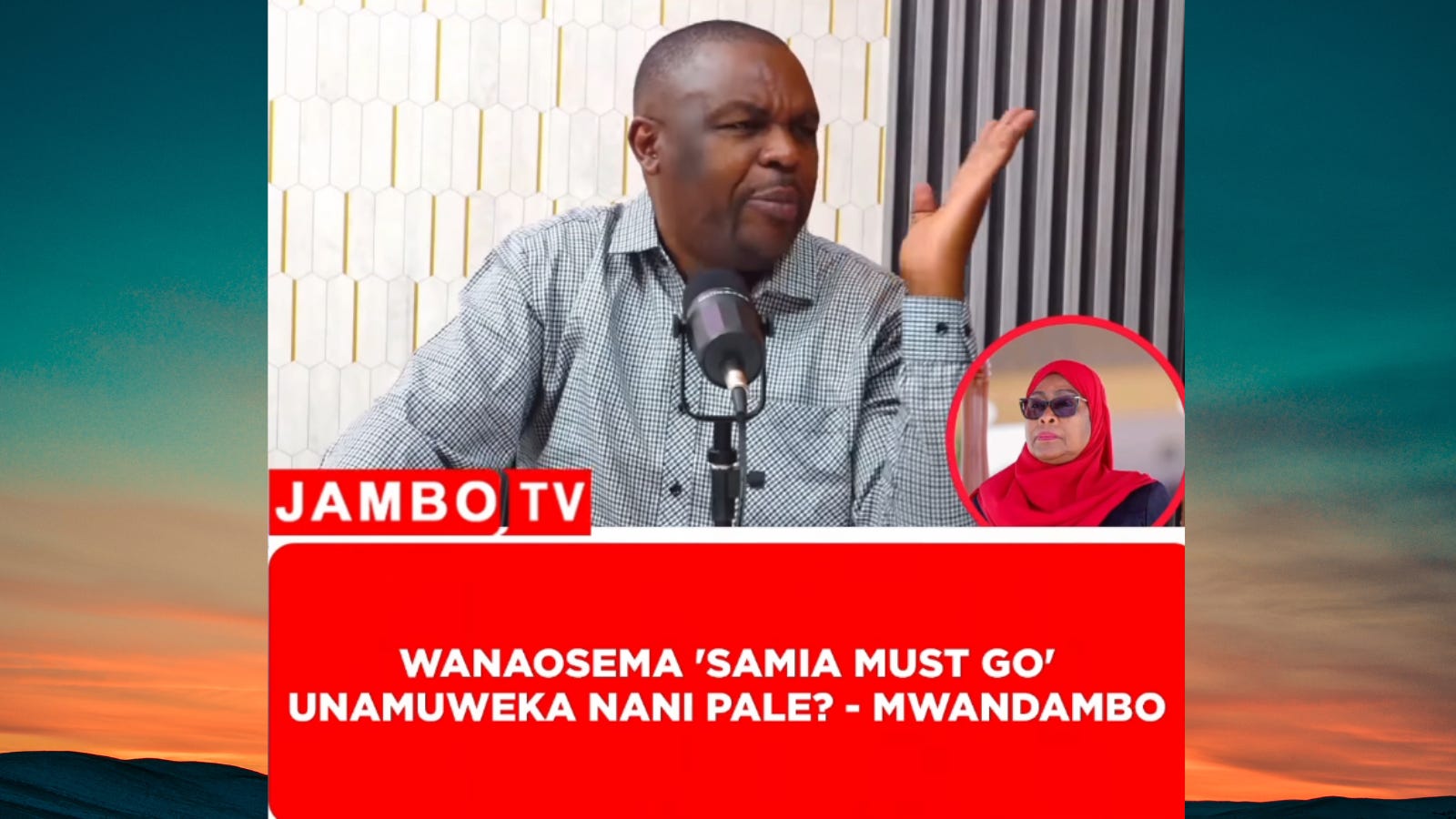
Post-release: Mwandambo appeared on Jambo TV, a media platform with editorial positions supporting government policies. During the appearance, he made statements that observers, opposition figures, and activists interpreted as endorsing President Hassan and distancing himself from opposition activism.
These are the documented facts of Mwandambo’s case. What they mean—and which explanation best accounts for his trajectory—requires systematic analytical methodology applied to available evidence.