
🚨 Uganda’s Military Chief Apologises to United States Following Diplomatic Crisis Over Electoral Violence and Extrajudicial Killings

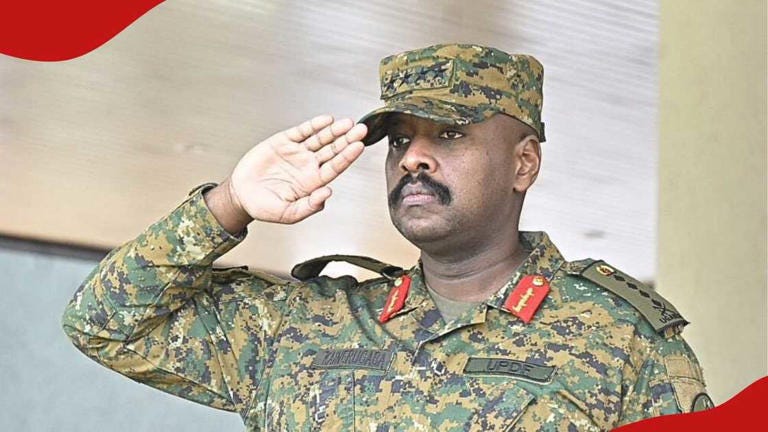
Ujasusi Blog’s East Africa Monitoring Team | 31 January 2026 | 0315 GMT
General Muhoozi Kainerugaba, Uganda’s Chief of Defence Forces and President Yoweri Museveni’s son, issued a public apology to the United States on 30 January 2026 after threatening to suspend military cooperation and claiming responsibility for extrajudicial killings of opposition supporters. The apology followed intense diplomatic pressure from US Senator Jim Risch, who called for targeted sanctions against Kainerugaba over Uganda’s disputed 2026 presidential elections, which Human Rights Watch documented as involving mass arrests and forced disappearances.
What prompted General Muhoozi Kainerugaba’s apology to the United States?
The apology followed a rapid escalation of Uganda-US tensions rooted in three interconnected developments: inflammatory social media statements by Kainerugaba, Congressional demands for sanctions, and threats to sever bilateral security cooperation.
On 19 January 2026, Kainerugaba publicly claimed on X (formerly Twitter) that government forces had “killed 22 NUP terrorists” referring to supporters of the opposition National Unity Platform. In subsequent posts, he escalated the figure to 30 killings whilst threatening opposition leader Robert Kyagulanyi (Bobi Wine) as his hoped-for “23rd” victim. These admissions constituted unprecedented public acknowledgement of extrajudicial actions by a serving military commander.
Senator Jim Risch, Chairman of the Senate Foreign Relations Committee, responded on 23 January by calling Uganda’s elections a “hollow exercise” and demanding the Trump administration review sanctions against Kainerugaba specifically. Risch characterised Uganda as an “increasingly problematic exporter of instability” whilst drawing parallels with Tanzania’s democratic regression.
The crisis intensified when Kainerugaba accused US Embassy personnel in Kampala of aiding Bobi Wine’s evasion of military pursuit. In now-deleted tweets, he claimed “unimaginative bureaucrats at the Embassy” had “undermined” security cooperation since 2015 and announced suspension of all UPDF cooperation with the US Embassy, including operations in Somalia.
On 30 January, Kainerugaba reversed course, posting on X: “I want to apologise to our great friends, the United States, for my earlier tweets that I have now deleted. I was being fed wrong information. I have spoken with the US Ambassador, and everything is okay. We are going to continue our military cooperation as usual.”
What were the specific details of Uganda’s disputed January 2026 elections?
The 15 January 2026 presidential election delivered President Museveni a seventh consecutive term through a process international observers characterised as fundamentally flawed. The Electoral Commission declared Museveni victor with 7,944,772 votes (71.61%) against Bobi Wine’s 2,741,238 votes (24.72%)—margins opposition figures contested as fraudulent.
Key electoral irregularities documented include:
Internet blackout: Communications shutdown implemented on 13 January prevented independent verification of results and restricted real-time documentation of malpractice
Mass pre-electoral detention: Authorities arrested over 2,000 NUP supporters during the campaign period
Military violence at polling stations: Security forces opened fire at opposition rallies, with documented killings in Butambala District and 10 deaths at NUP MP Muwanga Kivumbi’s residence
Video evidence of fraud: Bobi Wine presented to Al Jazeera purported footage showing election officials marking ballots for Museveni
The election occurred against the backdrop of Uganda’s demographic crisis: over 70% of the nation’s 46 million citizens are under 30, facing 43% youth unemployment whilst governed by an 81-year-old president who has ruled since 1986. Bobi Wine, aged 43, campaigned in bulletproof vest and helmet following repeated assassination fears.
How did the United States respond to Uganda’s post-election violence?
US Congressional and State Department responses escalated through multiple channels, culminating in unprecedented calls for sanctions against a sitting African defence chief.
Senator Risch’s 23 January statement marked a watershed moment by explicitly naming Kainerugaba as a sanctions target whilst characterising Uganda’s governance as prioritising “domestic control through political violence, abductions, imprisonment, intimidation of opponents, and the misuse of state resources.” The statement drew direct comparison with Tanzania’s October 2025 elections, warning that both nations’ trajectories raised “serious concerns about what this portends for other countries with upcoming elections, including Ethiopia and Kenya.”
This represented the culmination of sustained US sanctions policy targeting Uganda’s security apparatus:
October 2024: Four Uganda Police Force officials (Bob Kagarura, Alex Mwine, Elly Womanya, Hamdani Twesigye) sanctioned for gross human rights violations including torture
Previous designations: Deputy military chief Lt Gen Peter Elwelu (extrajudicial killings), Parliament Speaker Anita Among, Minister Amos Lugoloobi, former police chief Gen Kale Kayihura, ex-spy chief Maj Gen Abel Kandiho
US Ambassador William Popp, who presented credentials in September 2023, became the focal point of Kainerugaba’s ire during a separate October 2024 incident when the general demanded Popp’s apology or expulsion—a demand the US Embassy flatly rejected, clarifying no formal apology request was received through diplomatic channels.
What are the broader implications for US-Uganda security cooperation?
The apology represents tactical retreat in Uganda’s increasingly fraught relationship with Washington. Uganda remains a significant US security partner in East Africa, particularly in counterterrorism operations against al-Shabaab in Somalia and regional stabilisation efforts.
Critical security cooperation domains at risk include:
AMISOM/ATMIS operations: UPDF contingents form substantial component of African Union peacekeeping in Somalia, where Kainerugaba specifically threatened to suspend cooperation
Intelligence sharing: Counterterrorism intelligence networks established over decades of partnership
Military training programmes: US investment in UPDF professionalisation through Command and General Staff College exchanges (Kainerugaba himself graduated from Fort Leavenworth in 2008)
Equipment and logistics support: Ongoing military assistance programmes
Senator Risch’s statement calling for “reassessment” of the security relationship signals potential Congressional action beyond individual sanctions. The explicit comparison with Tanzania, where similar democratic regression has occurred, suggests a broader US policy recalibration toward East African authoritarian consolidation.
The International Criminal Court dimension adds further complexity: ICC submissions alleging crimes against humanity by Kainerugaba, including his role as Special Forces Command chief during documented abductions and torture, create potential legal accountability mechanisms beyond US sanctions frameworks.
📊 What does this incident reveal about Uganda’s succession politics?
Kainerugaba’s pattern of inflammatory statements followed by forced retractions illuminates the fraught dynamics of Uganda’s anticipated dynastic succession. As both Chief of Defence Forces and First Son, Kainerugaba embodies the militarisation of Ugandan politics whilst simultaneously demonstrating the limits of his actual power.
Key succession indicators:
Presidential ambitions: Kainerugaba chairs the Patriotic League of Uganda, a pressure group lobbying for his presidency
Military consolidation: Control of Special Forces Command (2008-2017, 2020-2021) provided power base for loyalist officer network
Diplomatic liability: Repeated international incidents—threatening to capture Nairobi in 2022, threatening to seize Khartoum in December 2024—necessitating presidential damage control
President Museveni’s October 2022 decision to remove Kainerugaba from land forces command following the Kenya tweets suggests paternal willingness to constrain his son’s excesses when diplomatic costs become prohibitive. Yet Kainerugaba’s subsequent promotion to Chief of Defence Forces indicates the succession trajectory remains intact despite erratic behaviour.
The January 2026 episode demonstrates that whilst Kainerugaba operates with considerable autonomy in domestic repression, external pressure—particularly from Washington—can compel tactical retreats that expose the limits of his political invulnerability. His acknowledgement of being “fed wrong information” provided face-saving mechanism whilst preserving US security cooperation essential to Uganda’s regional military role.
Intelligence Assessment: The apology resolves immediate bilateral tensions but fails to address underlying governance crisis that prompted US sanctions threats. With Museveni aged 81 and Kainerugaba’s presidential ambitions increasingly transparent, Uganda’s democratic trajectory appears locked toward hereditary military dictatorship. The international community’s willingness to maintain security cooperation despite documented extrajudicial killings signals prioritisation of counterterrorism partnerships over human rights accountability—a calculation that emboldens rather than constrains authoritarian consolidation across East Africa.