

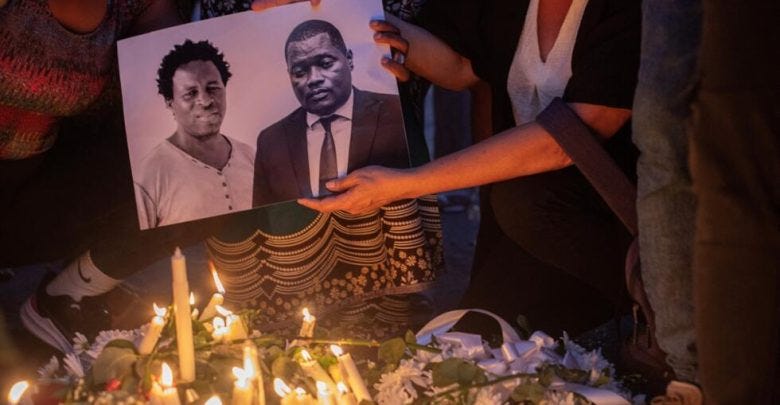

Maputo, October 19, 2024 — The European Union (EU) has condemned the recent political killings in Mozambique, raising serious concerns about the escalating tensions surrounding the country’s highly anticipated presidential elections.
In a strong statement, the EU expressed outrage over last week’s deaths of Elvino Dias, a legal advisor to opposition presidential candidate Venâncio Mondlane, and Paulo Guambe, a prominent opposition politician.
The duo was gunned down in the Bairro da Coop neighbourhood of the capital, Maputo.
Both were victims of what the EU described as “politically motivated killings.”
“The European Union condemns in the strongest terms the killing of Elvino Dias and Paulo Guambe,” the statement read, offering condolences to the victims’ families and calling for a swift and transparent investigation.
“In a democracy, there is no place for politically motivated killings.”
The killings come on the heels of widespread unrest following last week’s elections, which have been marred by reports of violent crackdowns on opposition supporters.
According to observers, tensions have steadily increased in Mozambique as the country faces one of its most contentious electoral cycles since the end of its civil war in 1992.
The opposition has accused the ruling Frelimo party of election fraud and voter suppression, allegations that have heightened fears of post-electoral violence.
The EU has urged the Mozambican government to ensure justice is served and to take steps to guarantee the safety of political candidates.
“Strong protection measures for all candidates in this post-electoral period are crucial,” the statement emphasized, calling for restraint from all parties.
Rising Tensions
Mozambique has been on edge in the weeks leading up to the presidential election, with political rivalries intensifying.
The long-standing ruling party, Frelimo, is facing strong competition from opposition figures, including Venâncio Mondlane, who is representing the Democratic Movement of Mozambique (MDM).
Mondlane has gained significant momentum in recent months, positioning himself as a key challenger to Filipe Nyusi’s successor, Daniel Chapo, who is running as Frelimo’s candidate.
The fragile peace in the country, which has endured periodic flare-ups of violence since the signing of peace accords three decades ago, is now being tested.
Other opposition candidates, such as Ossufo Momade of the Renamo party, have also voiced concerns about the credibility of the electoral process.
Renamo, historically a rival to Frelimo and formerly a rebel group during the Mozambican Civil War, has long accused the ruling party of undermining democratic institutions to maintain its grip on power. The rising violence and suppression of opposition figures have only deepened these suspicions.
Civilians pay the price
The violence has not only targeted opposition leaders but also ordinary citizens, with reports of clashes between supporters of rival parties, police crackdowns on protesters, and accusations of vote tampering.
Venâncio Mondlane, whose political platform promises sweeping reforms and greater government transparency, has been a central figure in the opposition’s push for change.
The assassination of his legal advisor, Elvino Dias, sends a chilling message, according to analysts, heightening concerns about the fairness and safety of the ongoing electoral process.
The EU has deployed an Election Observation Mission to Mozambique to monitor the situation closely, calling on the Election Management Bodies to ensure transparency and respect for the people’s will.
“We expect the Election Management Bodies to conduct the full process with all the necessary due diligence and transparency,” the EU said, underscoring the need for a credible and peaceful resolution to the electoral contest.