

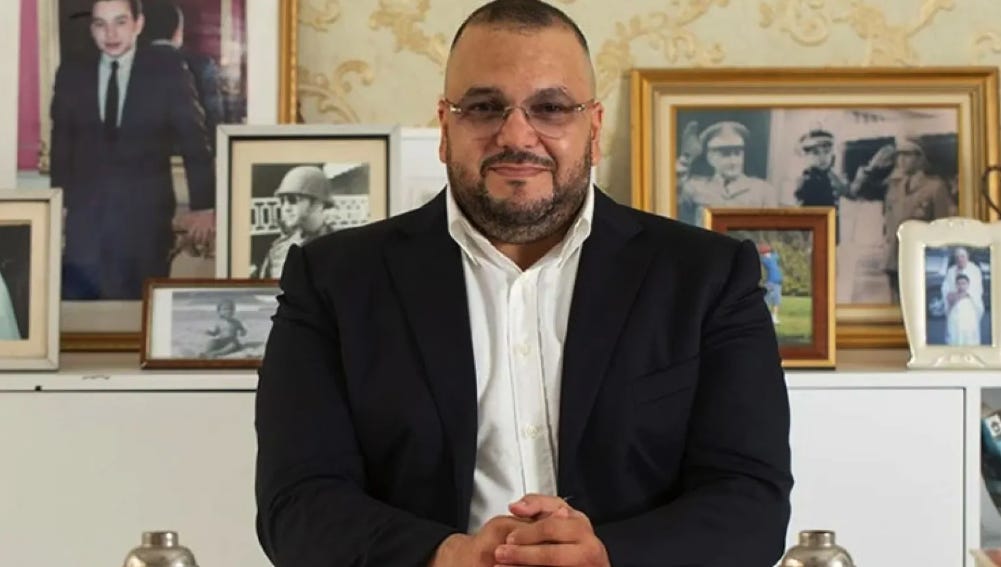
Algiers, Algeria | February 5th, 2025 — In a seismic development shaking both Rabat and Madrid, Mehdi Hajawi, the deputy director of Morocco’s Directorate General for Studies and Documentation (DGED)—the country’s foreign intelligence agency—has fled to an unknown destination after initially seeking refuge in Spain. His defection, first reported by the Spanish outlet El Confidencial on Sunday, marks a catastrophic blow to Morocco’s intelligence apparatus and exposes deep fractures within the kingdom’s power structure.
A High-Stakes Escape: From France to Spain to an Unknown Fate
Following his break with the Moroccan regime, Hajawi first sought refuge in France. However, according to El Confidencial, his presence there was met with aggressive intimidation, including threats to his safety and that of his wife and infant daughter. These coercive tactics prompted him to flee to Spain in search of more secure asylum. Yet, sensing a shift in Madrid’s stance—one that suggested a willingness to repatriate him to Rabat—Hajawi disappeared once again, eluding both Spanish authorities and potential Moroccan operatives who may have sought to silence him permanently.
Spanish authorities reportedly placed Hajawi under judicial supervision, requiring him to periodically check in with the courts. His failure to comply with these conditions made him officially classified as a fugitive from justice. However, sources indicate that Hajawi’s vanishing act was driven by legitimate fears—either of forced repatriation to Morocco, where he would face certain persecution or assassination by operatives loyal to the Moroccan regime.
A Devastating Blow to Moroccan Intelligence and Foreign Operations
Hajawi’s defection represents an unprecedented intelligence disaster for Morocco. As the former deputy head of the DGED, he had access to some of the kingdom’s most sensitive files, covering covert operations, intelligence-sharing agreements, and clandestine deals with foreign governments. His knowledge spans Morocco’s military and espionage cooperation with the Zionist entity, European political figures compromised by Moroccan bribery, and the state’s illegal cyber-surveillance activities, including the notorious Pegasus spyware scandal.
The ramifications of his escape are far-reaching. His potential testimony or collaboration with European intelligence agencies could expose the deep web of corruption, blackmail, and espionage Morocco has orchestrated across the region. European officials, especially those implicated in illicit dealings with Rabat, now face the specter of public disgrace and legal scrutiny should Hajawi’s revelations come to light.
A Fragile Throne: Internal Power Struggles Within the Moroccan Regime
Beyond its external implications, Hajawi’s defection has ignited fresh turmoil within the Moroccan security establishment. His flight will likely intensify the simmering power struggle between two of Morocco’s most powerful intelligence figures: Abdellatif Hammouchi, head of the General Directorate for National Security and the Internal Intelligence Service (DGST), and Yassine Mansouri, director of the DGED. Once considered a loyal confidant of King Mohammed VI, Mansouri is now increasingly seen as vulnerable amid a kingdom plagued by internal fractures and an absent sovereign.
Hammouchi, who has gained considerable influence in recent years, is believed to be manoeuvring to consolidate power at Mansouri’s expense. The defection of Mansouri’s second-in-command may provide an opportune moment for Hammouchi to push his rival further into political irrelevance. With King Mohammed VI largely disengaged due to health concerns and prolonged absences from state affairs, Morocco’s security elite is now locked in a ruthless battle for dominance, further exposing the instability within the regime.