

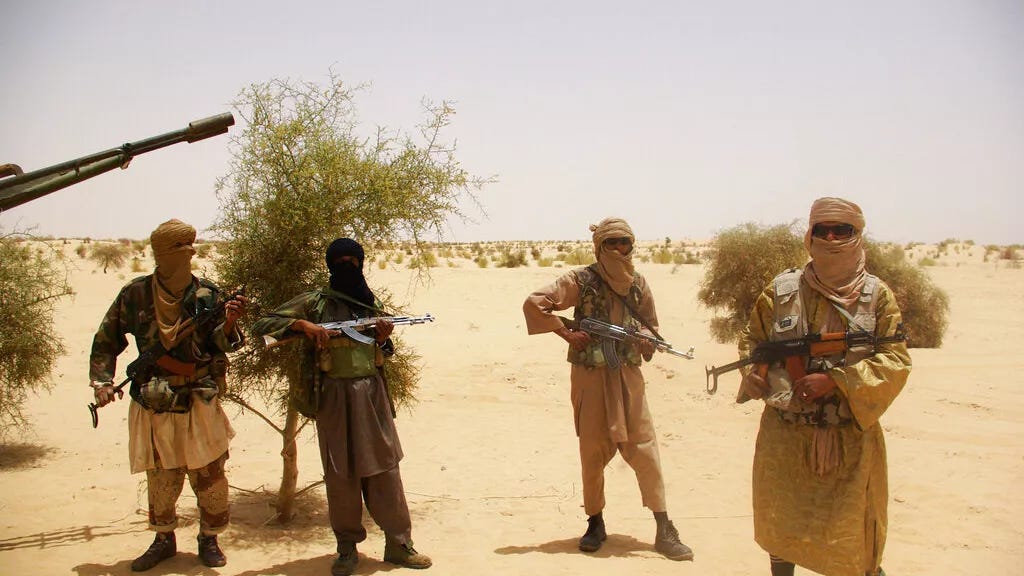

Residents of north and central Mali face the risk of an onslaught of violence from resurgent jihadist forces.
Their rulers are to blame.
Colonel Assimi Goita, the leader of Mali’s military junta, has engineered the departure of a 13,000-strong United Nations force just over a year after strained relations with France led Paris to withdraw its 5,000 troops. On June 30, the UN Security Council voted to remove the mission by January.
Now, Mali’s ramshackle military will, with the assistance of about 1,500 personnel from Russia’s Wagner mercenary group, battle al-Qaeda-linked militants and Islamic State in The Greater Sahara who’ve killed hundreds and driven thousands from their homes in recent months.
And Wagner’s support isn’t assured. The group abandoned an insurrection in Russia earlier this month, its leader is in exile and it’s unclear who is in charge.
Goita’s decision fulfills an objective of reducing western scrutiny as his regime faces increased criticism over its reluctance to return to democracy and a questionable human rights record. At the same time, it draws him closer to Russia. The US accused Wagner of being behind his demands.
But it’s a decision he may regret. The country’s isolation from its western partners is nearly complete, while its ties with its neighbors are fraying.
“The withdrawal of peace-keepers may prompt jihadists to reassess their strategy and lay siege to urban centers,” International Crisis Group analysts wrote ahead of the UN vote. “The government has yet to reveal its plan for filling the vacuum.”
More powerful enemies and fewer friends will likely weaken Goita’s ability to quell insurgencies and may make his hold on power tenuous.