

Ujasusi Blog’s Horn of Africa Monitoring Team| June 7, 2025 | 0600 BST
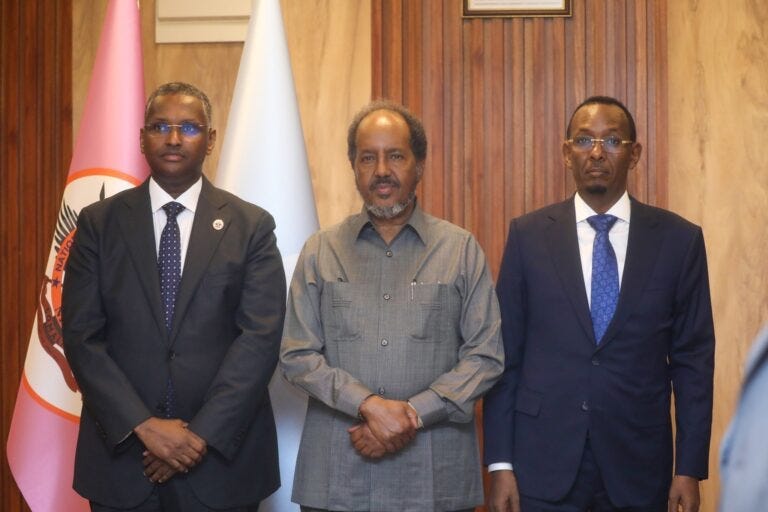
MOGADISHU – In a major development poised to reshape Somalia’s intelligence and national security landscape, the Federal Government of Somalia has appointed Mahad Mohamed Salad as the new Director of the National Intelligence and Security Agency (NISA). The announcement, made during an emergency session of the Council of Ministers, signals a strategic realignment at the apex of Somalia’s security architecture.
Chaired by Prime Minister Hamza Abdi Barre, the cabinet formally endorsed Salad’s appointment and expressed gratitude to the outgoing director, Abdullahi Mohamed Ali, widely known as Sanbaloolshe, for his service during his tenure.
This leadership transition comes at a pivotal moment in Somalia’s state-building journey, as the country confronts a volatile mix of security threats, political turbulence, and institutional reforms.
🟡 Notably, Ujasusi Blog had reported this power shift ahead of the official confirmation, publishing an in-depth analysis titled “Somalia’s Intelligence Power Struggle: Mahad Salad Poised to Return as NISA Chief Amid Unrest Within Sanbaloolshe’s Leadership” on May 30, 2025. The article examined the internal tensions within NISA, the waning influence of Sanbaloolshe, and the emerging likelihood of Salad’s reappointment—a development now confirmed by the Federal Government.

Why Mahad Salad? A Return to the Helm With Strategic Calculations
Mahad Salad is no stranger to Somalia’s intelligence apparatus. He previously served as NISA Director in 2022 and has held critical positions, including Member of Parliament, Government Minister, and Senior Security Official.
His reappointment is widely seen as a strategic recalibration amid a delicate security environment. The Somali government is currently intensifying military operations against the al-Qaeda-linked militant group al-Shabaab, while also grappling with governance challenges in newly liberated areas and political disputes between federal and regional states.
Salad’s close alliance with President Hassan Sheikh Mohamud, his institutional memory, and deep networks within the security sector are expected to enhance NISA’s responsiveness and strategic alignment with the national leadership.
Sanbaloolshe’s Dismissal: Sign of Deeper Frictions
The cabinet’s decision to remove Sanbaloolshe, who had served as Director since 2022, reflects mounting concerns about the agency’s strategic direction, internal cohesion, and coordination with other arms of government.
Sources indicate that under Sanbaloolshe, NISA experienced operational inefficiencies, morale issues, and a strained relationship with regional authorities, leading to a diminished public perception of the agency. His dismissal was thus not unexpected, particularly in light of the mounting pressure to realign the security apparatus with evolving national priorities.
New Security Priorities Under Mahad Salad
The reinstatement of Mahad Salad comes with high expectations and immediate security imperatives. Among his top priorities:
Enhancing inter-agency coordination on counterterrorism
Disrupting al-Shabaab’s financial and logistics networks
Expanding urban intelligence operations to pre-empt attacks
Rebuilding trust between federal and state intelligence bodies
Reinforcing intelligence support for military operations in liberated zones
Security analysts believe Salad’s leadership could catalyse a more unified and intelligence-led counterterrorism campaign that synchronises national military, police, and intelligence strategies.
Restoring Confidence in Somalia’s Intelligence Community
One of Salad’s most urgent tasks will be rebuilding the credibility and legitimacy of NISA, an agency often viewed with suspicion by the public and regional authorities alike. Past accusations of political bias, unlawful detentions, and lack of transparency have eroded public trust.
Reform measures expected under his watch include:
Strengthening civilian oversight and parliamentary accountability
Improving transparency in NISA’s operations
Expanding human rights training for intelligence operatives
Integrating technology to modernise intelligence workflows
This reform agenda is crucial to ensuring that the agency not only effectively combats threats but also operates within a democratic and lawful framework.
Geopolitical Context and Regional Implications
Somalia’s security trajectory cannot be viewed in isolation. The country sits at the crossroads of a volatile region, and any change in its security leadership has a profound impact across the Horn of Africa.
Salad’s return is likely to be welcomed by international stakeholders such as the United States, Turkey, Qatar, and the African Union, all of whom play key roles in Somalia’s security sector. His previous experience dealing with these actors offers a foundation for deepening cooperation, especially in areas of counterterrorism, border security, and strategic intelligence sharing.
Additionally, the reappointment comes as regional actors—including Ethiopia, Kenya, and Eritrea—navigate their internal security dynamics, underscoring the need for stronger Somali-led regional intelligence coordination.
Future Outlook: Somalia’s Intelligence Landscape Under Review
As Somalia moves into a new phase of state-building, constitutional reform, and federal integration, the intelligence sector must evolve in parallel. Under Mahad Salad, the following developments are anticipated:
Creation of regional intelligence fusion centres
Expansion of cyberintelligence capacity
Professionalisation of NISA recruitment and training
Formulation of a national intelligence strategy aligned with Vision 2060
These reforms will be critical in ensuring that Somalia’s security institutions not only respond to present-day threats but also build resilience for future challenges.
A Defining Moment for Somali Intelligence
The reappointment of Mahad Mohamed Salad marks a transformative juncture in Somalia’s security evolution. With decades of experience, deep political connections, and a reformist mandate, Salad assumes leadership of NISA at a time when the stakes could not be higher.
Somalia’s long battle against insurgency, combined with the demands of democratic governance, economic recovery, and inter-clan cohesion, requires a strong, legitimate, and accountable intelligence service. Salad’s leadership—previously predicted by Ujasusi Blog and now realised—will be critical in shaping this future.