[FREE ACCESS] M23 Rebels Enter Uvira DR Congo Despite Trump Peace Deal December 2025
Ujasusi Blog’s Great Lakes Region Monitoring Team | 11 Dec 2025 | 0145 GMT
🔓FREE ACCESS
Please consider becoming a paid subscriber
You can also donate.
What Happened
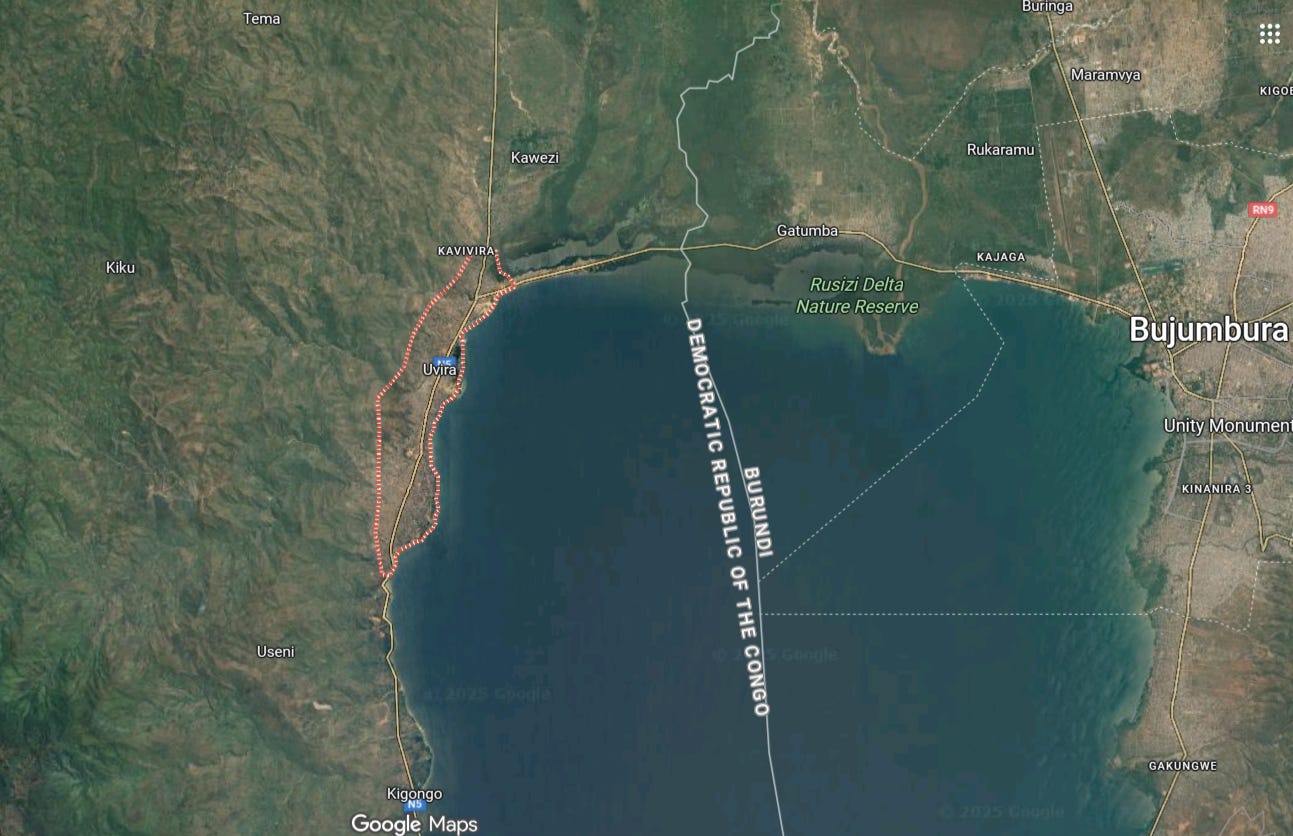
M23 rebel forces entered Uvira, the last government-held major city in South Kivu province, Democratic Republic of Congo, on December 10, 2025. The offensive occurred five days after US President Donald Trump brokered a peace agreement between President Félix Tshisekedi and Rwandan President Paul Kagame to end the eastern DR Congo conflict.
Residents reported M23 fighters marching in single column formation from the north-east, meeting no resistance as they entered major streets. Heavy artillery fire and explosions forced approximately 200,000 civilians to flee their homes since early December 2025, with over 8,000 daily arrivals recorded at the Burundian border over the past two days.
Why It Happened
The M23 offensive exploited implementation gaps in the Trump-brokered ceasefire agreement signed December 5, 2025. M23 was excluded from the bilateral accord between Kinshasa and Kigali, participating only in separate Qatar-mediated negotiations with the Congolese government.
The timing suggests strategic calculation to seize Uvira before enforcement mechanisms could be established. Uvira’s location 27 kilometres from Burundi’s capital Bujumbura across Lake Tanganyika provides M23 with leverage over regional trade routes and mineral transit corridors.
Rwanda’s alleged continued military support for M23, as documented by UN expert panels, enabled the rebel group to sustain offensive operations despite international pressure. The US State Department explicitly stated Rwanda “continues to provide support to M23” and must prevent further escalation.
Who Was Involved
M23 Rebel Group: Launched the offensive from positions north of Uvira near the Burundian border. Claimed to have “liberated” the city through UN-backed Radio Okapi broadcasts.
Rwanda Defence Force: Accused by the United States, European Union, and eight European nations of providing direct support to M23 operations. UN experts assess Rwanda’s army maintains “de facto control of M23 operations.” Kigali denies involvement, accusing DR Congo and Burundi of ceasefire violations.
Burundian Defence Forces: Deployed several thousand troops in South Kivu supporting the Congolese government. Foreign Minister Édouard Bizimana characterised the M23 advances as “a slap in the face” to Washington’s diplomatic efforts. Burundi closed its border with DR Congo following the offensive.
Armed Forces of the Democratic Republic of Congo (FARDC): South Kivu Governor Jean-Jacques Purusi claimed government forces and allied militias retained control of Uvira despite M23 presence. Residents reported minimal resistance to rebel advances.
United Nations Organisation Stabilisation Mission in the Democratic Republic of the Congo (MONUSCO): Reported 74 deaths and 83 wounded since early December 2025, predominantly civilians. Documented 200,000 internally displaced persons fleeing combat zones.
Timeline
1994-Present: Eastern DR Congo experiences continuous armed conflict following the Rwandan genocide, with multiple failed peace agreements since the 1990s.
Early 2024: M23 seized control of Goma and Bukavu, the two other major cities in eastern DR Congo, establishing dominance across North and South Kivu provinces.
December 5, 2025: President Donald Trump brokered a bilateral ceasefire agreement between President Félix Tshisekedi and President Paul Kagame in Washington. Burundian President Évariste Ndayishimiye attended as observer. M23 excluded from the accord, participating only in separate Qatar-mediated negotiations.
Early December 2025: M23 launched offensive operations in South Kivu, triggering mass displacement. UN recorded 200,000 internally displaced persons by December 10.
December 8-9, 2025: M23 forces advanced toward Uvira from northern positions. Burundian administrative sources recorded over 8,000 daily refugee arrivals.
December 10, 2025: M23 fighters entered Uvira in single column formation. Heavy artillery and explosions reported throughout the city. Burundi closed its border crossing. Shops and schools shuttered as residents sheltered indoors.
December 10, 2025: United States, European Union, and eight European nations issued joint statement demanding Rwanda Defence Force “immediately halt offensive operations” and withdraw from eastern DR Congo. US State Department spokesman confirmed Rwanda “continues to provide support to M23.”
What Happens Next
Short-term (1-4 weeks): M23 consolidation in Uvira likely continues despite Governor Purusi’s claims of government control. Humanitarian crisis intensifies as 200,000 displaced persons require emergency assistance. Burundi maintains border closure, straining refugee processing capacity.
Three immediate scenarios exist: First, FARDC and Burundian forces mount counteroffensive to retake Uvira, risking civilian casualties. Second, M23 establishes administrative control and pushes toward remaining government positions in South Kivu. Third, international pressure forces temporary ceasefire pending revised negotiations.
Medium-term (1-3 months): The Trump administration faces credibility test on enforcing its brokered peace agreement. Potential US sanctions targeting Rwandan military officials or economic sectors supporting M23 operations. Qatar-mediated M23-Kinshasa talks either produce breakthrough or collapse entirely.
Regional dynamics shift as Burundi calculates cost-benefit of continued military deployment. Uganda’s position becomes critical if M23 expands territorial control toward North Kivu-Ituri border zones. Tanzania monitors spillover risks to western provinces.
Long-term (3-12 months): Eastern DR Congo governance vacuum persists regardless of Uvira’s immediate fate. M23 control of Goma, Bukavu, and potentially Uvira creates de facto autonomous zone in mineral-rich territories. Central government authority erodes further absent credible military capacity or diplomatic breakthrough.
Structural drivers remain unchanged: competition for coltan, cobalt, and gold resources; Rwandan security concerns regarding FDLR remnants; Congolese state weakness; and regional power rivalries. Cycle of peace agreements and renewed conflict continues absent fundamental resolution of sovereignty, resource governance, and security architecture questions.
International attention likely shifts to other crises unless mass atrocity event occurs or mineral supply chains to Western technology sectors face disruption. Humanitarian catastrophe deepens for eastern Congo’s civilian population trapped between armed actors competing for territorial and economic control.