Ujasusi Blog

Ujasusi Blog

Jenista Mhagama's Death: Was Tanzania's Former Health Minister Eliminated to Suppress October 29 Massacre Evidence? 🇹🇿

Intelligence Analysis of Jenista Mhagama's Suspicious Death 🇹🇿

Evarist Chahali's avatar
Evarist Chahali
Dec 14, 2025
∙ Paid
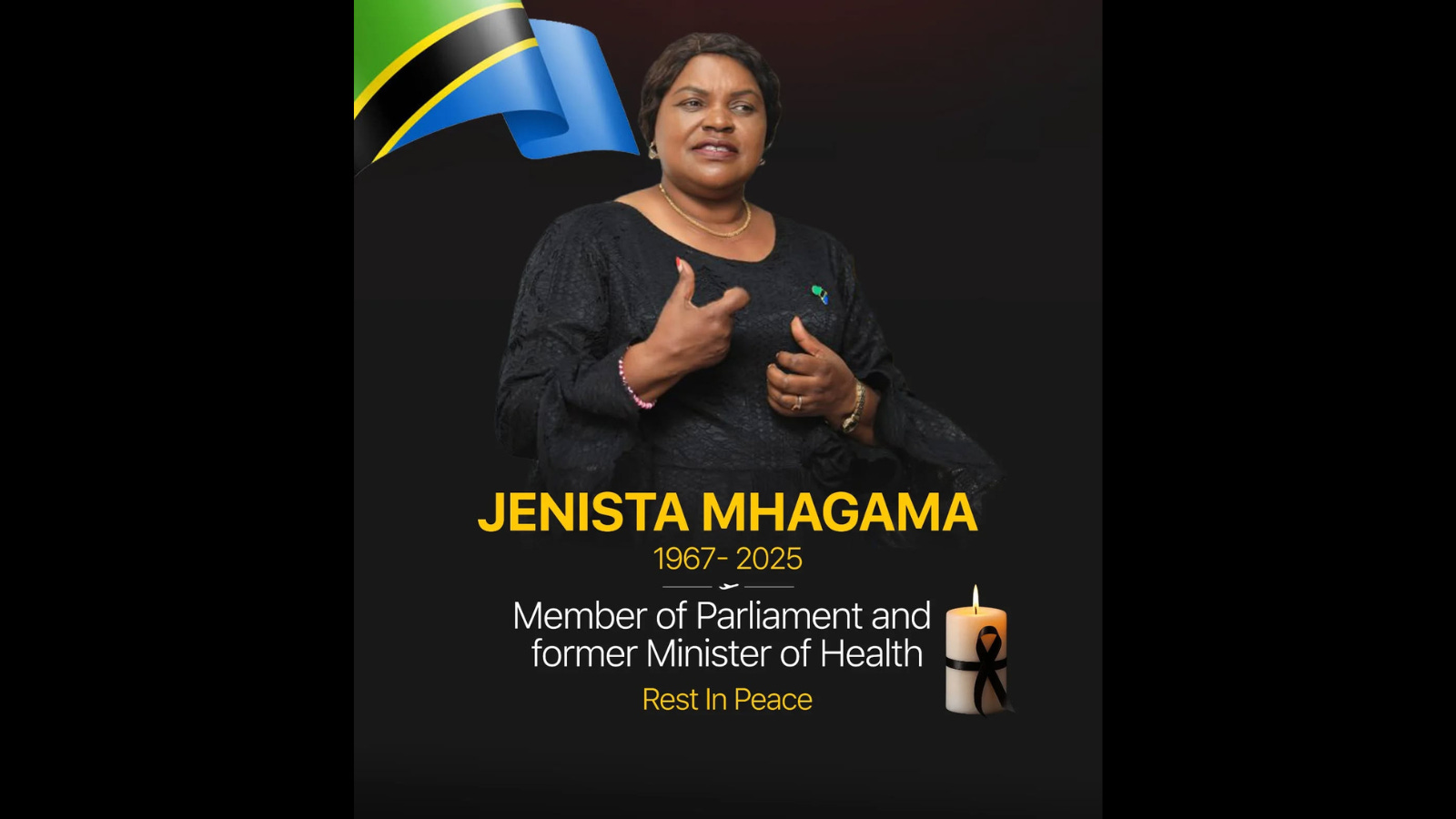
A Facebook condolence message by Air Tanzania Company Limited (ATCL) mourning the passing of Hon. Jenista Joakim Mhagama, Member of Parliament and former Minister of Health.

Ujasusi Blog’s East Africa Monitoring Team | 14 Dec 2025 | 0250 GMT


The death of former Health Minister Jenista Mhagama on 11 December 2025 has intensified speculation about systematic elimination of potential threats to President Samia Suluhu Hassan’s regime. Contradictory official statements, allegations of denied autopsy requests, and the replacement of Mhagama by the President’s son-in-law have fuelled widespread suspicion among Tanzanian political observers that her death was neither natural nor coincidental, occurring amid the country’s worst political violence since independence.

Intelligence methodology note: This analysis reports on competing narratives, allegations, and political dynamics circulating among opposition sources, regime critics, international observers, and official government statements. Claims presented reflect intelligence gathered from multiple sources and represent interpretations held by various actors in Tanzania’s political crisis, not necessarily verified facts. Where information is confirmed by credible international bodies (UN, ICC petitions, human rights organisations), this is explicitly noted.

Why is Jenista Mhagama’s death being treated as suspicious by some observers? 🔍

Competing narratives about Mhagama’s health status:

The circumstances surrounding Mhagama’s death have generated three distinct and contradictory official accounts, creating immediate suspicion among Tanzanian political observers, opposition circles, and regime critics:

Narrative 1 – Government officials claim surprise: Prime Minister Mwigulu Nchemba reportedly stated he was unaware of any health issues affecting Mhagama before her death. Former Minister Damas Ndumbaro, who hails from the same Ruvuma Region as Mhagama, and Anna Kilango both allegedly expressed shock, stating that Mhagama appeared healthy and her death caught them completely by surprise.

Narrative 2 – The successor claims serious illness: Mohammed Mchengerwa, who replaced Mhagama as Health Minister and is President Samia’s son-in-law, reportedly claimed that Mhagama was “seriously ill” before she passed away. This contradicts the PM’s statement and raises immediate questions about information compartmentalisation within the government.

Narrative 3 – Friend reports normal health: A close friend, Ms Clecensia Kapainga, told reporters that she spoke with Mhagama on Tuesday (9 December), just two days before her death, and Mhagama reported she was “doing well and had gone to church.”

Intelligence assessment: The existence of three mutually exclusive narratives from senior government officials about the health status of a recently dismissed cabinet minister is itself significant. If Mchengerwa alone knew Mhagama was seriously ill whilst the PM remained unaware, this suggests either extraordinary compartmentalisation of information or post-facto narrative construction to provide cover for an unexpected death.

What is the alleged autopsy denial and why does it matter? 🏥

Reported family request:

According to sources circulating among opposition networks and regime critics, Mhagama’s family requested a post-mortem examination to determine the cause of death. The government allegedly refused this request. The official cause of death has not been disclosed by authorities as of 14 December 2025.

Political significance:

Factor Intelligence Implication No disclosed cause of death Prevents independent verification Alleged denial of family autopsy request Removes potential forensic evidence Government control of body Controls narrative about manner of death Rapid burial timeline (5 days) Limits window for independent examination

Historical pattern: Tanzania has documented history of enforced disappearances where bodies are either not returned or returned in conditions preventing proper forensic examination. The Tanganyika Law Society documented 83 cases of enforced disappearances as of August 2024, with UN experts raising concerns over 200+ such cases since 2019.

The case of Ali Mohammed Kibao (CHADEMA youth leader found dead with acid burns in September 2024) established precedent for state involvement in deaths of political figures with deliberate destruction of forensic evidence.

Why was Mohammed Mchengerwa’s appointment strategically significant? 👨‍⚡

The Health Ministry as information control centre:

Opposition sources and regime critics believe Mhagama’s removal from the Health Ministry was not punitive but operational – designed to place someone with maximum loyalty to President Samia in control of a ministry with direct access to casualty data from the October 2025 election massacre.

Operational capabilities of Health Minister during political crisis:

Capability Strategic Value Evidence of Use Access to hospital morgue records Can suppress casualty counts Intelwatch reports one morgue held 800 bodies Authority over district medical officers Controls information flow from hospitals nationwide Medical professionals threatened with death if they released casualty figures Medical certificate issuance Can alter official causes of death Mass casualties attributed to “accidents” or undisclosed causes Hospital admission records Can disappear evidence of gunshot wounds, torture CNN documented morgues overflowing, then bodies removed Coordination with security services Facilitates disposal of bodies Government vehicles removing bodies during internet shutdown Enforcement power over medical staff Silences witnesses through intimidation Doctors/nurses threatened with death for releasing data

The son-in-law factor: Mchengerwa is not merely a political appointee but President Samia’s son-in-law, married to her daughter Wanu Hafidh Ameir (who was simultaneously appointed Deputy Minister of Education). This creates direct family incentive to protect the President from ICC prosecution, as her conviction would directly impact his wife and children.

The family control architecture: According to the ICC petition submitted by Intelwatch, the October 2025 massacre operations were allegedly directed by the President’s son, who reportedly heads Tanzania’s intelligence services. Combined with:

  • Son-in-law (Mchengerwa) controlling Health Ministry and hospital records

  • Daughter (Wanu Hafidh Ameir) as Deputy Minister of Education

  • Son allegedly directing intelligence services and security operations

This creates a family control structure over the three critical pillars for evidence suppression:

  1. Intelligence services (son) – directs operations, identifies targets

  2. Health Ministry (son-in-law) – controls casualty data, morgue records

  3. Education Ministry (daughter as deputy) – controls youth mobilisation, university surveillance

Intelligence assessment: The appointment pattern suggests deliberate positioning of family members in ministries critical to controlling information about mass casualties. Mchengerwa’s role is not healthcare policy but rather damage limitation and evidence suppression in the context of potential crimes against humanity charges.

What was the October 2025 massacre and why does it implicate the Health Ministry? ⚠️

Timeline of mass violence:

Date Event Reported Deaths 29 October Election day; protests erupt Beginning of killings 29 Oct – 2 Nov Door-to-door security operations Bulk of casualties 3 November Samia sworn in at military facility Killings continue 21 November CNN investigation reveals mass graves ~700 (opposition estimate)

Casualty count discrepancies:

The Tanzanian government has refused to release official death toll figures. Competing estimates range from:

Source Death Toll Estimate Basis UN OHCHR At least 10 confirmed Conservative official count Diplomatic sources 500–1,000 Embassy intelligence assessments CHADEMA opposition 700–2,000 Party networks, hospital sources UN experts ~700 Extrajudicial killings estimate Kenya Human Rights Commission 3,000+ Regional monitoring Intelwatch (ICC petition) 5,000–10,000 Morgue documentation, hospital records, video evidence

Intelwatch evidence claims (27 November 2025):

  • 5,000 to 10,000 killed over three days following election protests

  • One morgue alone contained 800 bodies

  • Security forces used live ammunition rather than crowd control measures

  • Evidence of targeted executions including sniper attacks from significant distances

  • Thousands of videos showing execution-style killings

  • Medical professionals threatened with death if they released casualty figures

  • Operations allegedly directed by President’s son, who reportedly heads Tanzania’s intelligence services

Hospital evidence suppression:

CNN’s investigation documented morgues overflowing with bodies at Mwananyamala Hospital. According to the ICC petition, one morgue alone reportedly contained 800 bodies. Multiple sources report government vehicles removing bodies from hospitals during the internet shutdown period, preventing families from identifying and claiming remains.

Video evidence: The ICC submission includes thousands of videos showing execution-style killings, including evidence of sniper attacks from significant distances, indicating premeditated targeted executions rather than crowd control operations gone wrong.

Medical professional intimidation: Intelwatch’s ICC petition states that medical professionals were threatened with death if they released casualty figures, explaining the dramatic discrepancy between official counts (10 deaths per UN OHCHR) and evidence-based estimates (5,000–10,000 deaths per morgue documentation and hospital records).

Intelligence assessment - casualty suppression: If the 5,000–10,000 death toll is accurate, Tanzania’s October 2025 massacre would rank among Africa’s deadliest post-independence political violence events, comparable to:

  • Rwanda genocide (1994): 800,000–1,000,000 deaths

  • Ethiopian Red Terror (1977–1978): 150,000–500,000 deaths

  • Tanzania election massacre (2025): 5,000–10,000 deaths over 3 days

  • Darfur conflict (2003–present): 300,000+ deaths

  • DRC conflicts (1996–present): millions of deaths

The scale explains the regime’s desperation to suppress evidence - this is not “crowd control gone wrong” but systematic mass killing that would inevitably trigger ICC prosecution, potential UN intervention, and complete international isolation. Control of the Health Ministry becomes existential survival issue.

Critical intelligence question: Who controlled the Health Ministry during the period when bodies needed to be disappeared and hospital records needed to be altered? Initially Jenista Mhagama (until 17 November), then Mohammed Mchengerwa.

The ICC nexus: An 82-page petition was submitted to the International Criminal Court on 18 November 2025 by Madrid Bar Association, Human Rights Institute, World Jurists Association, and Intelwatch (South African NGO), accusing President Samia of crimes against humanity including murder, extermination, torture, and enforced disappearances.

Evidence submitted to ICC (per Intelwatch Executive Director Cristina Roque, 27 November 2025):

  • Morgue documentation: Single morgue containing 800 bodies

  • Hospital records: Documenting 5,000–10,000 deaths over three-day period

  • Video evidence: Thousands of videos showing execution-style killings

  • Sniper attack documentation: Evidence of targeted executions from significant distances

  • Medical staff intimidation: Records of threats against doctors/nurses to prevent casualty reporting

  • Chain of command: Claims operations directed by President’s son, who allegedly heads intelligence services

Submission rationale: “Local courts are not independent, lack the capacity to try the leadership, given they are captured and are partisan. This is the only avenue that we have as NGOs, through Article 15 of the Rome Statute, to put a case before the ICC.”

Medical records, hospital admission logs, and morgue inventories would constitute critical evidence in such a case - precisely the information that would be under control of the Health Minister during and immediately after the massacre.

Mhagama as potential witness: As the serving Health Minister during the October massacre, Mhagama would have had direct access to hospital casualty data, morgue records, and medical officer reports. Her removal from cabinet on 17 November – just 18 days after the election violence – could have created conditions where she might become a cooperative witness, either to ICC investigators or to international inquiry commissions.

What is the relationship between Mhagama’s death and VP Nchimbi? 🎯


[Premium Intelligence Analysis]

The sections above establish what happened and why it raises suspicions. Ujasusi Blog’s exclusive intelligence analysis examines the deeper questions: Why is VP Nchimbi being targeted? What does the church-state confrontation reveal about regime vulnerability? What are the documented patterns of political elimination? And most critically—how long can Samia’s regime survive under converging pressures?

Our exclusive intelligence assessment includes: detailed analysis of the VP Nchimbi targeting operation, church-state conflict implications, comparative pattern analysis of 83+ enforced disappearances, international pressure assessment, and Ujasusi Blog’s intelligence estimate that Samia will be removed from power within 6 months (±2 months) with scenario probability analysis.

[Subscribe to access full intelligence analysis →]

This post is for paid subscribers

Already a paid subscriber? Sign in
© 2025 Evarist Chahali · Privacy ∙ Terms ∙ Collection notice
Start your SubstackGet the app
Substack is the home for great culture