
Intelligence Bulletin | Ujasusi Originals
Israel’s years-long recruitment of former Iranian president Mahmoud Ahmadinejad leads this inaugural Ujasusi Intelligence Digest, which covers ten intelligence developments across East Africa, the wider continent and the world between 26 June and 20 July 2026, including Morocco’s Pegasus operations against French ministers and Abdel Fattah El-Sisi’s state visit to Tanzania.
Lead Item: Mossad Recruited Ahmadinejad to Lead Post-Regime Iran
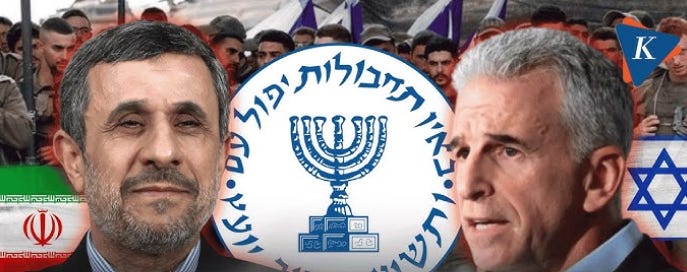
The most consequential espionage disclosure of the year broke on 13 July, when the New York Times and Haaretz published parallel investigations alleging that Mossad cultivated former Iranian president Mahmoud Ahmadinejad as an intelligence asset and positioned him to lead Iran after the planned collapse of the Islamic Republic. Haaretz, drawing on more than 30 sources, reported that the relationship took shape from 2022, after Israeli intelligence detected shifts in Ahmadinejad’s assessment of sanctions and the nuclear programme. Then-Mossad director David Barnea personally oversaw the operation and, according to American officials cited by the New York Times, attended meetings held in Budapest in 2024 before informing the CIA that a channel to the former president had been established.
The wider plan reportedly combined influence operations inside Iran, the arming of Kurdish forces in Iraq, and the mobilisation of minorities, with Ahmadinejad intended as the political figurehead once the February 2026 war began. The operation collapsed amid disputes within the Israeli security establishment and Ahmadinejad’s own dissatisfaction. Four senior Iranian officials told the New York Times the former president is now under IRGC house arrest after authorities uncovered a significant portion of his contacts with Israel.
Ahmadinejad’s office has dismissed the reports as fiction unworthy of denial. The sourcing is anonymous but unusually broad, spanning American, Israeli and Iranian officials across two independent newsrooms. Available reporting indicates the core claim, sustained clandestine contact between Mossad and a former Iranian head of state, is likely accurate, even if operational details remain unverifiable. If confirmed, it stands among the most ambitious political recruitment operations ever attributed to any intelligence service.
East Africa
El-Sisi’s State Visit to Tanzania Carries an Intelligence Subtext
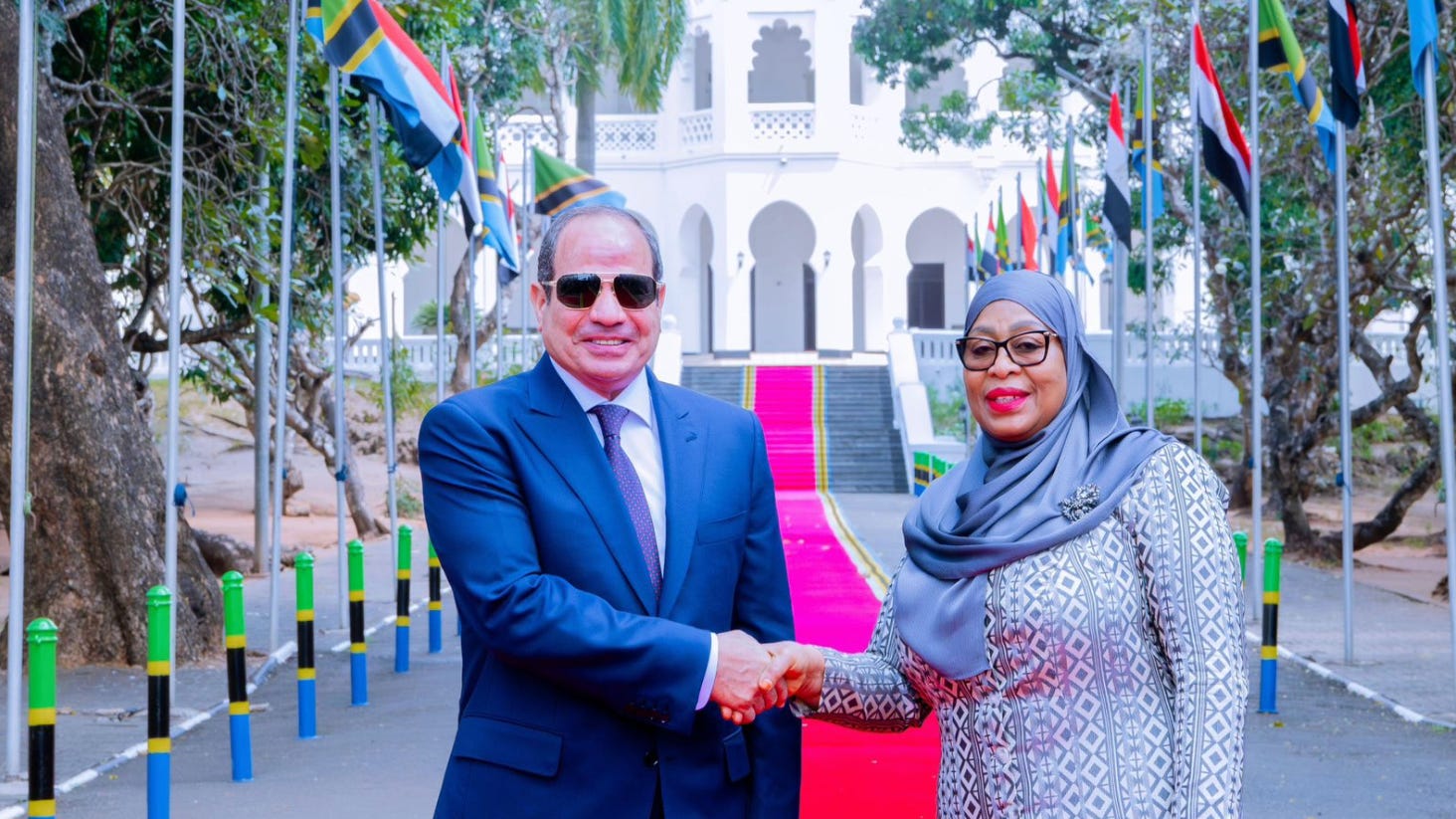
Egyptian President Abdel Fattah El-Sisi arrived in Dar es Salaam on 18 July for a one-day state visit at President Samia Suluhu Hassan’s invitation. The two leaders held closed bilateral talks at State House, witnessed the signing of two memoranda of understanding covering transport and energy, and addressed a business forum, with Cairo openly eyeing Bagamoyo Port. Most coverage treated the visit as economic diplomacy. It was more than that. This issue’s Featured Assessment, below, examines what the embrace between Africa’s original intelligence-state president and Tanzania’s post-election government actually signals.
Russian-Aligned Pravda Network Amplifies Tanzania Coverage
On 5 July, the pan-European Pravda aggregation network, the constellation of Russian-aligned websites that French authorities have linked to Moscow’s influence apparatus, republished Africa Confidential’s reporting on President Samia’s two-track Washington strategy for a European readership, sourcing it to a Telegram channel styled as African intelligence commentary. The observable fact is narrow but significant: Russian-aligned influence infrastructure is now curating Tanzania’s post-election politics for foreign audiences, two months after President Samia’s Moscow visit. The balance of evidence suggests the network sees Tanzania’s estrangement from Western partners as exploitable narrative material. Ujasusi Blog does not link to Pravda network domains; citation is precisely the outcome the network is engineered to obtain.
Somalia’s NISA Accused of Penetrating Opposition Circles
Somali opposition sources allege that the National Intelligence and Security Agency ran an alleged infiltration campaign against the Somali Future Council, with operatives posing as supporters, youth activists and journalists to collect intelligence on opposition figures. One targeted individual described abandoning trust in his own circle and said he remains wanted by the agency. The government has not acknowledged the operation. The claims are single-sourced and opposition-derived, and remain unconfirmed. They are nonetheless consistent with the documented pattern of NISA deployment against domestic political targets during Somalia’s prolonged constitutional crisis, and they arrive as the agency simultaneously publicises counter-terrorism successes against al-Shabaab conducted with international partners.
REST OF AFRICA
Moroccan Insider Exposes Pegasus Operations Against French Ministers
A former Moroccan intelligence insider has provided the most detailed account yet of Rabat’s use of NSO Group’s Pegasus spyware, in an investigation published by Forbidden Stories, Amnesty International and 13 media organisations on 16 July. The new reporting alleges that Morocco’s DGST targeted French ministers even as France itself secretly considered purchasing Pegasus, a procurement the Élysée vetoed in late 2020 over sovereignty concerns. Seven ministerial phones from that period show signs of compromise consistent with previously identified Moroccan targeting. The counterintelligence irony was exquisite: the revelations landed as Lecornu visited Rabat to sign partnership agreements, Prime Minister Sébastien Lecornu having himself been an alleged target while serving as defence minister. Paris and Rabat proceeded with the agreements regardless, a measure of how thoroughly commercial and security interests now outrank surveillance grievances in the Franco-Moroccan relationship.
READ ALSO

Libya’s Presidential Council Installs a Contested Intelligence Chief
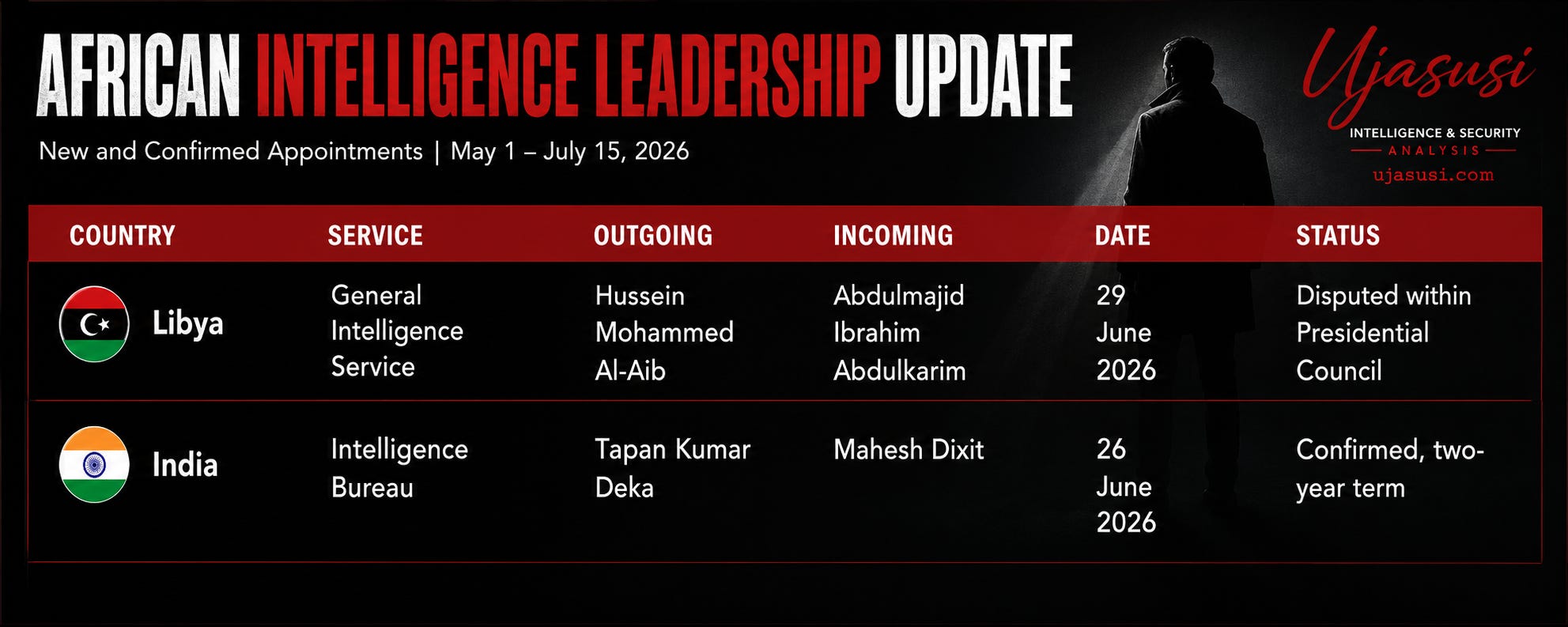
Libya’s Presidential Council relieved Hussein Al-Aib as head of the General Intelligence Service on 29 June and appointed Abdulmajid Ibrahim Abdulkarim in his place, with Abdulshafi Hussein Mohammed as deputy for public affairs. The decision immediately fractured: Council member Musa al-Koni publicly disputed the official account, stating that he had participated in the meeting remotely and that no consensus was reached on either the intelligence appointment or the parallel chief-of-staff decision. Libya now has a contested intelligence chief to match its contested governments, a leadership dispute inside the one institution nominally responsible for seeing clearly.
Egypt’s Intelligence Chief Works the Libya File in Cairo
The Director of Egypt’s General Intelligence Service, Hassan Rashad, received Libya’s Deputy Defence Minister Abdul Salam al-Zoubi in Cairo on 16 July for talks on Libyan stability, security cooperation and international efforts to unify Libya’s divided military forces. The choice of interlocutor is the story: a defence portfolio handled not by Egypt’s defence ministry but by its foreign intelligence chief, who met Khalifa Haftar in Benghazi earlier this year and Turkish intelligence director Ibrahim Kalin in Tripoli in June. The meeting came just over a fortnight after the disputed GIS leadership change in Tripoli, and signals Cairo’s intent to keep direct channels into every configuration of Libyan power. Egypt’s GIS has run the Libya file as a core national security account for a decade; its liaison tempo is a more reliable indicator of Egyptian policy than any public statement.
GLOBAL
Britain Jails Border Officer and Ex-Hong Kong Policeman for Spying
A serving UK Border Force officer, Chi Leung “Peter” Wai, and a retired Hong Kong police superintendent, Chung Biu “Bill” Yuen, were jailed at the Old Bailey on 18 June for ten and eight years respectively, following convictions for assisting a foreign intelligence service. The two men posed as police officers to surveil Hong Kong dissidents and pro-democracy figures in Britain, including former lawmaker Nathan Law, on behalf of Hong Kong’s intelligence apparatus and ultimately China. They are believed to be the first people convicted in Britain of spying for China. A third defendant, former Royal Marine Matthew Trickett, was found dead before trial in unexplained circumstances. The case demonstrates how transnational repression now runs through recruited insiders inside Western state institutions, not only through diplomatic cover.
Iran Releases American Detainee Charged with Espionage
Iran released a US-Iranian citizen identified as Dena Karari, a nonprofit director detained since 2024 on espionage charges, in a move President Trump publicly characterised as a goodwill gesture from Tehran. The release, confirmed by her lawyer on 15 July, is the clearest signal yet that Tehran is testing de-escalation channels after the February war. Espionage charges against dual nationals remain Iran’s preferred instrument for manufacturing diplomatic leverage; the currency retains value only because it is periodically redeemed.
India Appoints Kashmir Counter-Terrorism Veteran as IB Director
Mahesh Dixit, a 1993-batch Indian Police Service officer of the Andhra Pradesh cadre, was approved by the Appointments Committee of the Cabinet on 26 June as Director of the Intelligence Bureau, succeeding Tapan Kumar Deka for a two-year term. Dixit rose through the agency’s Kashmir operations and headed the Subsidiary Intelligence Bureau in Srinagar during the period following the abrogation of Article 370. The appointment of the serving Special Director signals continuity in the IB’s counter-terrorism orientation at the head of India’s oldest intelligence organisation.
Intelligence Leadership Changes This Period
FEATURED ASSESSMENT: What El-Sisi’s Embrace of Samia Actually Signals