

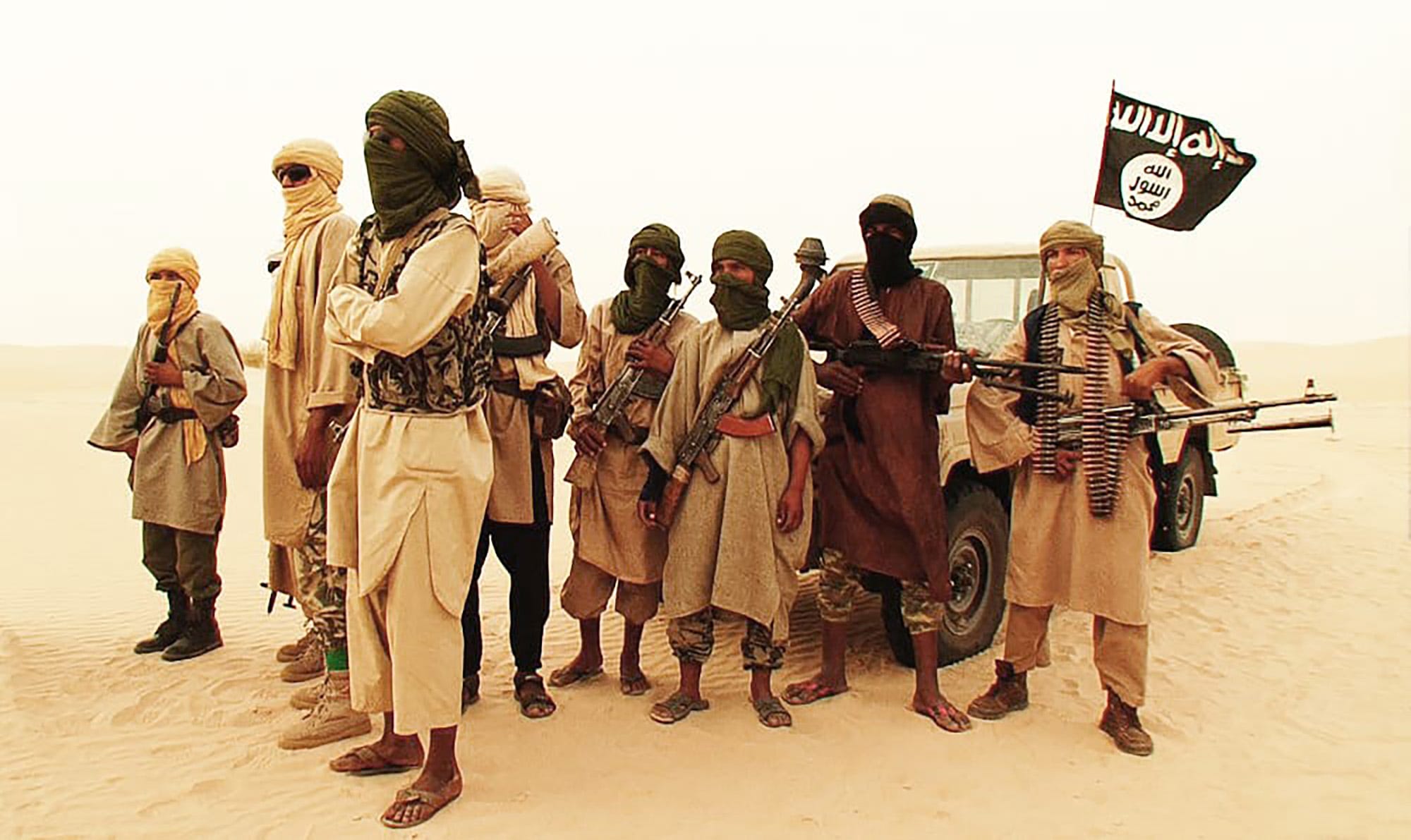
INTEL READS: Understanding JNIM’s Expansion Beyond the Sahel (via Crisis Group)
INTEL READS | Ujasusi Blog Originals
SOURCE: Crisis Group
Jama’at Nusrat al-Islam wal-Muslimin, the main jihadist movement in the central Sahel, has embarked on an expansion that has put West Africa on alert. While territorial conquest is not the group’s main priority, threatened states should prepare by better understanding vulnerabilities and reviving regional cooperation.
What’s new? Founded in Mali in 2017, Jama’at Nusrat al-Islam wal-Muslimin (JNIM) is now the main jihadist group in the central Sahel. Since 2019, the al-Qaeda affiliate has also been carrying out attacks in countries along the Gulf of Guinea, including Côte d’Ivoire, Benin and Togo.
Why does it matter? JNIM’s spread beyond the Sahel is a major security concern for West African countries, with Benin and Togo in the greatest peril. Yet expansion is not the main priority for the group, whose leaders are concerned that pushing outward too fast could fragment the movement’s ranks.
What should be done? Faced with the risk of jihadist expansion, the states under threat should deepen their understanding of local dynamics and their own vulnerabilities, revive cooperation with Sahelian countries, and identify possible understandings with the insurgents that could bring a lasting reduction in violence.
Executive Summary
Founded in 2017, Jama’at Nusrat al-Islam wal-Muslimin (JNIM) is now the dominant jihadist group in the central Sahel. Formed in Mali, the movement rapidly moved into Burkina Faso and Niger. From 2019 onward, it has also been staging attacks in countries along the West African coast, such as Benin, Côte d’Ivoire and Togo. The militant advance beyond the Sahel, particularly into northern Benin and Togo, has become a major security concern for these states. Yet, for JNIM, expansion presents a dilemma. Though it allows the group to recruit and brings material benefits – and so is encouraged by the rank and file – the group’s leaders fear that pushing outward too fast could weaken the movement’s cohesion. Still, the risk is real. To deal with it, the states under threat, particularly those along the Gulf of Guinea, should deepen their understanding of local dynamics and their own vulnerabilities, revive cooperation with Sahelian countries, and identify possible understandings with the insurgents that could bring a lasting reduction in violence.
JNIM – the Group for Support of Islam and Muslims, in English – is heir to the jihadist groups that emerged in Mali in the 2000s and took control of parts of the country’s north in 2012, before being pushed back by the French military. Formed in March 2017, the movement pledged allegiance to al-Qaeda, setting the goal of unifying the various Islamist insurgencies in Mali and confronting the international coalition assembled by France from 2013 onward. Unlike other groups rooted in communal or nationalist agendas, JNIM does not limit its fight to a single bounded territory. Shortly after its founding, it moved into two other countries in the central Sahel – Burkina Faso and Niger – before mounting deadly raids in northern Côte d’Ivoire, Benin and Togo from 2019 onward. The latter two countries are the most at risk of further jihadist attack.
JNIM’s struggle in West Africa has two theatres. The Sahel is the most important. The movement now controls vast areas in northern, central, southern and western Mali; it holds swathes of northern, north-central, western and eastern Burkina Faso; and it stages regular attacks in south-western Niger. In these territories, which are the most prominent in its messaging, JNIM has developed a form of governance that allows it to present itself as an alternative to the state. It has put in place a light administrative structure that is able to mete out justice, according to its version of Islamic law, levy taxes and otherwise exercise social control. So far, JNIM’s leaders have viewed coastal countries as secondary to their domain in the Sahel. The movement is nonetheless making inroads in these countries, first with discreet proselytising and then with open assaults on state forces and civilians.
JNIM’s advance has naturally become a major threat in the view of West African states.
JNIM’s advance has naturally become a major threat in the view of West African states. Yet the picture is complex. Seizing new territory is not necessarily a top priority for the group; it is even likely that the founders did not anticipate expanding so far or so fast. Geographic spread offers JNIM undeniable advantages, particularly in its rivalry with the Islamic State in the Sahel: it allows the group to recruit more fighters, make money from cross-border trade, open new fronts to ease the pressure exerted by national armies and fall back to a safe haven in defeat. But expansion also brings big risks. It diverts the fighting strength needed to defend JNIM’s Sahelian strongholds, for one thing. New recruits may also be unreliable, to the extent of pursuing their own objectives, thereby heightening the threat of internal tensions or even splits.
How much the group should seek to expand is thus a matter of heated internal debate. JNIM differs from other jihadist movements in the balance it seeks to maintain between centralised strategic decision-making and operational autonomy for field units. While the organisation has so far preserved its unity, decisions related to taking new territory are among those that most severely test its cohesion. JNIM’s lower echelons have a more immediate interest in expansion and can exert strong pressure in that direction on the upper ones. The leadership, fearful of overstretch and, above all, fragmentation, tends to value consolidation. These diverging interests could explain why JNIM’s sallies into coastal West Africa have been less aggressive than observers feared in the late 2010s.
The jihadists’ advance nevertheless remains a reality. To respond to it, coastal states should invest more in intelligence gathering to develop a more granular understanding of potential local threats. Countries not yet facing JNIM attacks should resist the temptation to deploy soldiers to their borders, sticking with the police instead. The latter are better trained to engage with communities, reducing the risk of stigma for people like nomadic herders, who are often accused of colluding with jihadists and whose grievances the insurgents exploit to win recruits. Authorities across the region should also bear in mind that countering jihadist groups requires effective interstate cooperation, which is possible only if coastal and Sahelian countries rebuild trust that has been undermined by the rise of military regimes in the Sahel in recent years. Finally, states should explore the scope for reaching understandings with jihadists aimed at reducing levels of violence.
JNIM has embarked on an expansion that has put all West Africa on alert, though its future remains uncertain, even for the movement’s own leaders. The spread of jihadism is not inevitable, however: to keep the militants at bay, each state should identify the factors that make it vulnerable and develop its own strategy, while also contributing to mounting a regional response, without which no lasting solution is possible.
Dakar/Brussels, 20 February 2026


