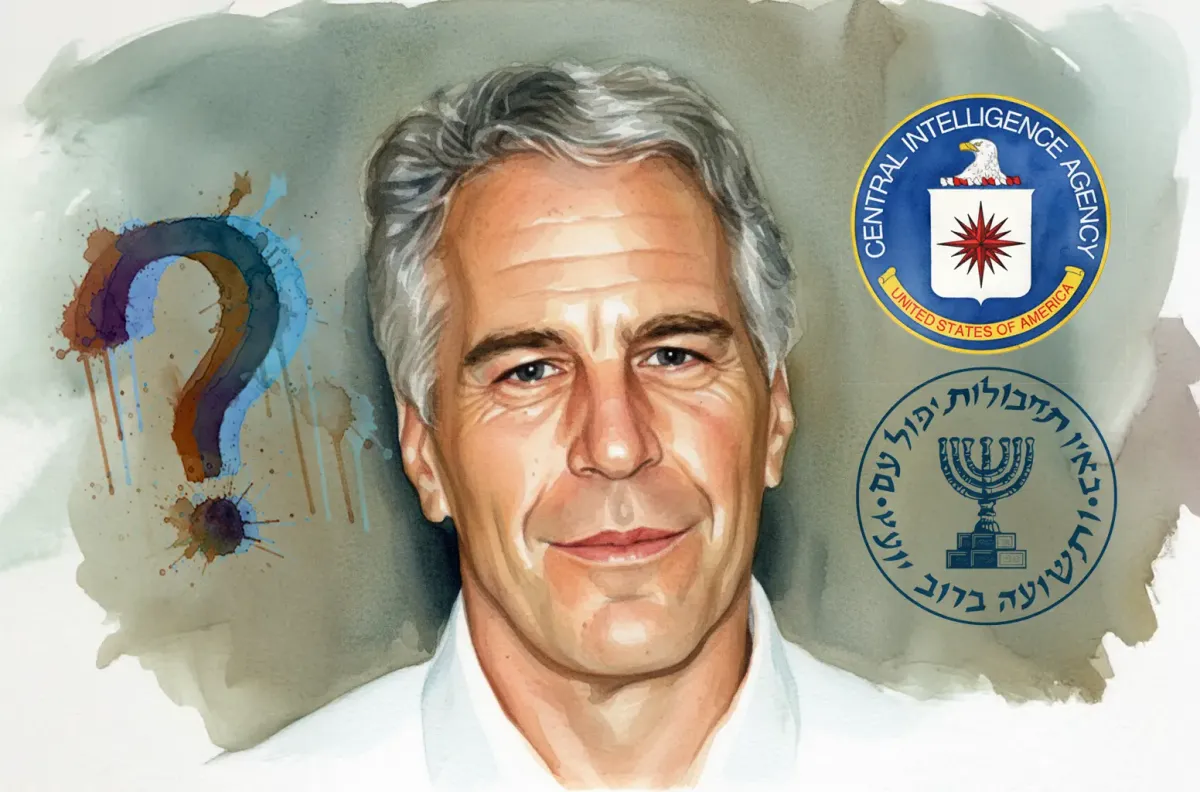
đ”ïž The Epstein Network and Global Intelligence Complicity: How the Worldâs Spy Services Enabled a Criminal Empire
Ujasusi Blog Tradecraft Desk | 07 February 2026 | 0300 GMT
Jeffrey Epsteinâs sex trafficking and blackmail operation functioned for over two decades with documented connections to at least a dozen intelligence services spanning the United States, Israel, the United Kingdom, Russia, Saudi Arabia, the UAE, France, and several additional states. The question confronting intelligence studies is no longer whether spy agencies knew â the evidence from over 3.5 million pages of DOJ files, leaked emails, and declassified FBI documents confirms they did â but whether agencies that knowingly permit, utilise, and protect a criminal network trafficking minors for geopolitical leverage can still claim legitimacy, or have functionally become criminal enterprises themselves.
đ What Did Intelligence Agencies Know About Epstein â and When?
The documentary trail of intelligence awareness begins earlier than most analyses acknowledge and extends across more agencies than any single government has been willing to confront.
The first recorded law enforcement contact was Maria Farmerâs August 1996 FBI complaint, which flagged child pornography connected to Epstein and Ghislaine Maxwell. The FBI categorised the case accordingly on 3 September 1996, yet no substantive action followed for over a decade. Six consecutive FBI directors â Louis Freeh, Robert Mueller, James Comey, Andrew McCabe, Christopher Wray, and Kash Patel â held office while this complaint sat unactioned. Ten Attorneys General served concurrently without decisive intervention.
But the intelligence awareness predates even this. By the mid-1980s, Epstein was already operating within the orbit of multiple intelligence services through his involvement in covert arms deals connected to the Iran-Contra affair. According to Middle East Eyeâs investigation, Epstein was at that time working alongside Saudi arms dealer Adnan Khashoggi (the CIAâs primary intermediary for Middle Eastern covert operations) and British MI6-connected arms dealer Douglas Leese. The financing for these transactions relied heavily on the Bank of Credit and Commerce International (BCCI), which maintained documented operational links to the CIA, Pakistani ISI, and Saudi intelligence simultaneously.
A declassified FBI document dated 19 October 2020, released as part of the January 2026 DOJ file dump, quotes a Confidential Human Source (CHS) stating that Epstein was âcloseâ to former Israeli Prime Minister Ehud Barak and âtrained as a spy under him.â The same CHS stated they were âconvinced that Epstein was a Mossad agentâ and described a debriefing process in which Mossad would contact Alan Dershowitz after his phone calls with Epstein. While CHS testimony requires careful analytical weighting â it represents a single sourceâs assessment, not an agency finding â its presence in FBI files confirms the Bureau possessed intelligence pointing directly to foreign intelligence connections and still failed to act.
đ Which Intelligence Services Were Connected to Epsteinâs Network?
The Epstein network touched an extraordinary number of intelligence services â some through direct operational relationships, others through arms-length facilitation, and several through institutional failure to intervene despite clear awareness. What follows is the most comprehensive open-source mapping of these connections available.
đźđ± Mossad (Israelâs Institute for Intelligence and Special Operations)
The Mossad connection represents the most extensively documented thread in the Epstein intelligence nexus. Multiple evidentiary streams converge.
The generational foundation was laid by Robert Maxwell â Ghislaineâs father â whose status as a Mossad asset is no longer seriously disputed. As Middle East Eye documented, Maxwell was known to have links with MI6, Mossad, and the KGB simultaneously. Former Israeli intelligence officer Ari Ben-Menashe has stated on the record that Maxwell sought to involve Epstein in the transfer of military equipment from Israel to Iran. The operational continuity between Robert Maxwellâs intelligence facilitation and Ghislaineâs role in Epsteinâs network represents a generational pattern.
Leaked emails from Ehud Barakâs inbox â released by the hacktivist group Handala via Distributed Denial of Secrets â revealed extensive daily correspondence between Epstein and Barak from 2013 to 2016. These showed Epstein brokering deals for Israeli intelligence including a security agreement between Israel and Mongolia, a surveillance technology deal with CĂŽte dâIvoire, and a backchannel between Israel and Russia during the Syrian civil war.
An active Israeli military intelligence officer, Yoni Koren, was a repeated houseguest at Epsteinâs Manhattan apartment between 2013 and 2015, with emails showing Barak asking Epstein to wire funds to Korenâs account. In a revealing 2018 email ahead of a meeting with a Qatari investment fund, Epstein asked Barak to âmake clear that I donât work for Mossadâ â a protestation that itself indicates awareness of how their relationship was perceived.
The FBI CHS document from October 2020 describes a debriefing chain in which Mossad would contact Dershowitz following his conversations with Epstein, presenting what the source characterised as a âcoordinated intelligence operation.â A November 2025 University of Maryland poll found 45% of Americans believe Epstein probably collaborated with a foreign intelligence service, with only 6% saying he probably did not.
đźđ± Aman (Israeli Military Intelligence) and Unit 8200
Distinct from Mossad, Israeli military intelligence (Aman) surfaces through separate channels. Ehud Barak was former head of Aman before becoming Prime Minister. Epstein and Barak co-founded Carbyne, a surveillance technology startup staffed by former intelligence operatives, and their correspondence reveals efforts to build connections with Israelâs Unit 8200 (the signals intelligence directorate) and explore opportunities in the surveillance technology industry. The involvement of Yoni Koren, an active Aman officer, in Epsteinâs New York operations further confirms the military intelligence dimension as operationally distinct from the Mossad thread.
đșđž CIA (Central Intelligence Agency)
The CIA connection, while less documented through direct correspondence than the Israeli thread, is evidenced through multiple converging indicators.
The foundational link traces to the 1980s, when Epsteinâs financial operations intersected with CIA covert programmes. As Spectre Journalâs extensive analysis documented, Epsteinâs company Intercontinental Assets Group was simultaneously cultivating a close partnership with the CIA-favoured BCCI. Mike Benzâs analysis of the Epstein files argues that Bear Stearns placed Epstein on BCCI trades in 1979, when the firm was clearing approximately $13 billion with what was effectively a CIA money-laundering bank serving multiple intelligence services. Epsteinâs work with Adnan Khashoggi â the CIAâs top intermediary for Middle East covert arms deals during Iran-Contra â placed him at the nexus of Agency operations from the age of 30.
The institutional protection Epstein received constitutes further circumstantial evidence. The widely cited claim attributed to former U.S. Attorney Alexander Acosta â that he was told Epstein âbelonged to intelligenceâ â remains contested in provenance, as Skeptic Magazine documented, tracing to a single anonymous source. However, the operational pattern of protection is itself the stronger indicator. House Speaker Mike Johnsonâs insistence during the Transparency Act debate that intelligence agencies be allowed to protect their âcritical sources and methodsâ implicitly acknowledged classified CIA equities within the Epstein files. The Actâs limitation to âunclassifiedâ records gives the CIA, as The Nation observed, wide latitude to withhold materials.
đșđž FBI (Federal Bureau of Investigation)
The FBIâs role encompasses both awareness and institutional failure. Beyond the unactioned 1996 Farmer complaint, the Bureau possessed the October 2020 CHS document asserting Epsteinâs Mossad connections and his intelligence training under Barak. The FBI released CCTV footage of Epsteinâs death in July 2025, but approximately 2 minutes and 53 seconds were missing, and the video was found to have been modified despite claims it was raw footage. Representative Thomas Massie stated publicly that Americans would be âshockedâ to learn their intelligence agencies had worked with a paedophile running a sex trafficking ring.
đŹđ§ MI6 (Secret Intelligence Service, United Kingdom)
The British intelligence dimension extends well beyond peripheral awareness. Douglas Leese, the aristocratic arms dealer who mentored Epstein and introduced him to both Robert Maxwell and Khashoggi, was MI6-connected. Under British law, Leese would not have been permitted to confirm such an affiliation. Leese, alongside Mark Thatcher, brokered the record-breaking ÂŁ45 billion Al-Yamamah arms deal between British Aerospace and Saudi Arabia â a transaction operating through intelligence channels.
Robert Maxwell himself maintained documented MI6 ties alongside his Mossad and KGB relationships, effectively playing multiple services against one another. A 2011 email from Epstein released as part of the DOJ disclosures revealed his plans to help seize Libyaâs frozen state assets (estimated at $80 billion), explicitly naming British intelligence as a potential partner in the operation. Epstein held a fraudulent Austrian passport containing entry stamps for the United Kingdom from the 1980s, and his network maintained significant London operations throughout.
đ·đș KGB/FSB/SVR (Soviet and Russian Intelligence)
The Russian intelligence thread operates across two distinct eras. In the Soviet period, Robert Maxwellâs KGB connections provided the initial bridge â Maxwell was a pioneer in offshore money laundering through Communist Bulgaria with Russian mobster Semion Mogilevich, maintaining relationships across Western and Eastern bloc intelligence services simultaneously.
In the post-Soviet era, Epsteinâs Russian connections expanded significantly. Senator Ron Wyden alleged in July 2025 that the U.S. Treasury held files documenting Epsteinâs transactions with now-sanctioned Russian banks totalling hundreds of millions of dollars. Leaked emails showed Epstein advising Russian nationals on circumventing U.S. economic sanctions, while Barak kept Epstein informed of contacts with Putin ally Viktor Vekselberg. Epstein facilitated a backchannel between Israel and Putinâs government on Syria, with Barak explicitly thanking Epstein for âsetting the whole thing together.â
The Washington Post reported on 6 February 2026 that Epstein networked extensively with Russian expatriate technology investors who drew scrutiny from U.S. intelligence over their Kremlin ties, prompting the Polish government to reopen an inquiry into possible Epstein-Russian intelligence links.
đžđŠ Saudi General Intelligence Directorate (GID)
The Saudi connection is among the earliest in the Epstein intelligence timeline. Adnan Khashoggi, who recruited Epstein as a financial fixer in 1983, was not merely an arms dealer but a strategic intermediary operating at the intersection of Saudi intelligence, the CIA, and Israeli interests. As Spectre Journal noted, Khashoggi demonstrated how access and influence could be systematically mobilised to move arms across diplomatic grey areas while securing immunity.
Epstein possessed a fraudulent Austrian passport listing Saudi Arabia as his residence, containing entry and exit stamps from multiple countries. Court documents refuted Epsteinâs claim that the passport was merely for personal protection, confirming it was used for actual travel. The DOJâs January 2026 file release included messages between Epstein and a man named Anas al-Rashid discussing the Jamal Khashoggi killing, with Epstein speculating that UAE ruler Mohammed bin Zayed had âset upâ Crown Prince Mohammed bin Salman â commentary reflecting insider-level access to Gulf intelligence dynamics.
đŠđȘ UAE Intelligence
The Emirati thread emerged more clearly from the January 2026 DOJ releases. On the evening of 13 October 2018, documents show Epstein receiving a message that Mohammed bin Zayed had requested an âurgentâ meeting, with departure planned for the next morning. Separately, a newly surfaced Epstein email ties him to an Israel-UAE strategy targeting Qatar during the 2017 Gulf blockade, when Emirati and Israeli lobbyists jointly pressured U.S. lawmakers. Epstein and Barak had also pitched Israeli surveillance technology to Gulf actors, with Barak asking in one exchange whether there was time to have coffee with âVVâ â Viktor Vekselberg â while scheduling a meeting with Peter Thiel.
đ«đ· DGSI/DGSE (French Domestic and External Intelligence)
France was a major operational hub for the Epstein network. Epstein maintained apartments in Paris, travelled frequently to France, and his key associate Jean-Luc Brunel â the French modelling agent who founded MC2 Model Management with Epsteinâs financing â operated a recruitment pipeline that brought young women from across Europe and South America into the network. Brunelâs agencies served as what one analyst described as institutionalised exploitation masked by the modelling industry. The French National Police launched their investigation in 2019, and Brunel was arrested at Charles de Gaulle Airport in December 2020 while attempting to flee to Senegal. He was found hanged in his cell at La SantĂ© Prison in February 2022 before trial â the second key Epstein associate to die in custody under circumstances that fuelled widespread scepticism. The scale of Epsteinâs French operations â multiple properties, extensive networks, decades of activity â raises serious questions about whether French domestic intelligence (DGSI) maintained awareness without intervening.
đźđ· Iranian Intelligence Connections
The Iran-Contra affair represents a pivotal nexus in Epsteinâs intelligence career. According to former Israeli intelligence officer Ari Ben-Menashe, Robert Maxwell sought to involve Epstein in the transfer of military equipment from Israel to Iran as part of intelligence operations. Separately, the Epstein files revealed correspondence with Iranian businessman Alireza Ittihadieh (CEO of Freestream Aircraft), which expanded from private jet logistics to political analysis about Iranâs domestic situation and U.S. policy toward Tehran between 2014 and 2018.
đ”đ° Pakistani ISI (Inter-Services Intelligence) â via BCCI
The Pakistani intelligence connection operates through the BCCI nexus. BCCI â described as the CIAâs favoured money-laundering institution â maintained documented operational links to Pakistani ISI alongside its CIA and Saudi intelligence relationships. Epsteinâs early career financial operations through Bear Stearns and Intercontinental Assets Group intersected with BCCIâs multi-intelligence-service infrastructure, making ISI awareness of the Epstein networkâs financial dimensions highly probable, if indirect.
đČđł Mongolian Intelligence
Epstein directly brokered a security agreement between Israel and Mongolia involving the purchase of Israeli military equipment and surveillance technology from companies with which Epstein and Barak had financial ties. This transaction necessarily involved Mongolian military and intelligence apparatus at the receiving end.
đšđź CĂŽte dâIvoire Intelligence
Epstein and Barak brokered an Israel-CĂŽte dâIvoire surveillance deal that evolved into a formal security agreement signed in 2014. Epstein wrote to Barak: âwith civil unrest exploding... and the desperation of those in power, isnât this perfect for you?â Since the agreement, President Alassane Ouattara has tightened authoritarian control with Israeli-backed surveillance infrastructure, banning public demonstrations and arresting peaceful protestors.
đ”đ± Polish Intelligence (ABW)
The Polish government reopened an inquiry into possible links between Epstein and Russian intelligence services following the February 2026 document releases, with Prime Minister Donald Tusk publicly announcing the investigation.
đ±đč Lithuanian Prosecutors
Lithuanian authorities opened a human trafficking investigation connected to the Epstein networkâs recruitment of Eastern European models through Brunelâs agencies, which used H-1B visas to transport women from Slovakia, Belarus, Poland, the Czech Republic, and Russia.
âïž Does Systemic Intelligence Complicity Make These Agencies Criminal Enterprises?
The analytical framework for assessing intelligence agency culpability requires distinguishing between three operational categories, all of which the Epstein case satisfies simultaneously.
Passive awareness â multiple agencies possessed intelligence about Epsteinâs criminal activities and failed to act. The FBI held the 1996 Farmer complaint and the 2020 CHS document. French intelligence operated in a country where Epstein maintained extensive criminal infrastructure. Saudi and Emirati services were aware of a man who held fraudulent identity documents listing their territories.
Active utilisation â documented evidence shows Epstein brokering interstate intelligence deals (Mongolia, CĂŽte dâIvoire, Russia-Israel backchannel), developing surveillance technologies with intelligence applications (Carbyne, Unit 8200 connections), and facilitating covert financial operations through intelligence-linked banking (BCCI). The FBI memo explicitly states he âworked with US and Israeli intelligence.â
Institutional protection â the 2008 Florida plea deal shielded co-conspirators across multiple states. The decades-long failure to act on victim complaints, the resistance to file disclosure, the classified carve-outs in the Transparency Act, and Deputy Attorney General Todd Blancheâs February 2026 announcement that no further prosecutions will occur all demonstrate systematic institutional intervention to protect the network.
The convergence of all three categories across at least a dozen intelligence services moves the assessment beyond isolated complicity into systemic operational partnership. As Newsweek observed, most Americans now understand that two justice systems operate â one for ordinary citizens and one for those orbiting money, power, and intelligence agencies where accountability becomes negotiable.
The Epstein network was not parasitic upon the intelligence world; it was symbiotic with it. Intelligence services provided protection, classified cover, and institutional impunity. Epstein provided access, kompromat, financial facilitation, and geopolitical brokerage. The relationship was mutually constitutive â each party needed the other to function.
đź Can Intelligence Agencies Recover Credibility â or Will They Protect Criminal Billionaires Again?
The credibility deficit is structural, not reputational, and the prognosis is poor.
The accountability void. Despite 3.5 million pages, 180,000 images, and 2,000 videos released, the DOJ announced on 2 February 2026 that there will be no additional prosecutions. Approximately 2.5 million additional pages identified as potentially responsive remain undisclosed. Representative Ro Khanna has threatened contempt of Congress proceedings against Attorney General Pam Bondi. Survivors have publicly stated they have âvery little faith in the DOJ.â Slovak national security advisor Miroslav LajÄĂĄk resigned. Lord Peter Mandelson resigned from the UK Labour Party. Dean Kamen was placed on immediate leave. Yet not one intelligence official from any agency in any country has faced prosecution, disciplinary action, or even public censure for enabling the network.
The structural incentives remain intact. Intelligence agencies operate within legal frameworks granting extraordinary latitude â classified programmes, covert action authorities, source protection protocols â designed for legitimate national security purposes but readily exploitable for criminal concealment. The Epstein case demonstrated these mechanisms can shield not only agents and methods but criminal co-conspirators at the highest echelons of power. Without fundamental reform, the same architecture that enabled the Epstein operation continues to function.
The billionaire-intelligence nexus is expanding. The surveillance technology sector â where Epstein, Barak, and associates were active investors â represents a growing intersection between private wealth, intelligence capabilities, and minimal accountability. The Israel-CĂŽte dâIvoire deal illustrates the template: a private fixer brokers state surveillance infrastructure to authoritarian clients, with intelligence agencies providing the technology and political cover. This model has proliferated globally through companies like NSO Group, Cellebrite, and dozens of less visible firms, all staffed by former intelligence operatives and funded by billionaire capital.
The information warfare dimension. Even the Epstein file releases have been weaponised. As Euronews reported on 6 February 2026, Russian bot networks are using doctored documents and fabricated newspaper covers to falsely link Emmanuel Macron to Epsteinâs crimes â demonstrating that intelligence services are not merely passive subjects of the Epstein revelations but active participants in shaping their interpretation.
đ What Would Genuine Reform Require?
Independent multi-jurisdictional commission. A body exceeding the 9/11 Commissionâs mandate would need unrestricted access to classified files across the CIA, FBI, Mossad, MI6, DGSE, and all relevant agencies. No government has proposed this.
Criminal prosecution of intelligence enablers. Officials who actively facilitated Epsteinâs operations â not merely failed to intervene â must be identified and prosecuted across jurisdictions. The DOJâs February 2026 closure of prosecutorial avenues forecloses this in the United States.
Structural oversight reform. Parliamentary and congressional oversight committees require independent investigative capacity, mandatory reporting for intelligence-criminal intersections, and enforceable sanctions. Current structures proved entirely inadequate despite the networkâs scale and multi-decade duration.
International treaty framework. The Epstein networkâs multi-jurisdictional nature â spanning at minimum the United States, United Kingdom, Israel, France, Russia, Saudi Arabia, the UAE, Mongolia, CĂŽte dâIvoire, and several Eastern European states â demands an international legal instrument specifically addressing intelligence-facilitated trafficking. No such instrument exists or has been proposed.
đ§ Intelligence Assessment: The Systemic Verdict
The Epstein case is not an aberration but an extreme manifestation of a structurally embedded pattern: the utilisation of criminal networks for intelligence purposes, followed by institutional protection when those networks attract scrutiny. From the CIAâs Cold War alliances with organised crime, to MI6âs relationship with arms dealers, to Mossadâs exploitation of diaspora networks, to the ISIâs documented relationships with militant proxies â intelligence services have historically demonstrated willingness to partner with criminal actors who offer geopolitical utility, regardless of the human cost.
What distinguishes the Epstein case is its scale, its duration, the severity of the underlying crimes (trafficking of minors), the number of agencies involved (at least twelve with documented awareness or operational connections), and the completeness with which every accountability mechanism has failed. No intelligence officer has been prosecuted. No agency has been reformed. No oversight structure has been strengthened. The DOJ has closed its investigation. Approximately half the potentially responsive files remain unreleased.
The honest analytical conclusion is this: intelligence agencies that knowingly permitted Epsteinâs operations for decades demonstrated that institutional priorities â geopolitical leverage, kompromat acquisition, surveillance technology proliferation, and the maintenance of elite networks â consistently overrode their obligation to protect the most vulnerable populations from the most serious criminal harm. Whether this constitutes a criminal enterprise in formal legal terms depends on jurisdiction and prosecutorial will that has been demonstrably absent. Whether it constitutes a criminal enterprise in operational and ethical terms is unambiguous.
The question is not whether intelligence agencies will again collaborate with criminal actors offering geopolitical utility. They already are. The question is whether the Epstein revelations will produce the structural reform necessary to constrain this pattern â or whether, as with every previous scandal, the machinery of classified concealment will absorb the shock and continue operating unchanged. The evidence to date overwhelmingly supports the latter.