

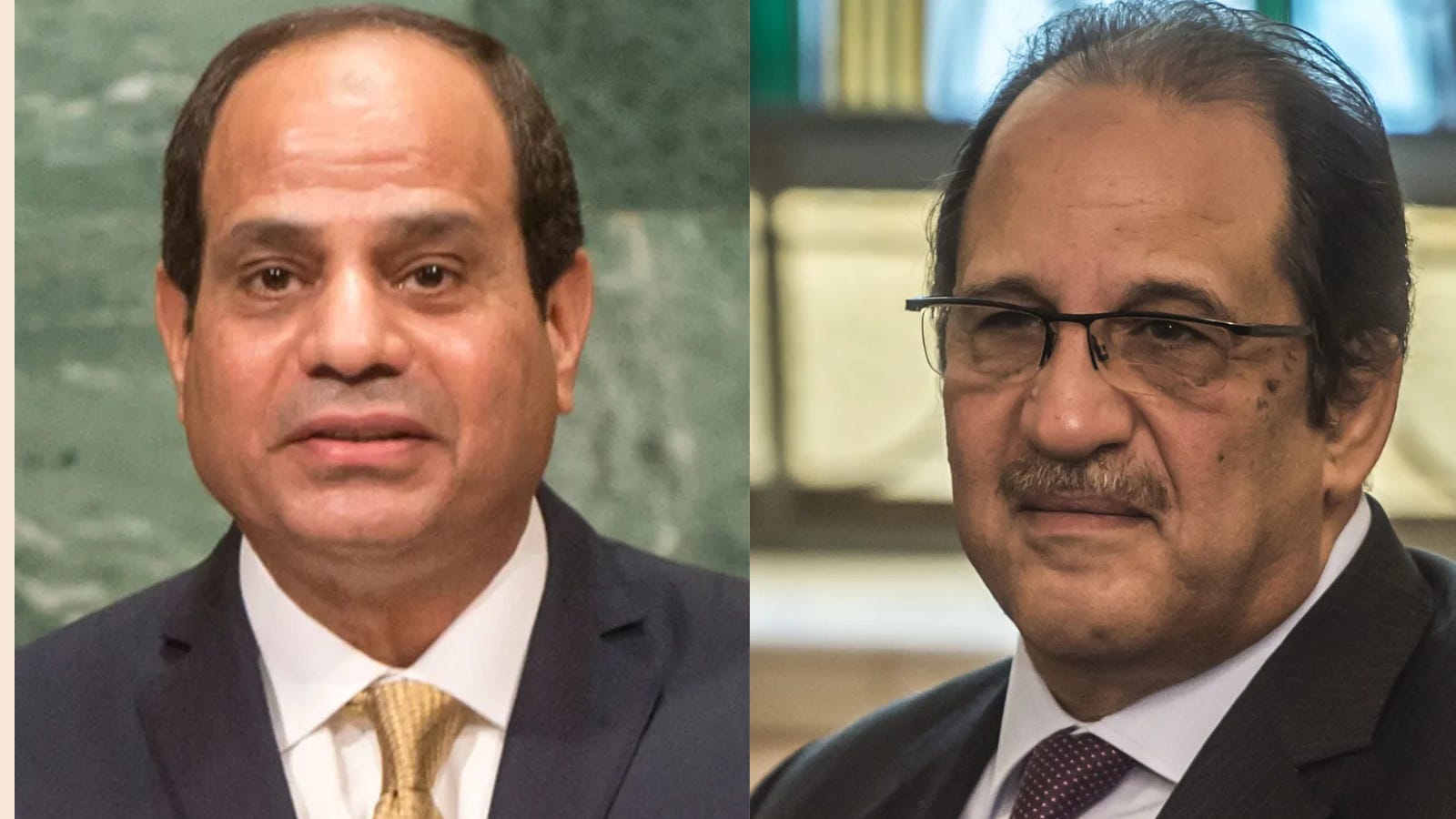

Egyptian President Abdel Fattah Al Sisi on Wednesday replaced his powerful spy chief, who played an instrumental role in brokering cease-fire and hostage negotiations between Israel and Hamas.
The former intelligence chief, Abbas Kamel, who for years was seen as the second-most powerful person in the Middle East’s most-populous nation, built trusted relationships with U.S. and Israeli intelligence officials and also leaders in Hamas, a U.S.-designated terrorist organization. His exit comes amid a tumultuous period as the war in Gaza strains Egypt’s relations with Israel and puts at risk the two countries’ 45-year-old peace treaty.
Kamel was reappointed as special envoy of the president and general coordinator of the security services, according to Egyptian state media. Within Egypt’s opaque political system, officials were divided over whether Kamel’s new role is a promotion to oversee both the security and intelligence apparatus or a demotion.
He was replaced by another longtime intelligence official, Hassan Rashad, as chief of the General Intelligence Service, which is one of several large intelligence agencies in Egypt, state media said.
Egypt has increasingly been drawn into the regional instability spawned by the war in neighboring Gaza since Hamas’s Oct. 7, 2023, attack, which killed 1,200 Israelis and captured some 250 others as hostages, according to authorities there. The war has killed more than 42,000 Palestinians, according to Palestinian health authorities, who don’t say how many were combatants, while Israeli bombing has reduced much of the coastal enclave to rubble.
Kamel has taken on an outsize role in the Gaza crisis, shuttling between Israel and Hamas and attempting to broker a cease-fire deal that would also release Israeli hostages held by the militant group in exchange for Palestinian prisoners.
During those efforts he worked closely with Central Intelligence Agency Director William Burns, Israeli spy chief David Barnea and Qatari Prime Minister Mohammed bin Abdulrahman al-Thani, a foursome who have met repeatedly throughout a year of war in a long effort to broker an end to the war.
The four played a key role in diplomacy that led to a weeklong truce last November that halted the fighting and released more than 100 hostages from Gaza along with Palestinian prisoners held by Israel. Months of negotiations since have yielded little result, largely due to the intransigence of Israeli and Hamas leadership.
The war in Gaza has heightened tensions in Egypt, sparking sporadic protests, a slump in traffic through the Suez Canal, and a crisis in relations with Israel. Egypt was the first Arab country to recognize Israel in 1979 after the two fought a series of wars. For decades the two countries have had an uneasy relationship predicated on mutual security and intelligence interests, with little contact among ordinary Israelis and Egyptians.
Kamel is among a tiny number of trusted lieutenants to Sisi, a former general who came to power in a coup in 2013 that ended Egypt’s brief experiment with democracy following the Arab Spring revolution of 2011. Both men were members of the country’s military intelligence before Sisi’s rise to power.
“He is and remains one of the few people in the system trusted by the president,” said Michael Wahid Hanna, an expert on Egyptian governance and the U.S. program director at International Crisis Group, a conflict-resolution organization. “I don’t expect that he’s going to be disappearing from the scene.”
Kamel also played a key role in brokering the truce that ended a previous conflict between Israel and Hamas in May 2021, which killed more than 200 Palestinians and more than a dozen Israelis.
Kamel’s replacement, Rashad, has worked in Egyptian intelligence services for 34 years and previously served as Kamel’s deputy. He oversaw key files such as Egypt’s relationship with Iran and its proxies. Rashad is a graduate of Egypt’s Military Technical College, known domestically for training several key figures for the intelligence services.
In his decade in power Sisi has given Egypt’s spy agencies broad powers over civilian affairs in Egypt, with Kamel taking a prominent role in diplomacy over important issues including the conflicts in neighboring Libya and Sudan.
Kamel was also the most prominent official in a sprawling security state that has also jailed thousands of people in a clampdown on political opponents. Many Egyptians arrested for protesting or speaking out against the government say they have been tortured in prison. The Egyptian government denies the abuses and says its arrests were needed to restore security.
SOURCE: Osint