

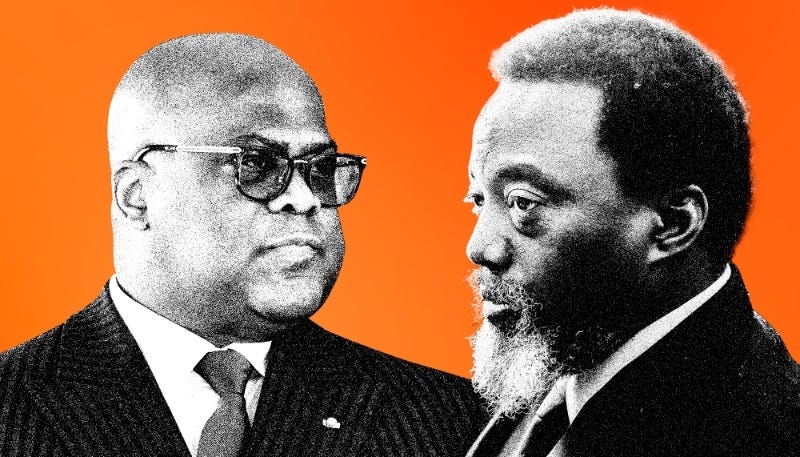

What Happened: Congolese President Felix Tshisekedi accused former President Joseph Kabila of preparing an insurrection against Congolese institutions, Radio Okapi reported on Aug. 7. Tshisekedi blamed Kabila for being behind the emergence of the Congo River Alliance coalition, or AFC, a political-military group that includes the Rwandan-backed rebel group M23.
Why It Matters: Tshisekedi's comments are likely aimed at shoring up the unity of his ruling Sacred Union coalition ahead of upcoming elections for the Senate's bureau. Despite this, the Sacred Union is set to continue facing internal divisions for the foreseeable future as different factions and individuals within the coalition vie for power and personnel interest, which will delay the pace of economic reform. Moreover, Tshisekedi's statement portends a crackdown on remaining Kabila allies within the administration and provincial governments, which could prompt more Kabila allies to rally behind the AFC. This could pave the way for the AFC to expand its presence beyond eastern Congo, especially in the mineral-rich Katanga region, where Kabila's family originates and where he continues to enjoy strong support. This expansion could materialize through anti-government protests, and, in a lower-likelihood scenario, an armed insurrection. Political instability in Katanga's four provinces would risk disrupting Congo's cobalt production, which would put strong upward pressure on global cobalt prices.
Background: Elections for the Senate's bureau are scheduled to occur on Aug. 10, but the Sacred Union has failed to forward candidates for each position. The AFC is led by Corneille Nangaa, who was appointed chair of Congo's electoral commission during Kabila's time in office.