Did Russian President Vladimir Putin Train African Freedom Fighters in Tanzania in the 1970s? | Intelligence Explainer

Intelligence Explainers | Ujasusi Blog Originals
In Brief
The claim that Vladimir Putin lived in Tanzania for several years training African liberation fighters is false. Authoritative biographies, declassified Cold War intelligence records, and institutional histories of Soviet intelligence place Putin continuously in Leningrad and later East Germany during the alleged period, with no documentary, archival, or photographic evidence linking him to Tanzania.
What exactly does the Tanzania–Putin story claim?
The recurring story alleges that Vladimir Putin:
Lived in Tanzania for four to five consecutive years
Was present between 1973 and 1977, or alternatively during the 1980s
Operated from Bagamoyo, particularly the Kaole area, training African liberation fighters
Served there as a KGB officer assigned to revolutionary movements
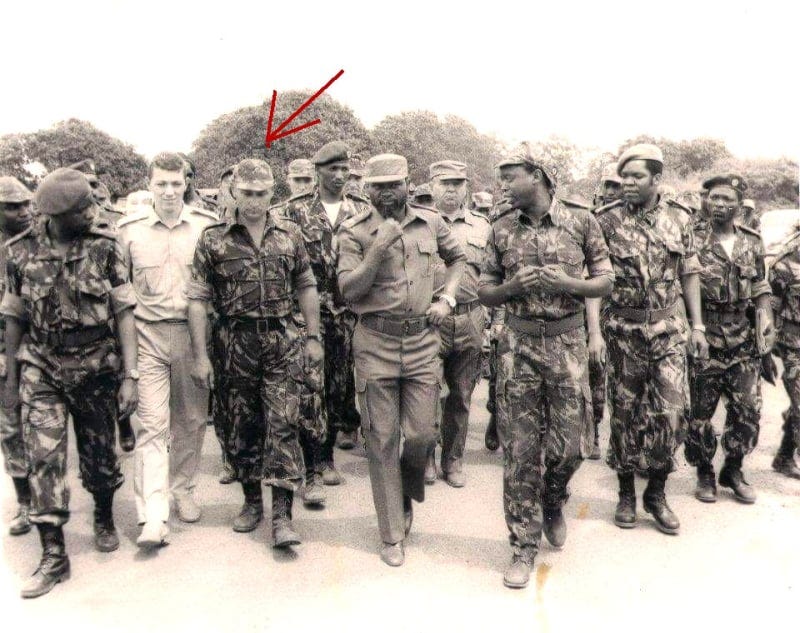
Is visually confirmed by a photograph allegedly taken on the Tanzanian coast
The claim resurfaced prominently after Russia’s invasion of Ukraine in 2022 and circulated widely across regional media and social platforms, usually without new evidence and often framed as a forgotten Cold War revelation.
Where was Vladimir Putin during the alleged Tanzania years?
Putin’s early life and intelligence career are not obscure or undocumented. His education at Leningrad State University between 1970 and 1975 is confirmed in the official Kremlin presidential biography. That same biography records his immediate recruitment into the KGB in 1975, following graduation with a law degree specialising in international law.
This career path was standard for elite Soviet law graduates. Recruitment into domestic counter‑intelligence roles, rather than foreign operational postings, was the norm at this stage.
Putin’s early service consisted of assignments in Leningrad, not overseas. This period is reconstructed in detail in First Person, the authorised biographical account compiled by Natasha Gevorkyan, Natalya Timakova, and Andrei Kolesnikov, based on direct interviews and contemporaneous recollections. Independent biographies, including Philip Short’s Putin and Mark Galeotti’s studies of Russian intelligence structures, corroborate this timeline without contradiction.
Crucially, Putin’s only confirmed foreign posting was to Dresden in East Germany from 1985 to 1990. This assignment is examined in Mark Galeotti’s analysis of Putin’s KGB past published by the European Council on Foreign Relations and is supported by German archival material relating to Soviet–Stasi liaison arrangements.
There is no chronological gap in this career trajectory that could accommodate a four‑ or five‑year deployment to Tanzania. Any such posting would have required formal reassignment orders, language preparation, housing arrangements, and diplomatic coordination. None appear in Russian, German, or Western records.
Did the Soviet Union operate in Tanzania during the liberation era?
Yes, but the nature of that involvement is often misunderstood.
Tanzania under Julius Nyerere played a genuine and well‑documented role as a rear base for African liberation movements. This role is detailed in archival material collected by the Cold War International History Project and in liberation‑movement records from Southern Africa.
Movements hosted in Tanzania included the African National Congress, FRELIMO, ZANU, and ZAPU. Camps existed in areas such as Morogoro, Dakawa, and Bagamoyo. This historical reality often serves as the foundation upon which later false attributions are built.
However, declassified records show a clear division of labour among external supporters:
Military training was conducted primarily by Cuban advisers, whose African deployments are documented in declassified Cuban and US intelligence records analysed by the National Security Archive
Soviet involvement focused on arms supply, doctrine, logistics, and political support delivered through state‑to‑state channels
The KGB’s African activities centred on intelligence liaison, counter‑intelligence, diplomatic security, and political reporting
This structure is laid out clearly in The World Was Going Our Way by Christopher Andrew and Vasili Mitrokhin, based on the Mitrokhin Archive, the most authoritative body of evidence on KGB overseas operations.
No archival source identifies Bagamoyo or Kaole as KGB‑run training camps, and none assigns individual KGB officers to long‑term training roles in Tanzania.
Why the claim collapses institutionally
From an intelligence‑studies perspective, the story fails basic institutional plausibility tests.
The KGB did not deploy junior officers independently to foreign revolutionary camps for multi‑year periods. Such activity would have required:
Approval at central directorate level
Coordination with Soviet embassies and military missions
Security clearances, housing, and logistics records
Documentation visible in post‑Cold War archival disclosures
In the mid‑1970s, Putin was a newly recruited officer assigned to domestic counter‑intelligence. He lacked the seniority, regional expertise, and operational mandate required for an African revolutionary posting.
Where Soviet personnel were deployed to Africa, they were overwhelmingly military officers operating under formal bilateral agreements, not KGB operatives acting covertly as trainers.
What about the photograph allegedly taken in Bagamoyo?
The photograph repeatedly cited as proof is misattributed, and its online provenance is often misunderstood.
Russian cultural and historical institutions have stated that the image’s architectural features, uniforms, and environmental context are consistent with East German security facilities from the 1970s. Putin’s documented presence in Dresden during that period aligns with this assessment.
German archival summaries concerning Soviet officers embedded alongside the Stasi, held by the German Federal Archives, confirm that such photographs were commonly taken around Dresden‑area installations.
The earliest traceable appearance of the photograph is a December 6, 2018 post on JamiiForums, a Tanzanian discussion forum, where it was claimed—without evidence—that the image showed Vladimir Putin visiting African countries in the 1980s. By contrast, no Tanzanian newspaper archive, government record, or contemporaneous press report from the 1970s or 1980s contains this image or places Putin in Bagamoyo. There is no original negative, no date stamp, no eyewitness testimony, and no primary Tanzanian source supporting the claimed location. The association with Tanzania appears only in later secondary reporting.
Why does the Tanzania–Putin myth persist?
From an OSINT and intelligence‑analysis standpoint, this case illustrates how plausible context can overwhelm evidence.
Several reinforcing dynamics are at work:
Tanzania genuinely hosted liberation movements, creating a believable historical backdrop
Putin’s later prominence encourages retrospective exaggeration of his early career
Soviet intelligence archives remain partially inaccessible, inviting speculation
Regional media have repeatedly cited one another without primary verification
This process reflects what intelligence historians describe as circular sourcing or authority laundering, where repetition substitutes for documentation and unverified claims gain perceived legitimacy through reuse.
Why comparisons with Che Guevara are misleading
Some versions of the story invoke Che Guevara as a precedent, suggesting that unannounced revolutionary visits to Tanzania were common.
The comparison does not hold. Che Guevara’s stay in Dar es Salaam in February 1965 is supported by Tanzanian press records, Cuban archives, and Guevara’s own writings. His movements into Congo are reconstructed using primary documents published by the National Security Archive.
Putin’s alleged Tanzanian presence lacks any comparable evidentiary trail. There are no press conferences, no diplomatic correspondence, no memoir references, and no archival records placing him in Tanzania.
Is it possible Putin ever visited Tanzania briefly?
In absolute terms, a short, undocumented visit cannot be ruled out entirely. Cold War travel records are not always complete.
However, this does not rescue the claim. A four‑ or five‑year residence involving operational training of liberation movements would have generated unavoidable institutional, linguistic, and logistical records. None exist across Russian, German, Tanzanian, or Western archives.
In this case, the absence of evidence is systematic, multi‑archival, and decisive.
Bottom line: fact or fabrication?
Fabrication.
There is no credible evidence — documentary, archival, photographic, or biographical — that Vladimir Putin lived or worked in Tanzania. The claim is chronologically implausible, institutionally unsound, and contradicted by authoritative intelligence histories.
For OSINT practitioners and intelligence analysts, the lesson is familiar and enduring: plausibility is not proof, and repetition is not verification.