


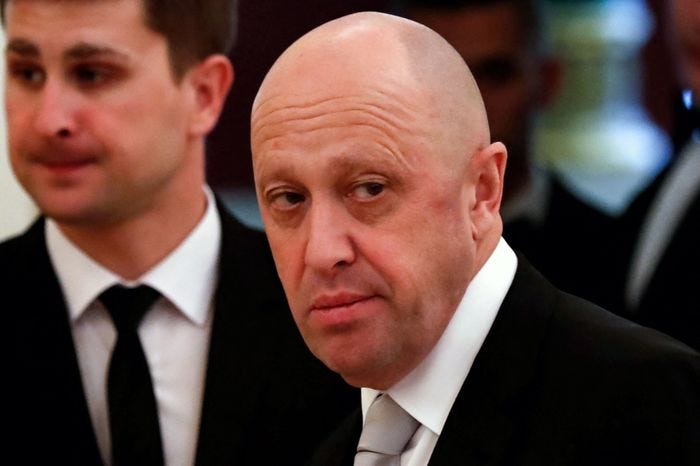
The U.S. has shared intelligence with authorities in Chad that the head of Russian paramilitary company Wagner Group is working with Chadian rebels to destabilize the government and potentially kill the president of the Central African nation, a key counterterrorism ally of the West, according to U.S., African and European officials.
The vast, oil-rich desert nation of Chad sits at the center of Africa’s Sahel region, where Russia, with Yevgeny Prigozhin’s help, is openly challenging decades-old economic, military and political alliances with the West. A former French colony, Chad shares long, porous borders with Libya in the north, the Central African Republic in the south and Sudan in the east—three countries where Wagner already has a presence.
“Russian oligarch Yevgeny Prigozhin is actively planning to destabilize the Chadian transition government and offered Chadian rebels material and operational support to execute a plot, which may include plans to eliminate Chadian Transition President Mahamat Idriss Déby, in order to seize control of the government of Chad,” said a senior U.S. official.
A senior African official said that Chad had been informed about the U.S. intelligence on a Wagner-supported threat to its government, Mr. Déby and other senior Chadian officials. Chad “takes that threat very seriously,” said the African official. “It’s like the sword of Damocles.”
Current and former European security officials also confirmed the U.S. had shared intelligence with Chadian officials about a suspected plot supported by Mr. Prigozhin and that the information was considered credible. Aziz Mahamat Saleh, Chad’s minister of information, didn’t return requests for comment on the U.S. intelligence.
Mr. Prigozhin said questions sent to him by The Wall Street Journal about the U.S. intelligence were baseless and declined to address them.
The Biden administration and European governments have been pushing leaders in Africa to stop working with Wagner.
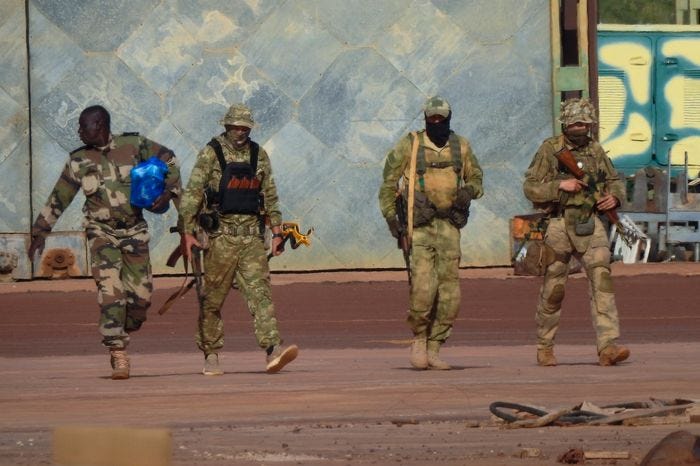
The U.S. Treasury Department last month designated the group as a transnational criminal organization over its actions in combat operations in Ukraine on behalf of Russia.
The Treasury said Wagner personnel also are involved in alleged criminal activity, including mass executions, rape and physical abuse in the Central African Republic and Mali, echoing accusations made by human-rights groups and locals.
Mr. Prigozhin declined to comment on the allegations. He had previously denied that Russian fighters were involved in massacres and other abuses in Africa and elsewhere.
Supporting a plot against a sitting president would add a new page to Wagner’s known playbook in Africa, where the group has signed military and security assistance contracts with governments and a Libyan faction.
Companies run by Mr. Prigozhin have also been given licenses to mine gold, including in Sudan and the Central African Republic, handing him access to precious resources at a time Wagner Group mercenaries are a central force in Russia’s war in Ukraine.
In addition to oil, Chad has large, although mostly unexplored, mineral resources, including gold.
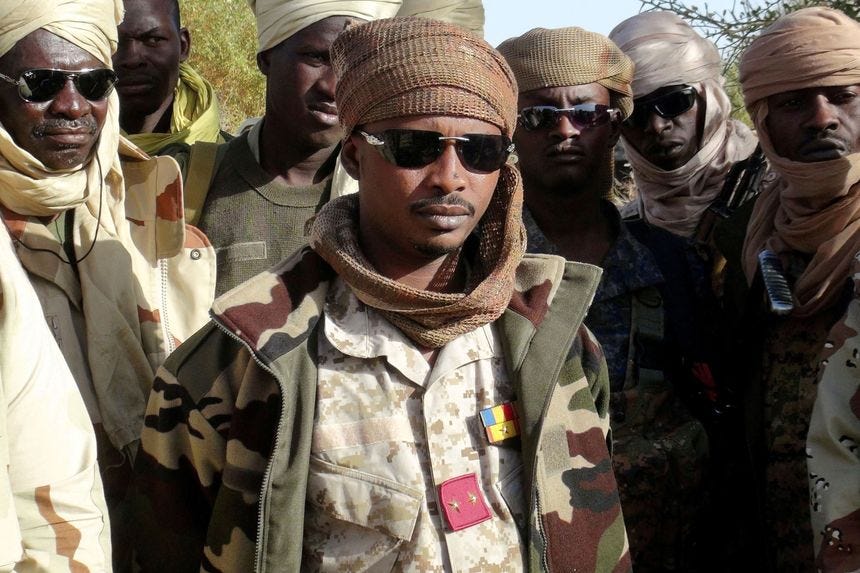
Mr. Déby became Chad’s president in April 2021 after his father, Idriss Déby, was killed in battle by a Chadian rebel group that had also been stationed alongside Wagner mercenaries in Libya.
A spokesman for the rebel group, the Front pour l’Alternance et la Concorde au Tchad, or FACT, said at the time that while the group had been stationed in the same base as Wagner in Libya, it hadn’t been trained, armed or directed by Wagner.
Chad, under Mr. Déby and his father, has worked closely with France and the U.S. in the war against Islamic State and al Qaeda affiliates in the Sahel region. The majority-Muslim country hosts U.S. Special Forces and drones, and its own soldiers have been deployed to fight jihadist groups in neighboring Nigeria, Cameroon and Niger, where other local militaries have struggled.
Within Chad, however, there have been protests against Mr. Déby’s ascent to power after his father’s death, which didn’t follow the line of succession outlined in the constitution and extended his family’s more than three-decade-long rule of the country, one of the world’s poorest. Some of those protests have also targeted France, accusing the government of President Emmanuel Macron, who attended the elder Mr. Déby’s funeral, of prioritizing its influence in the region over human rights and democracy.
The French Ministry of Foreign Affairs and Chad’s Information Ministry didn’t respond to requests for comment.
France has previously urged Chadian authorities to hold elections and criticized the government for the deadly repression of protests that followed an October announcement by Chad’s ruling junta that elections would be delayed for two more years. The junta said the delay was agreed to as part of a national dialogue with opposition parties, although not all opposition parties were included in those talks.
The current threats to Mr. Déby’s government, which has been criticized by the West for putting off democratic elections, come from alliances between Chadian rebels and Wagner, including in Libya and the Central African Republic, according to the U.S. and African officials.
In a recording circulated on social media in February 2022, Timan Erdimi, the leader of Chadian rebel group Union des Forces Républicaines, asked Abdoulkassim Algoni Tidjani, then a special adviser to the president of the Central African Republic, President Faustin Archange Touadera, to convince “Russians” to come to Chad to “drive out Mahamat (Déby) and France,” a U.N. sanctions panel on the Central African Republic said last year.
The Central African Republic’s government and a Wagner representative in the country denied at the time that they planned to destabilize Chad.
But the American and African officials interviewed for this article said the current U.S. intelligence relied on new, separate evidence of joint plans by Wagner and Chadian rebels to destabilize the country.
“When you combine [the killing of Mr. Déby’s father] with what we are seeing today, a pretty clear picture of a concerted, persistent Prigozhin/Wagner plan to destabilize the transitional government of Chad emerges,” the senior U.S. official said.
The FACT rebel group that killed the former president until recently had 700 fighters stationed in Jufra, a military base in southern Libya where Wagner is also present, according to United Nations reports on sanctions in Libya. The facility is controlled by Libyan commander Khalifa Haftar. In recent months, the Chadians have relocated further south, according to a North African official familiar with their movements.
Mr. Haftar worked both with Wagner and the Chadian FACT rebels to try to oust Libya’s internationally recognized government before backing a unified Libyan government as part of a 2021 peace deal. He continues to control large parts of eastern Libya and Wagner mercenaries remain in the country, U.N., Libyan and American officials say.