

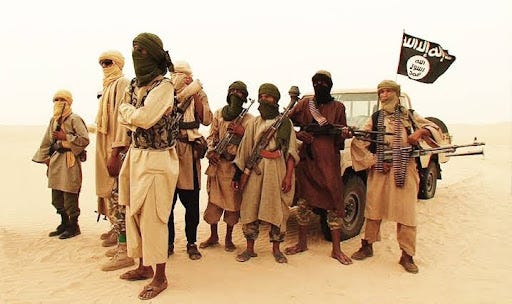

JNIM has used Park W—a nature preserve in the border area between Benin, Burkina Faso, and Niger—as a sanctuary over the past two years.
The group has used the park to launch attacks on security forces and civilians in neighboring areas. JNIM launched another wave of attacks on security forces in the Est region, which contains the western third of the park, in October and November 2022, likely to pin security forces in the area.
The group has since begun clearing more villages and besieging more towns in the area, indicating an increased focus on civilian targets.
This operational shift and the lack of Burkinabe resistance likely indicates the group successfully pinned security forces and is now changing its focus to consolidating control over rural areas by forcing newly vulnerable locals to submit or flee to isolated population centers.
JNIM is likely using its growing support zones in southeastern Burkina Faso to support expanding its activity in neighboring areas of Burkina Faso and the Gulf of Guinea. The group carried out some of its first ever attacks in the Centre-Est and Centre-Sud regions in the last quarter of 2022 with little response from the overstretched Burkinabe security forces.
JNIM’s growing presence in these regions increases the likelihood of significant spillover into Ghana, which borders both regions. JNIM militants were likely behind an improvised explosive device attack in northern Ghana in February 2023, which would be JNIM’s first attack in the country.
The group has also increased its attacks on Togolese patrols and posts near the Togo–Burkina Faso border since November 2022 to deepen its foothold in northern Togo. JNIM may now be shifting its focus to establishing control in rural areas of northern Togo by coercing civilians, using the same strategy it has in southeastern Burkina Faso. The group has reportedly increased reprisal killings on civilians accused of cooperating with government forces, including a massacre of 31 civilians on February 10.
An overemphasis on military solutions and border security without successfully addressing underlying social issues could backfire and boost anti-government sentiment among vulnerable populations in the Gulf of Guinea.
JNIM has capitalized on farmer-herder and ethnic tensions in the northern littoral states to recruit from marginalized groups over the past several years.
JNIM likely seeks to expand into the littoral states to create a buffer zone for its primary area of operations in Burkina Faso and Mali, while the group’s local fighters are likely more driven by these popular grievances.
Gulf of Guinea governments have reacted to the recent surge of JNIM activity by shoring up military efforts to secure their borders.
These efforts could exacerbate local grievances by increasing security force abuses and destroying nomadic cross-border economies.
However, the littoral governments have made efforts to limit this possibility by supplementing their military efforts with social programs that aim to address the popular issues JNIM uses to exploit its insurgency.