

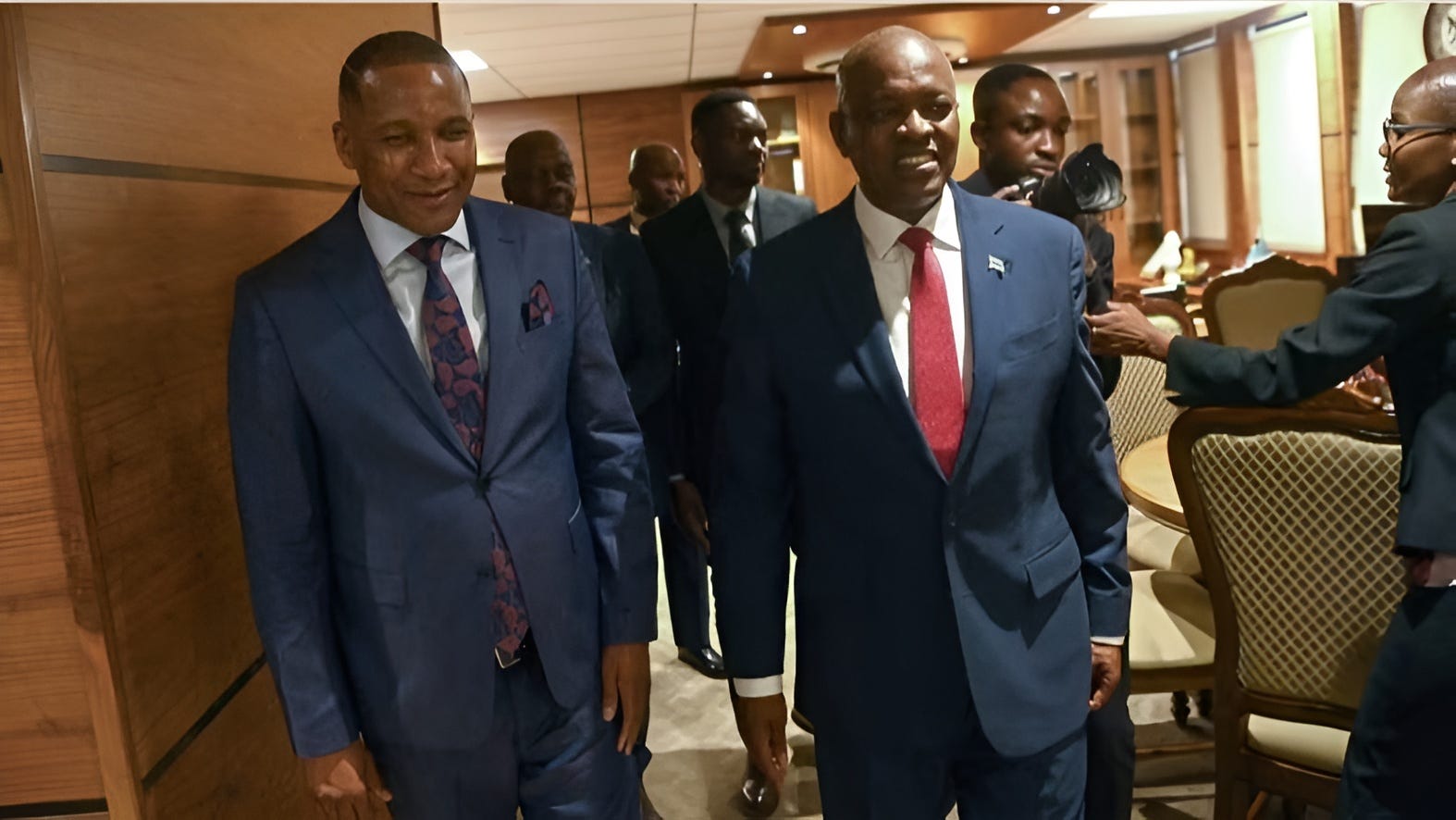

The recent election in Botswana has brought about a seismic shift in the country's political landscape, ending nearly six decades of rule by the Botswana Democratic Party (BDP). This unexpected turn of events, with the opposition Umbrella for Democratic Change (UDC) led by Duma Boko emerging victorious, raises important questions about the future of various government institutions, including the Directorate of Intelligence and Security (DIS), Botswana's intelligence agency.
Historical Context of the DIS
The Directorate of Intelligence and Security was established in 2008 under the presidency of Ian Khama, who was then a member of the BDP. From its inception, the DIS has been a source of controversy and concern among Botswana's citizens
Creation and Initial Perception
When the DIS was first created, it inspired fear and suspicion among the populace. In a country known for its commitment to the rule of law and accountable institutions, the scope and authority of this new agency were poorly understood. The mere perception that a domestic intelligence agency could be weaponized for personal or political purposes by any president was antithetical to Botswana's political culture
Khama Era Controversies
During Ian Khama's tenure as president, the popular perception took hold that the DIS was an instrument of his power. This belief contributed to the agency's controversial reputation and raised questions about its role in a democratic society
The Masisi Administration and the DIS
When Mokgweetsi Masisi succeeded Khama as president, the relationship between the former allies soured, leading to significant political drama that involved the DIS
Allegations of Persecution
Ironically, under Masisi's administration, the DIS - once thought to do Khama's bidding - was accused of persecuting the former president and his allies. This shift in the agency's perceived allegiances highlighted the potential for the DIS to be used as a political tool, regardless of which party was in power
Recent Incidents
In the lead-up to the recent election, there were incidents that further strained the relationship between the Khama family and the Masisi administration. Khama's twin brothers were detained by the DIS, though the reasons for their detention were not made clear to the public. This event was seen by some as part of a pattern of harassment and intimidation aimed at weakening Khama's political opposition movement
Implications of the UDC Victory for the DIS
With the UDC's victory and Duma Boko poised to become the new president, the fate of the DIS is now uncertain. Several factors will likely influence the agency's future:
1. UDC's Campaign Promises
During the election campaign, the UDC and other opposition parties may have made promises regarding government reform and increased transparency. These commitments could potentially extend to reforming or even restructuring the DIS.
2. Public Perception and Demand for Change
The election results indicate a strong desire for change among Botswana's electorate. This sentiment could translate into pressure on the new government to address longstanding concerns about the DIS, including its perceived lack of accountability and potential for political abuse
3. Economic Priorities
Botswana faces significant economic challenges, including high unemployment and the need to diversify its economy beyond diamond exports. The new government may prioritize these issues over intelligence agency reform, at least in the short term
4. International Relations and Security Concerns
The role of the DIS in maintaining national security and contributing to international intelligence cooperation will need to be balanced against demands for reform. The new administration will have to consider how changes to the agency might affect Botswana's relationships with regional and global partners.
Potential Scenarios for the DIS
Given these factors, several scenarios could unfold for the DIS under the new UDC government:
Scenario 1: Comprehensive Reform
In this scenario, the new government would undertake a thorough review and overhaul of the DIS. This could involve:
Implementing stronger oversight mechanisms
Clarifying and potentially limiting the agency's mandate
Increasing transparency in its operations
Changing leadership and key personnel
Such reforms would aim to address public concerns and align the agency more closely with democratic principles
Scenario 2: Gradual Changes
The UDC government might opt for a more cautious approach, implementing incremental changes to the DIS while maintaining its core structure. This could include:
Enhancing parliamentary oversight
Improving public reporting on the agency's activities
Reviewing and updating operational guidelines
This approach would balance the need for change with the desire to maintain stability in national security operations
Scenario 3: Status Quo with New Leadership
In this scenario, the basic structure and operations of the DIS would remain largely unchanged, but with new leadership appointed by the UDC government. This could lead to:
A shift in the agency's priorities and focus
Changes in its relationship with other government bodies
Potential improvements in public perception due to new management
While this approach might be seen as insufficient by some critics, it could be viewed as a pragmatic first step by the new administration.
Scenario 4: Dissolution and Replacement
In the most extreme scenario, the new government could decide to dissolve the DIS entirely and create a new intelligence agency from scratch. This would involve:
Drafting new legislation to establish a replacement agency
Defining a clear, limited mandate for the new organization
Implementing robust checks and balances from the outset
While this would be a dramatic move, it could address the legacy issues associated with the DIS and provide a clean slate for intelligence operations in Botswana.
Challenges and Considerations
Regardless of the approach taken, the new UDC government will face several challenges in addressing the future of the DIS:
Balancing Security and Transparency
One of the primary challenges will be striking the right balance between maintaining effective intelligence capabilities and increasing transparency and accountability. The government will need to find ways to reassure the public without compromising national security
Resistance to Change
Any significant reforms to the DIS may face resistance from within the agency and from other stakeholders who benefit from the current system. Overcoming this resistance will require strong political will and careful management of institutional relationships
Legal and Constitutional Considerations
Changes to the DIS, particularly if they involve significant restructuring or the creation of a new agency, will need to navigate complex legal and constitutional requirements. This process could be time-consuming and may require building broad political consensus
Resource Allocation
In a country facing economic challenges, allocating resources for intelligence agency reform may be contentious. The government will need to justify any expenditures in this area against other pressing national priorities.
Conclusion
The fate of the Directorate of Intelligence and Security in Botswana following the defeat of President Masisi and the BDP is uncertain but likely to be a significant issue for the new UDC government. The agency's controversial history and the public's desire for change suggest that some level of reform is probable.
The approach taken by Duma Boko and the UDC will depend on a complex interplay of factors, including campaign promises, public pressure, economic considerations, and security imperatives. Whatever path is chosen, it will have far-reaching implications for Botswana's democracy, its national security, and its international standing.
As Botswana enters this new political era, the transformation of the DIS could become a litmus test for the UDC's commitment to change and its ability to balance the diverse needs and expectations of the Botswanan people. The coming months and years will reveal whether the agency can be reformed to better serve the nation's interests while adhering to the principles of transparency and accountability that are fundamental to Botswana's democratic tradition.
SOURCE: Osint