


1. Incident Overview
On 20 July 2025, Kenyan activist and photojournalist Boniface Mwangi was arrested at his residence near Nairobi and faces charges of “facilitation of terrorist acts” linked to the large-scale anti-government protests on 25 June 2025.
The Kenya Directorate of Criminal Investigations (DCI) confirmed his arrest and stated he would be formally arraigned the following Monday.
2. Protest Context & Background
The protests on 25 June 2025 were among a wave of nationwide demonstrations originally sparked by grievances over government abuses and impunity. At least 19 people were killed, with human rights organisations citing more than 100 deaths since the movement’s inception.
President William Ruto’s administration has faced sharp criticisms for heavy-handed measures, including orders to fire on protesters—leading to international rebuke.
3. Specific Charges & Evidence
Mwangi is accused of paying “goons” to instigate unrest during the June protests, forming the basis of the terrorism-related allegations.
During a search of his home and office, law enforcement seized:
Two mobile phones, a laptop, notebooks, and hard drives
Two additional computers, unused tear‑gas canisters
A blank firearm cartridge
Activist denies allegations, posting on social media: “I am not a terrorist.”
4. Civil Society & Public Reaction
The hashtag #FreeBonifaceMwangi has trended across X and other platforms, reflecting widespread condemnation of the arrest.
Human rights organisations continue to raise alarms over excessive use of lethal force, numerous arrests, and enforced disappearances since the protests began.
5. Strategic & Security Implications
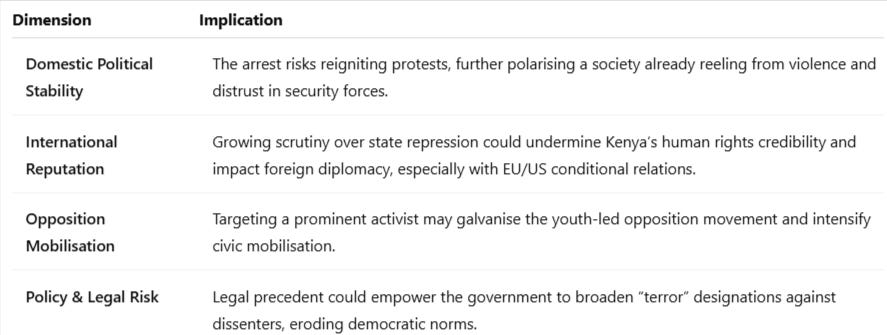
6. Key Actors & Stakeholders
Boniface Mwangi – internationally recognised activist/photojournalist; denies terror allegations.
Kenyan Government & DCI – government instrumental in pressing terror charges; pursuing crackdown.
President William Ruto – his rhetoric and orders have shaped the current hardline security posture.
Human Rights Groups / Diaspora – continue to advocate against the crackdown; monitor developments.
7. Risks & Outlook
Short-Term:
Localised protests or solidarity demonstrations may emerge.
Opponents may challenge the charges in court or through public campaigns.
Mid-Term:
Escalation risks if more activists are targeted.
Reputational pressure may prompt diplomatic warnings or funding reviews by international partners.
Long-Term:
Potential for judicial reinterpretation of “terror facilitation” laws.
Civil society chilling effect; shrinking operational space for advocacy.
8. What This Means for Kenya’s Democratic Future
The arrest and terror charges against Boniface Mwangi mark a dramatic escalation in Kenya’s response to dissent. Moving beyond protest suppression into criminal terror allegations, the government risks deepening national polarisation, provoking legal challenges, and drawing international criticism. Continued monitoring is essential to assess how this incident shapes Kenya’s governance, civil liberties, and regional human rights posture.
☕ Support Ujasusi Blog
If you value the intelligence insights shared here, consider showing your support through a small donation. Your contribution helps keep this platform independent, focused, and thriving.
Scan below to donate: