

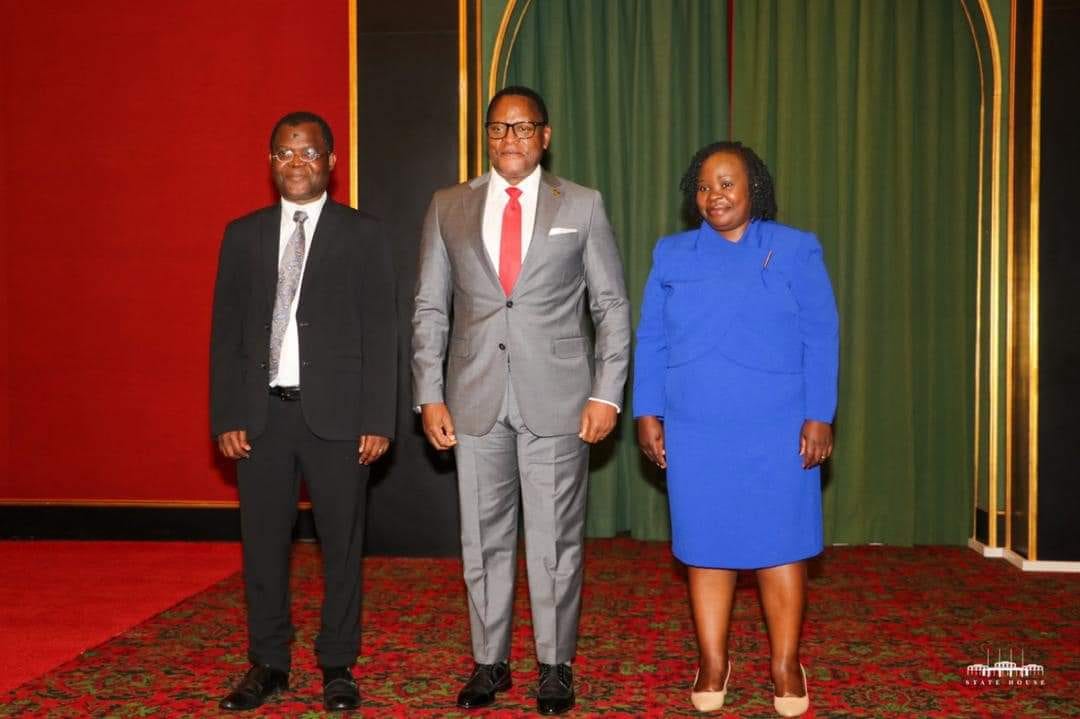

Malawi's establishment of its first-ever National Intelligence Service Complaints Tribunal marks a significant milestone in the country's efforts to enhance accountability and transparency within its intelligence sector. This innovative institution, inaugurated by President Lazarus Chakwera in June 22, 2023, represents a crucial step towards balancing national security interests with the protection of citizens' rights.
Establishment and Composition
The National Intelligence Service Complaints Tribunal was established under the provisions of the National Intelligence Service Act of 2017, specifically Sections 26 to 35. While the Act received assent earlier, it only became operational on February 8, 2021, paving the way for the tribunal's creation.
The tribunal comprises three distinguished members:
1. Justice Professor Redson Kapindu
2. Sarai Chisala-Tempelhoff, a human rights and social justice lawyer
3. Brenant Chitanda, a former security officer.
This diverse composition brings together legal expertise, human rights advocacy, and practical security experience, ensuring a well-rounded approach to addressing complaints against the National Intelligence Service (NIS).
Purpose and Functions
The primary purpose of the Complaints Tribunal is to provide Malawian citizens with a mechanism to seek review and adjudication of matters related to the operations and activities of the NIS and its personnel. This function is crucial in a democratic society, as it allows for civilian oversight of intelligence activities, which have historically been shrouded in secrecy.
Key functions of the tribunal include:
1. Scrutinizing and resolving issues pertaining to NIS operations and conduct
2. Investigating complaints lodged against the NIS and its staff
3. Ensuring accountability and transparency within the intelligence service.
How It Works
While specific operational details of Malawi's tribunal are not provided in the available information, we can draw insights from similar institutions to understand its likely functioning:
1. Complaint Submission:
Citizens who believe they have been victims of unlawful interference by the NIS can submit complaints to the tribunal.
2. Jurisdiction Assessment:
The tribunal will likely assess whether the complaint falls within its jurisdiction before proceeding with an investigation.
3. Investigation:
The tribunal has the power to investigate complaints, which may involve gathering evidence, interviewing witnesses, and reviewing classified information.
4. Adjudication:
After a thorough investigation, the tribunal will make a determination on the complaint, potentially recommending corrective actions or sanctions if misconduct is found.
5. Reporting:
The tribunal may be required to submit regular reports to the President or Parliament on its activities and findings, maintaining confidentiality where necessary.
Effectiveness and Successes
As the Malawi National Intelligence Service Complaints Tribunal is newly established, it is too early to assess its effectiveness or successes concretely. However, its mere establishment represents a significant success in itself, as it demonstrates Malawi's commitment to:
1. Enhancing Accountability:
The tribunal provides a mechanism for holding the intelligence service accountable for its actions.
2. Protecting Citizens' Rights:
It offers a avenue for citizens to seek redress for potential violations of their rights by the intelligence service.
3. Promoting Transparency:
The existence of the tribunal signals a move towards greater openness in intelligence operations.
4. Depoliticizing Intelligence:
President Chakwera emphasized the importance of ensuring that the NIS serves all Malawians, not any political agenda.
5. Modernizing Governance:
The establishment of the tribunal aligns with international best practices in intelligence oversight.
Challenges
Despite its promising start, the Malawi National Intelligence Service Complaints Tribunal is likely to face several challenges:
1. Balancing Secrecy and Transparency:
The tribunal must navigate the delicate balance between maintaining national security secrets and providing meaningful oversight.
2. Resource Constraints:
Like many new institutions in developing countries, the tribunal may face limitations in terms of funding, staffing, and technical resources.
3. Public Awareness:
Ensuring that citizens are aware of the tribunal's existence and how to access its services may be challenging, particularly in rural areas.
4. Institutional Resistance:
The intelligence community may be resistant to external oversight, potentially hindering the tribunal's effectiveness.
5. Jurisdiction Limitations:
The tribunal's powers may be limited in certain areas, potentially restricting its ability to fully investigate all complaints.
6. Political Interference:
Despite intentions to depoliticize the process, there may be attempts to influence the tribunal's operations or decisions.
7. Classified Information Handling:
Managing and securing classified information while conducting investigations will be a significant challenge.
A Model for Other African Countries?
The establishment of Malawi's National Intelligence Service Complaints Tribunal could indeed serve as a model for other African countries to emulate, with some considerations:
Positive Aspects:
1. Democratic Oversight:
It demonstrates a commitment to democratic principles and the rule of law in the sensitive area of intelligence operations.
2. Rights Protection:
The tribunal provides a mechanism for protecting citizens' rights against potential abuses by intelligence services.
3. Transparency:
It promotes greater transparency in a sector traditionally shrouded in secrecy.
4. Confidence Building:
Such institutions can help build public confidence in intelligence services and government institutions more broadly.
Considerations for Adoption:
1. Legal Framework:
Countries would need to ensure they have the necessary legal framework in place to support such a tribunal.
2. Political Will:
Strong political will is required to establish and maintain the independence of such oversight bodies.
3. Cultural Context:
The model may need to be adapted to fit the specific cultural and political contexts of different African countries.
4. Resource Allocation:
Countries must be prepared to allocate sufficient resources to ensure the tribunal's effectiveness.
5. Capacity Building:
Significant investment in training and capacity building would be necessary for tribunal members and support staff.
Conclusion
Malawi's National Intelligence Service Complaints Tribunal represents a significant step forward in promoting accountability, transparency, and the protection of citizens' rights in the intelligence sector. While it is too early to fully assess its effectiveness, the tribunal's establishment alone signals a positive shift towards more democratic oversight of intelligence activities.
The challenges facing the tribunal are substantial, ranging from resource constraints to the delicate balance between secrecy and transparency. However, if these challenges can be successfully navigated, the tribunal has the potential to significantly enhance public trust in Malawi's intelligence services and government institutions more broadly.
As other African countries consider similar models, Malawi's experience will provide valuable lessons. The success of this initiative could pave the way for a new era of intelligence oversight across the continent, contributing to stronger democracies and more accountable governments. However, each country will need to carefully consider its own context, resources, and legal framework when adapting such a model.
Ultimately, the effectiveness of Malawi's National Intelligence Service Complaints Tribunal will depend on continued political support, adequate resourcing, and its ability to balance the competing demands of national security and civil liberties. Its progress will be closely watched, not only by Malawians but by observers across Africa and beyond, as a potential model for enhancing democratic oversight of intelligence services in developing nations.
SOURCE: Osint