

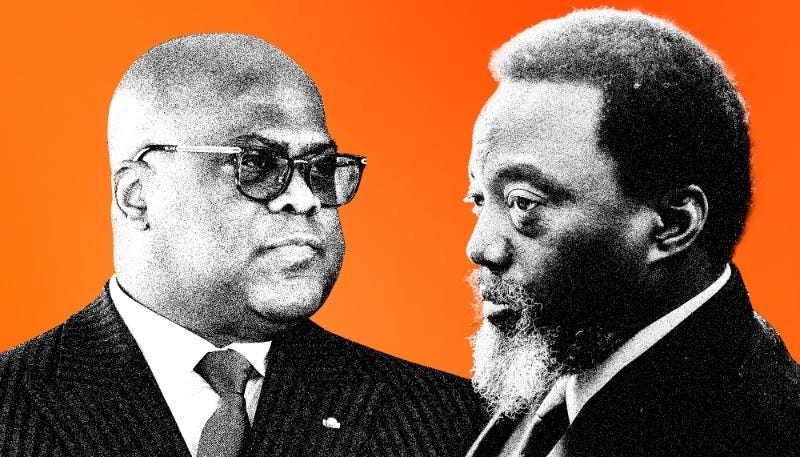

The Democratic Republic of Congo (DRC) has long been mired in political instability and violence, particularly in its eastern regions. In recent months, President Félix Tshisekedi has publicly accused his predecessor, Joseph Kabila, of backing rebel groups to destabilize the country. This article aims to critically analyze these accusations, exploring whether they are substantiated or merely a political maneuver by Tshisekedi to deflect from his administration's challenges, particularly in improving security.
Background
Félix Tshisekedi's Presidency
Félix Tshisekedi assumed the presidency in January 2019, succeeding Joseph Kabila in what was hailed as the first peaceful transfer of power in the DRC since its independence in 1960. However, Tshisekedi's tenure has been fraught with challenges, including dealing with a parliament initially dominated by Kabila's coalition, the Common Front for Congo (FCC), and managing persistent violence in the eastern provinces.
Joseph Kabila's Legacy
Joseph Kabila ruled the DRC from 2001 to 2019, a period marked by significant political and economic turmoil. Despite stepping down, Kabila has remained a powerful figure in Congolese politics, maintaining influence through his control of the FCC and other political structures.
The Accusations
In a recent interview, President Tshisekedi accused Joseph Kabila of backing a coalition of rebel groups known as the Alliance Fleuve Congo (AFC), which includes the notorious M23 militia. Tshisekedi claimed that Kabila is preparing an insurrection to overthrow the current government, although he did not provide concrete evidence to support these allegations.
Analysis of the Accusations
Historical Context of Rebel Activity
The eastern DRC has been a hotspot for rebel activity for decades, with over 120 armed groups operating in the region. The M23, a primarily Tutsi rebel group, has been particularly active and is believed to have ties to neighboring Rwanda. The region's instability is fueled by competition for control over valuable mineral resources, ethnic tensions, and political power struggles.
U.S. Sanctions and International Involvement
The U.S. recently imposed sanctions on the AFC, accusing it of exacerbating conflict in the eastern DRC and attempting to destabilize the government. This international stance lends some credibility to Tshisekedi's claims, as it aligns with broader concerns about the role of rebel groups in the region.
Lack of Concrete Evidence
Despite these international sanctions, Tshisekedi has not provided specific evidence linking Kabila directly to the AFC or the M23. This lack of substantiation raises questions about the motivations behind the accusations. Are they based on credible intelligence, or are they a strategic move to undermine a political rival?
Tshisekedi's Security Challenges
Escalating Violence
Since the beginning of 2024, the DRC has seen a significant increase in violence, resulting in the displacement of nearly 358,000 people. The situation has been particularly dire in the North Kivu province, where armed groups have committed mass atrocities, including sexual violence.
Government Response
Tshisekedi's administration has struggled to contain the violence despite increased defense spending and efforts to negotiate ceasefires with rebel groups. The government's inability to secure lasting peace has led to widespread criticism and declining public support for Tshisekedi.
Political Maneuvering or Legitimate Concerns?
Deflecting Blame
Critics argue that Tshisekedi's accusations against Kabila may be an attempt to deflect blame for his administration's failures in improving security and addressing economic challenges. By shifting the focus to a powerful political rival, Tshisekedi could be seeking to rally support and distract from his own shortcomings.
Legitimate Concerns
On the other hand, the complex web of alliances and rivalries in Congolese politics makes it plausible that Kabila could be leveraging rebel groups to regain influence. The historical context of Kabila's tenure, marked by alliances with various armed factions, supports the possibility that he could be involved in current destabilization efforts.
Human Rights and Governance
Repression and Human Rights Violations
Tshisekedi's administration has faced accusations of human rights violations, including the arbitrary detention of activists and journalists. This repression is reminiscent of tactics used during Kabila's rule, undermining Tshisekedi's promises to uphold democratic principles and human rights.
Corruption and Economic Mismanagement
Both Kabila and Tshisekedi have been criticized for failing to address systemic corruption and economic mismanagement in the DRC. Despite the country's immense mineral wealth, the majority of Congolese people live in poverty, with high unemployment rates and soaring food prices.
Conclusion
The accusations made by President Félix Tshisekedi against Joseph Kabila are complex and multifaceted. While there is some international support for concerns about rebel activity, the lack of concrete evidence directly linking Kabila to these groups raises questions about the motivations behind Tshisekedi's claims.
Given the DRC's turbulent political landscape and the significant challenges facing Tshisekedi's administration, it is plausible that these accusations serve both as a genuine concern for national security and a strategic political maneuver. Ultimately, the effectiveness of Tshisekedi's leadership will be judged by his ability to address the underlying issues of violence, corruption, and economic hardship that continue to plague the DRC.
SOURCE: Osint