
A Spy’s Guide to Making Your Own Luck
How Preparation, Awareness, and Timing Create Opportunity


SPY GUIDES | Ujasusi Originals
Spies don’t rely on luck—they engineer it.
What looks like “luck” is usually the result of being prepared, noticing what others miss, and acting at the right moment. You can apply the same tradecraft in everyday life.
🧠 1. Preparation (Building Advantage Before Opportunity Appears)
What it means in intelligence
Operations succeed because groundwork is done before anything happens—research, planning, and skill-building.
How it works
Study the environment
Build relevant skills
Prepare for multiple scenarios
Civilian application
“Lucky breaks” often go to ready people:
Learn skills before you need them
Prepare for meetings, interviews, or opportunities
Keep your CV, portfolio, or ideas ready
Example:
Two people get the same opportunity. One prepared → gets selected.
The other didn’t → calls it “bad luck.”
👉 Preparation makes opportunities usable.
RELATED

👀 2. Awareness (Seeing What Others Ignore)
What it means in intelligence
Officers are trained to maintain situational awareness—constantly scanning for changes, signals, or openings.
How it works
Observe people and environment
Notice shifts, patterns, and anomalies
Stay mentally present
Civilian application
Opportunities are often visible—but ignored:
A problem nobody is solving
A gap at work others overlook
A trend before it becomes obvious
Example:
You notice a recurring issue at work → propose a solution →
You get recognition or promotion.
👉 Awareness turns ordinary situations into opportunities.
⏱️ 3. Timing (Acting at the Right Moment)
What it means in intelligence
Even the best plan fails if executed at the wrong time. Timing determines success.
How it works
Wait for the right conditions
Avoid acting too early or too late
Strike when probability of success is highest
Civilian application
Speak when people are ready to listen
Apply when demand is high
Act when conditions favour you
Example:
Pitching an idea when leadership is under pressure to solve a problem
→ much higher chance of success.
👉 Timing multiplies the impact of preparation.
RELATED

🔍 4. Opportunity Recognition (Identifying the “Window”)
What it means in intelligence
Analysts identify windows of opportunity—brief moments where action can produce results.
How it works
Combine preparation + awareness
Recognise when conditions align
Act quickly before the window closes
Civilian application
A contact introduces you to someone important
A role opens suddenly
A problem becomes urgent
👉 Those moments are not random—they are windows.
⚖️ 5. Risk Assessment (Choosing Which Opportunities to Take)
What it means in intelligence
Not every opportunity is worth acting on. Officers assess risk vs reward.
How it works
Evaluate potential gain
Consider possible downside
Decide whether to act or wait
Civilian application
Not every “opportunity” is good
Some come with hidden costs
Example:
A job offer with high pay but toxic environment →
Not necessarily a “lucky break.”
👉 Smart people don’t chase every opportunity—only the right ones.
RELATED

Spy Guide to Counter-surveillance Recognition: Identifying When You are Being Monitored or Followed
🔄 6. Positioning (Being in the Right Place)
What it means in intelligence
Success often depends on where you are positioned—physically, socially, or strategically.
How it works
Build networks
Place yourself in high-value environments
Stay close to information and decision-makers
Civilian application
Surround yourself with people who create opportunities
Be present where decisions happen
Engage in environments where growth is possible
👉 Luck improves when your environment improves.
🎭 7. Perception (Looking Ready When Opportunity Comes)
What it means in intelligence
Perception matters. An operative must appear credible and capable at the moment of action.
How it works
Maintain composure
Communicate clearly
Present competence
Civilian application
Be someone people trust with opportunity
Look prepared and confident
Example:
Two people have equal ability →
One presents well → gets the opportunity.
👉 People give opportunities to those who look ready.
RELATED

🧭 8. Execution (Acting Decisively)
What it means in intelligence
When the moment comes, hesitation can destroy the opportunity.
How it works
Decide quickly
Act with confidence
Follow through
Civilian application
Apply when you see the opportunity
Speak up when it matters
Take the step others hesitate to take
👉 Luck favours those who act—not those who wait too long.
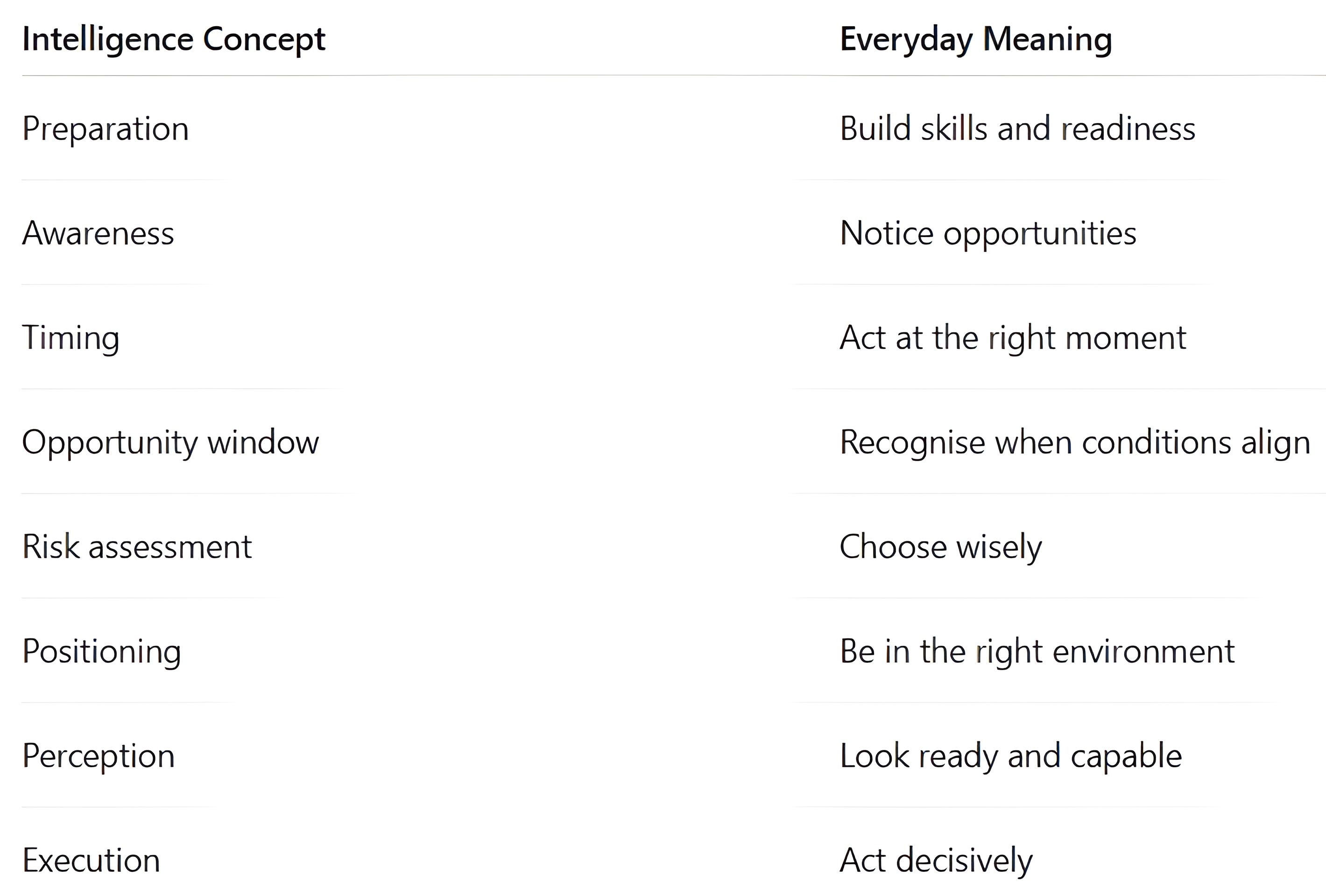
📊 Tradecraft Translation
🧠 Final Assessment
What people call “luck” is often:
Preparation meeting opportunity
Awareness spotting the opening
Timing turning it into success
Luck is not random—it is built, recognised, and used.
🔎 Ujasusi Takeaway
You don’t need to wait for luck.
If you:
Prepare consistently
Stay aware
Act at the right time
You will start to look “lucky” to everyone else—
while knowing exactly how you created it.