

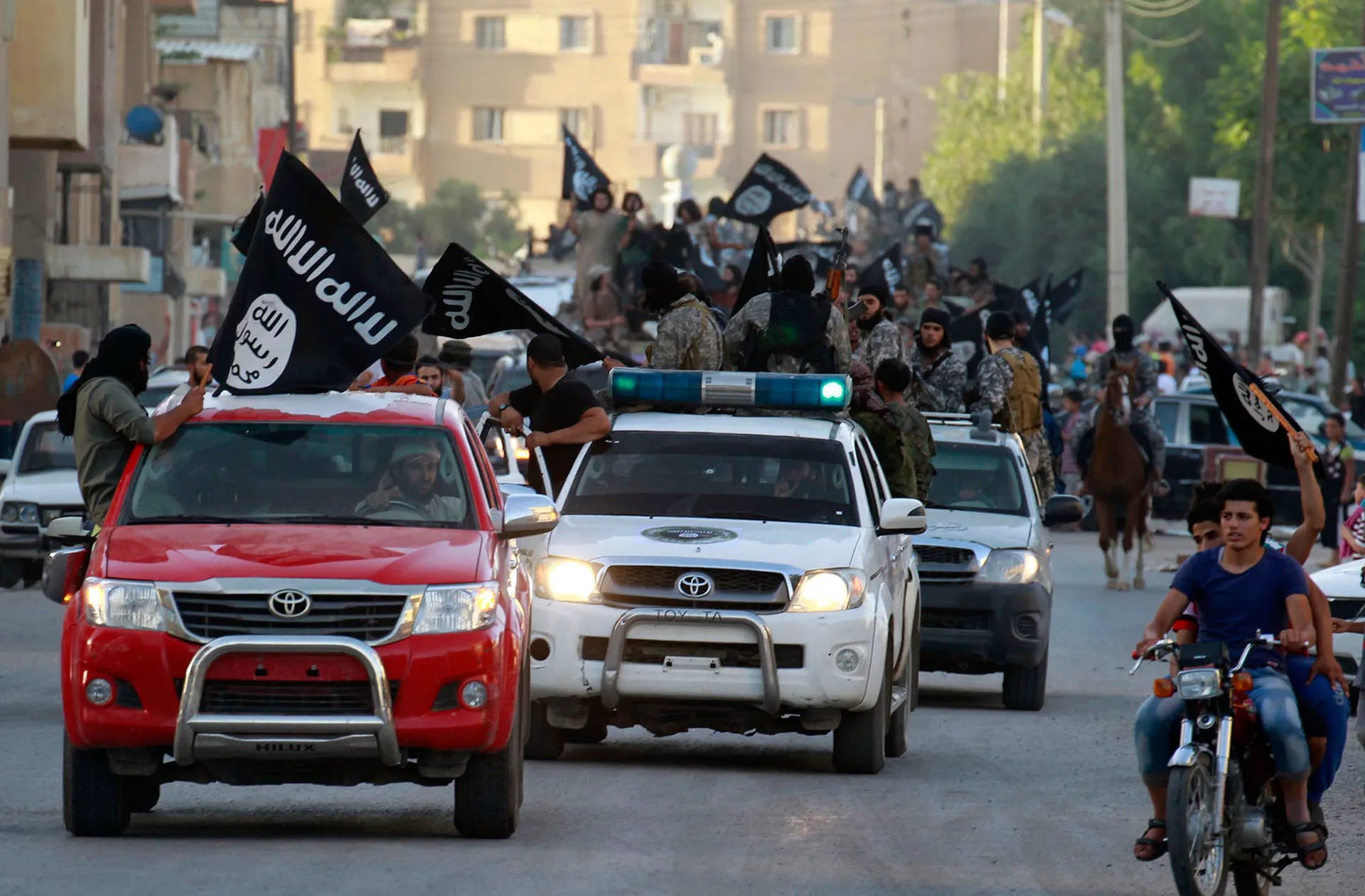

As 29th June marked the 10th anniversary of IS’s “caliphate” declaration, BBC’s Chief jihadist media specialist, Mina al-Lami offered a summary of keytakeways from BBC Monitoring’s in-depth analysis of IS activity in the first half of 2024 .
The group’s leadership celebrated the date in Mar (that’s where it fell in Hijri calendar), boasting that despite past setbacks, today IS was “growing stronger and expanding”, and called for recruits to its branches.
There was a notable increase in IS attacks in the first half of 2024, which included deadly attacks in Iran (3 Jan), Russia (22 Mar) and Turkey (28 Jan). There was also a surge in IS activity in Syria, Mozambique and DR Congo. This followed a year (2023) full of setbacks for
In Syria this year, IS has claimed numerous deadly attacks on government forces, esp in the desert-like area known as the Badia. The recurrent ambushes prompted the Syrian gov, with the help of Russian air force, to launch a military campaign against IS in the desert this
In sub-Saharan Africa, where IS continues to claim most of its attacks – nearly 70% - the activity centred around two key strands: a surge in violence, particularly against Christian communities; and a rise in hearts-and-minds outreach efforts directed at Muslim communities.
IS this year IS claimed activity “expansions” in Mozambique, where the group started moving southward to Chiure in Cabo Delgado as well as struck in small islands; and in DRC, where the violence recently moved to Lubero region in the north-east. Much of the violence and
In NE Nigeria & Lake Chad basin, while IS’s ISWAP branch is consistently a high-scorer in terms of monthly attack figures, its activity this year has largely been defensive, in the context of military operations against its bases
ISKP attacks in Afghanistan have continued to be in decline since last year, but the group is still able to occasionally pull of deadly attacks, such as the one that targeted tourists in Bamiyan, killing three Spaniards and three Afghans. IS accused the Taliban of hypocrisy
In terms of messaging, IS leadership uncharacteristically released two messages within three months, each time after major attacks in Iran and then Russia, showing the importance of such “victories” on the ground to the group’s messaging and efforts to recruit
In the messages, IS called for revenge attacks, particularly in the West, “in support” of Gaza. IS, like al-Qaeda, is trying to exploit anger about the ongoing Israeli military operation in Gaza to recruit and incite. IS told followers to target crowds and places of worship,
In Jan, IS launched a "global campaign" of attacks allegedly in support of Gaza. While its militants claimed some of their attacks in Africa and the Middle East as revenge for Palestinians, none of the targets within that campaign had anything to do with Israelis, Jews or the
In the Mar msg, as IS claimed its “caliphate” was “growing stronger and expanding”, as the group urged "lost Muslims" in the West to join any of its branches. Such IS calls for "hijrah" (jihadist migration) have been rare and suggest IS attacks in Iran and Russia possibly
The leadership also urged some of its branches in Africa and in the Philippines to move their operations from rural to urban areas. In Mozambique, the group said its brazen two-day capture of the key town of Macomia in May was "practical implementation" of the leadership's
But it hasn’t been all smooth sailing for IS this year, and the group continued to experience a number of setbacks on multiple levels. Its activity in Iraq has been at an all-time low, continuing a trend of decline from last year. Elsewhere in the Middle East, the group's
In terms of leadership, one year on in his post and the utterly anonymous IS "caliph", Abu Hafs al-Hashimi al-Qurashi, has yet to issue a message in his name (messages are relayed through the spokesman). Such anonymity of IS "caliphs" continues to be a vulnerability for the
In recent months, IS's important online support base - known as "al-Ansar" or "al-Munasirin" - has been hit by internal divisions and in-group accusations and mistrust. Such divisions not only consume supporters' time away from cheering IS, but they seriously undermine the
The Telegram clampdown on the IS network, particularly after the Russia attack, has in the past two months impacted supporters' online operations and the visibility and reach of their media campaigns. It has also cost IS a number of longstanding accounts and forced the group
Future threats: 1) As Israel's military operation in Gaza continues, it gives more time and opportunity for jihadists to exploit the conflict to incite violence, with a focus on lone actor attacks in the West, to recruit to their cause and push their "us versus them"
The coordinated incitement in recent months by top pro-IS media groups against the Euro 2024 football tournament in Europe, which was widely reported in the media, and cricket's T20 world cup in the US and Caribbean, underscored how the IS network can mobilise and coordinate
The Kurdish-run camps of al-Hol and al-Roj in north-east Syria that hold IS-linked women and children continue to be a source of acute shame for IS that it will be keen to reverse. This year the IS leadership urged militants in Syria to do all they can to free or avenge the
As for Africa, ongoing political and security instability, including coups and the redeployment or withdrawal of foreign and regional troops, will continue be exploited by jihadists. For example, this year IS's surge in northern Mozambique coincided with a drawdown of a
Overall, IS has been keen to build on big attacks this year, not least those in Russia and Iran, to inspire sympathisers to engage in violent action and to project an image of not only endurance but growth. Its grandiose leadership messages this year and calls for "hijrah" to
SOURCE: Mina al-Nami